GERMICIDAL SOAPS AND COSMETICS 133 Reference is made to several publications on the early "germi- cidal" soaps which exhibited ques- tionable antibacterial activity. Brief discussions are also given on the use of germicides in deodorants, germ-free creams, dentifrices, and the significance of toxicologic and pharmacologic controls in soap and cosmetic manufacturing. REFERENCES (1) Koch, R., "Ueber Desinfektion," Mir- tell. des. Kaiserl., Gesundheitsamt, Bd. 1, S. 271 (1881). (2) Nijland, A. H., "Ueber das Abt6ten yon Cholerabacillen im Wasset,"/lrch. f. Hyg., 18, 335 (1893). (3) Symes (from Norton, refer. No. 4), Bristol Med., Chirg. 2% 17, 193 (1899). (4) Norton, J. F., "Soaps in Their Rela- tions to Their Use for Handwashing," 2 •./ira. Med. Assoc., 75, 302 (1920). (5) Jolles, M., "Weirere Untersuchungen fiber die Desinfektionsfahigkeit yon Seifenlosungen," Zeitsch. f. Hyg., 19, 130 (1895). (6) Reithoffer, R., "Ueber die Seifen als Desinfectionsmittel,"/irch. f. Hyg., 27, 350 (1896). (7) Reasoner, M. A., "Effect of Soaps on Treponema Pallidurn," y. /ira. Med. /issoc., 68, 973 (1929). (8) Walker, J. E., "The Germicidal Prop- erties of Soap," •t. Inf. Diseases, 38, 127 (1926). (9) Kozlowski, A., "A Comparative Study of the Action of Sodium Ricinoleate Upon Bacteria," 2 •. Bact., 16, 203 (1929). (10) Hamilton, H. C., "Soaps From Differ- ent Glycerides Their Germicidal and Insecticidal Values Alone and Asso- ciated With Active Agents," Ind. Eng. Chem., 3, 582 (1911). (11) Hampil, B., "The Influence of Soaps on the Germicidal Properties of Certain Mercurial Compounds," /lm. 2 •. Hyg., 13, 623 (1931). (12) Hamilton, H. C., and Thistlethwaite, F., "A Method for the Germicidal Assay of Soaps," •t. Lab. Clin. Med., 16, 391 (1931). (13) Hamilton, H. C., "The Germicidal Value of Mercuric Iodide Alone and Associated with Soap," •./lm. Pharm. /lssoc., 9, 497 (1920). (14) Traub, E. F., Newhall, C. A., and Fuller J. R., "The Value of a New Compound Used in Soap to Reduce the Bacterial Flora of the Human Skin," Surg. Gynec. Obstet., 79, 205 (1944). (15) Seastone, C. V., and Erickson, T. C., "A Comparison of Solid and Liquid Soap as Vehicles for G-11 (hexachloro- phene) in the Surgical Wash," Surg., 25, 290 (1949). (16) Nungester, W. J., Thrilby, R. L., and Vial, A. B., "Evaluation of Hexachloro- phene and Detergents as Substitutes for the Surgical Scrub," Surg. Gynec. Obstet., 88, 639 (1949). (17) Armbruster, E. H., and Ridenour, G. M., "A New Medium for Study of Quaternary Bactericides," Soap Sanit. Chem., 23, 119 (1947). (18) Weingarten, M., and Payson, B., "Deodorization of Colostomies with Chlorophyll," Rev. Gastroenterology, 18, 602 (1951). (19) Astler, V. B., and Morley, G. W., "Deodorization of Colostomies and Leukorrheic Conditions by Means of Chlorophyll Preparations," Univ. Mich- igan Med. Bull., 17, 112 (1951). (20) Montgomery, R. M., and Nachtigall, H. B., "Oral Administration of Chloro- phyll Fractions for Body Deodoriza- tion," Postgrad. Med., 8, 401 (1950). (21) Brown, P. N., "Report on New De- odorant for Hospital Use," •. Michigan State Med. Soc., 49, 1205 (1950). (22) Guiteras, A. F. (A Book Review), Chem. Eng. News, 28, 2379 (1950). (23) Ross, An T., "Bactericidal Properties of an Ultraviolet Irradiated Petrolatum- Lanolin Mixture," Proc. Soc. Exptl. Biol. Med., 29, 1265 (1932). (24) Harris, R. S., Bunker, J. W. M., and Milas, N. A., "The Germicidal Activity of Vapors from Irradiated Oils," •. Bact., 23, 429 (1932). (25) Eising, E. H., "Therapeutic and Physi- cal Properties of Ultraviolet Irradiated Petrolatum," /Inn. Surg., 93, 1231 (1931). (26) Eising, E. H., "Clinical Observations in the Use of Ultraviolet Irradiated Petrolatum," Am. •. Surg., 19, 244 (1933). (27) Editorial, Queries and Minor Notes, "Chlorophyll," •. Am. Med. Assoc., 147, 99 (1951). (28) Killian, J., "Chlorophyll," Drug Trade News, 26, No. 11, 32 (1951) ibid., 26, No. 14, 35 (1951). (29) Barall, L., "A Study of the Deodorizing Properties of Chlorophyll in Denti- frices," •. Soc. Cosmetic Chem., 3, 1 (1952).

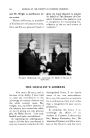
MAISON G. DE NAVARRE, THE COSMETIC CHEMIST 135 mine, our Toastmaster for the even- ing, Dr. Dan Dahle." Dr. Dahle asked Mr. Thomas Farrell, Chairman of the Medal Award Committee to review the requirements leading to the choice of a Medalist. Mr. Farrell also mentioned the sudden and un- timely death of Dr. Curt Wimmer whom Mr. Farrell was temporarily replacing. Dr. Dahle introduced Dr. Emil Klarmann who spoke on "Maison G. deNavarre, The Cosmetic Chem- ist." Toastmaster Dahle then called on Harland Wright who spoke on "Maison G. deNavarre, The Man." President McDonough gave the citation and presented the medal to Mr. deNavarre. The Medalist gave his address entitled "De- siderata." MAISON G. DE NAVARRE, THE COSMETIC CHEMIST BY EMIt, G. KLARMANN, D.Sc. Fice-President in Charge of Research, Lehn • Fink, Inc., Bloomfield, N. •7. Mr. President, Mr. Toastmaster, Members and Guests of TI•E SO- CIETY OF COSMETIC CHEMISTS, dear friends, Ladies and Gentlemen: IT •S ^ pleasure and a privi- lege to participate in this function. Mine is the task of telling you some- thing about the technical quali- fications of Maison deNavarre, known as Ed to his friends. I am not at all sure that I am quite equal to this task, or that, indeed, the task itself is not a matter of redundancy in that Ed's accom- plishments in the field of cosmetic chemistry are so well known to everybody in this field and to a great many outside of it. However, I shall have to accept this risk in delving into Ed's past and in bring- ing up a number of significant instances in order to illustrate the career of the man whom we are happy to honor tonight. Ed's interest in cosmetic chemis- try has its roots in his pharmaceuti- cal antecedents. Influenced by his two elder brothers, one of whom was already a pharmacist and the other studying pharmacy at the College of the City of Detroit, Ed went to Cass Technical High School, where he took what was called a pre- pharmacy course. One of his teachers was Mrs. I,indbergh, the mother of the man who blazed the air trail across the Atlantic. Another was Fleck, co-discoverer of the dye Bismarck Brown. Such courses as chemistry, physics, bi- ology, trigonometry, and algebra were easy. It was in the classical
Purchased for the exclusive use of nofirst nolast (unknown)
From: SCC Media Library & Resource Center (library.scconline.org)