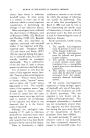
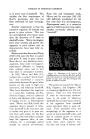
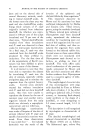
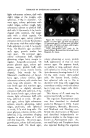
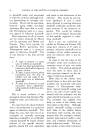
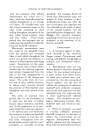
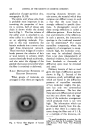
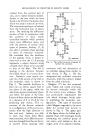
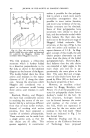
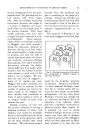
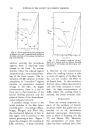
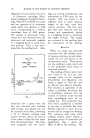
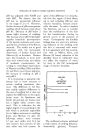
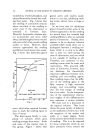
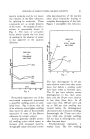
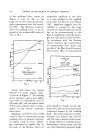
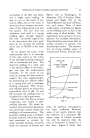
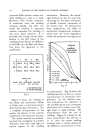
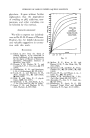
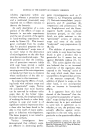
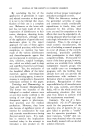
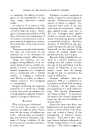
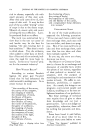
116 JOURNAL OF THE SOCIETY OF COSMETIC CHEMISTS saturated LiBr solution causes only little swelling in a day or a week. However, with further extension of immersion time, the swelling increases rapidly, and after two weeks the swelling in saturated solution overtakes the swelling of the more dilute solutions. It is probable that strong osmotic dehy- dration in the first phase of the mechanism. However, the centrif- ugal method can also be used with advantage for the direct evaluation of specific cosmetic treatments of the human hair. To demonstrate these applications, the effect of ammonium thioglycolate solutions, which form the active ingredients of the cold permanent waving lotions ! i swelling process delays the diffusion ••, ' sw•tu,o of the LiBr into the fiber and there- fore slows the approach to the equilibrium. z,,oh 15o I 148.6 48.4 44.• 44.• • • ,o• ,o•zo• • • •.• I N I •r , , , • ' / .• •,s ,o,. •w,,•, / '. Fig. 10 [ j deemiea. Fig. shows Fig. 9 Figure 9 shows the swelling of the alkali and ammonium halides at 50 per cent or saturated solution after fourteen days immersion. For a complete interpretation of the results, the density of the solution would have to be taken into account. The results reported are interest- ing from the standpoint of cosmetic chemistry since they shed light on certain aspects of the swelling swelling behavior of hair in various concentrations of ammonium thio- glycolate. At the alkaline reac- tion maintained, the reduction of the disulfide group and consequent elimination of co-valent cross link- ages leads fo rapid swelling. The measurements show the rate of swelling. Figure 11 is based on the same measurement but plotted so as to show the extent swelling attained after a 'certain period by the different concentrations of thio-

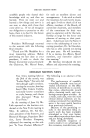
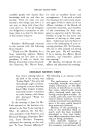
SWELLING OF HAIR IN MIXED AQUEOUS SOLVENTS 117 glycolate. It goes without further explanation that the dependence of swelling on pH, additives, tem- perature, and other variables, can be followed by this method. ACKNOWLEDGMENT We wish to express our indebted- ness to Dr. D. H. Powers of Warner- Hudnut, Inc. for helpful discussion and valuable suggestions in connec- tion with this work. REFERENCES (1) Taken in part from the thesis of Gabriel Barnett, to be submitted in partial fulfillment of the requirements for the degree of Master of Science in Chemistry, Polytechnic Institute of Brooklyn, June, 1952. (2) Preston, J. M., Nimkar, M. V., and Cundavda, S. P., J. Text. Inst., 42, T79 0951). (3) Chamberlain, N.H., and Speakman, J. B., Z. Elektrochemie, 37, 374 (1931). (4) Lloyd, D. J., and Marriott, R. H., Trans. Faraday $oc., 29, 1228 (1933) 30, 444 (1933). (5) E16d, E., and Silva, E., Z. physik. Chem., A137, 142 (1927). (6) Speakman, J. B., and Smith, S. G., J. $oc. Dyers and Col., 52, 121 (1936). (7) Jones, C. B., and Mechan, D. K., .4rch. Blochem., 2, 209 (1943). 240 ø ø 225 I- i / //// 0.25 O.• 0.75 Fig. 11 (8) Mellon, E. F., Korn, Ao H., and Hoover, S. R., J./ira. Chem. Sot., 71, 2761 (1949). (9) Speakman, J. B., and Stott, E., Trans. Faraday Sot., 30, 539 (1934) 31, 1425 (1935). (10) Proctor, H. R., and Wilson, J. A., J. Chem. $oc., 109, 307 (1916). (11) Sookne, A.M., and Harris, M., J. Res. Nat'l. Bur. Stand., 19, 535 (1937). (12) Alexander, P., /Inn. N.Y. /Icad. $ci., 53, 653 (1951). (13) Hambraeus, E., Steele, R. G., XII Internat'l Cong. Pure and Applied Chemists, N.Y., Sept. 10-13 (1951).
Purchased for the exclusive use of nofirst nolast (unknown)
From: SCC Media Library & Resource Center (library.scconline.org)