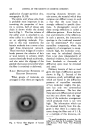
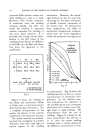
JOURNAL OF THE SOCIETY OF COSMETIC CHEMISTS always been found in infectious dandruff scales. In other words, it is present in every case of the infection, which is a most important consideration in determining the etiology of any infectious disease. Other mycologists have confirmed the observations of Malassez, such as Bizzozera (1884), (12), MacLeod and Dowling (1928) (13), Benedek (1930) (14), who described an organism associated with dandruff similar if not identical with Pity- rosporum ovale. Templeton (1926) (15) and Acton and Panja (1927) (16) also reported finding this organ- ism in dandruff scales, but did not actually establish its etiological relationship. This is confirmation of the fact that P. ovale is always present in infectious dandruff scales. It is of interest to note that the name of this organism means, liter- ally, "branny scales containing spore or seeds." "Pityro" means branny or branny scales, "sporum" means seed or spore, and "ovale" means egg-shaped or oval. The scientific name of the organism means "egg- shaped seeds in branny scales." It must be stated that this name originated many years ago, and was used to indicate the morphology of the organism and where it was observed, that is in the branny scales of dandruff. Although the etiological rela- tionship of P. ovale to infectious dandruff was indicated many years ago and for many years since, it is only recently that it has been finally proved to be the cause of this disease. There is, fortunately, a highly satisfactory criterion or set of rules by which the etiology of infections can readily be determined. This set of rules, first promulgated by Koch in 1882 and used by him in first determining the specific cause of tuberculosis, is known as Koch's postulates and it has been and still is used for determining the cause of infectious diseases. Koch's postulates, briefly stated, are as follows: 1. The specific micro6rganism must be present in every case of the disease (infection). 2. This specific micro6rganism must be isolated and grown in pure culture. 3. This specific micro6rganism, in pure culture, must, when inoculated into a susceptible animal, give rise to the disease (infection). 4. This specific micro6rganism must then be observed in and recovered from the experi- mentally diseased (infected) animal. Of the several micro6rganisms suspected as being etiologic agents of dandruff, only one of these satis- fied all of the conditions set forth in Koch's postulates. This one organism is now known and de- scribed as Pityrosporum ovale. This etiological relationship to dandruff was not immediately proved when this organism was first discovered, but during the years since then all of the requirements of Koch's postulates have been fulfilled. As stated previously, P. ovale by whatever name it was designated, has been consistently observed as present in all dandruff scales, that

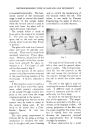
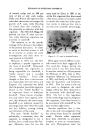
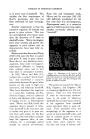
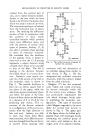
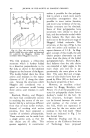
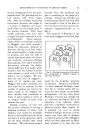
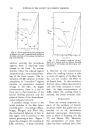
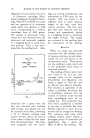
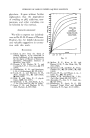
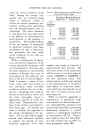
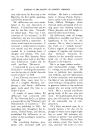
ETIOLOGY OF INFECTIOUS DANDRUFF 93 is, in every case of dandruff. This satisfies the first requirement of Koch's postulates, and this has been confirmed by later investiga- tors. Another requirement is that the causative organism be isolated and grown in pure culture. This was not accomplished until many years after the discovery of 1•. ovale in dandruff scales. Many mycologists have since isolated and grown this organism in pure culture and its characteristics have been fully de- scribed. Hodara and then Acton and Panj a (1927) (16) were the first to isolate and grow P. ovale in pure culture. Since this is a very fastidious micro- organism, these early investigators experienced difficulty in keeping their cultures alive, and in fact they died on subsequent transfers. In 1935, Moore and Kile (17), isolated the so-called "bottle bacil- lus," and established a causative relationship between this germ, when present on the scalp in high con- centr,ition, and infectious dandruff. They have described this organism as a yeast-like, budding, non-fila- mentous f•ngus, ovoid to spherical in form, and identical with a species of fungus known as Pityrosporum ovale. Moore and Kile found this organism always present in infec- tious dandruff scales and were able to isolate and grow it in pure cul- ture from such scales for the first time, also, they were able to actually keep the organism alive, in sub- cultures, for a prolonged period outside its natural environment. From this and subsequent work, Moore and his associates (18) (19) (20) definitely established for the first time that this microb. rganism, Pityrosporum ovale, is a causative agency of infectious pityriasis capiris simplex, commonly referred to as "dandruff." Figure II. Drawings of P. ovale in (A) budding cells in acute lesion, (B) thick-walled cells from chronic or treated lesions, (C) cells grown on wort agar, and (I)) enlarged cells grown on different media. The extensive research by Moore Kile, Engman, and Engman (19) is of especial significan:e in this con- nection. They not only observed P. ovale by microscopic examina- tions in all scales of infectious dandruff, but isolated many cultures of the organism from dandruff scales and grew them in pure cul- tures. They described fully the morphology of the organism as it occurs in acute dandruff scales, and also in cultures grown in various culture media. They then inocu- lated these pure cultures into the skin and scalp of human sub-
Purchased for the exclusive use of nofirst nolast (unknown)
From: SCC Media Library & Resource Center (library.scconline.org)