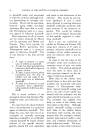
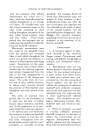
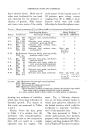
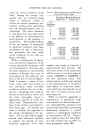
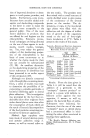
GERMICIDAL SOAPS AND COSMETICS 127 heart infusion broth. Both sets of tubes were incubated for one week and observed for the presence or absence of growth. Slide smears and stains were made of the media swab smears of the treated areas of 10 patients gave colony counts ranging from 20 to 2000 or more bacteria which were still viable following the hexachlorophene treat- TABLE 1--HExACttLOROPHENE (3%) XN PHIsoDERM© AS A PREOPERATIVE SKIN DISINFECTANT Swab Sampling Results Biopsy Findings Patient TotalCount Microscopic Findings TAT Broth BHI Broth J.C. BA 600 Gram-pos. cocci, sarcines-nonhemo- 0 0 FDA 560 lyric J.O. BA 2,800 Gram-pos. cocci, sarcines, strep., 0 0 FDA 2,700 non-hemol. gram-neg. bacilli H.E. BA 735 Gram-pos. cocci, sarcines, strep., 0 0 FDA 700 non-hemolytic E.K. BA 550 Gram-pos. cocci, sarcines, strep., Gram- pos. 0 FDA 600 non-hemolytic b a c i 11 i, hemolytic G.H. BAEstimated Gram-pos. bacilli gram-neg. bacilli 0 0 FDA as gram-pos. staph. yeast 17,000 T.Z. BA 150 Gram-pos. cocci, strep., non-hemol. 0 0 FDA 230 gram-pos. bacilli G.S. BA 45 Gram-pos. cocci, staph. weakly he- 0 0 FDA 53 mol. gram-pos.bacilli, (spreader) J.R. BA 90 Gram-pos. cocci, staph. non-hemol. 0 0 FDA 75 R.M. BA 40 Gram-pos. cocci, staph. non-hemol. 0 0 FDA 20 gram-pos. bacilli F.W. BA 775 Gram-pos. cocci, staph. non-hemol. Gram - po.s. Gram - po.s. FDA 815 c oc cl, co cc•, staph. staph. non-hemol. LEGEND: BA--Brain-heart infusion agar containing blood. FDA--Beef extract agar. TAT--Tween-asolectin-thioglycollate broth. BHI--Brain-heart infusion broth. Figures represent numbers of organisms (colonies) developing in agar media from swabs used in sampling treated skin areas of patients. 0--Culture medium failed to show evidence of visible growth of organisms. showing any evidence of turbidity which may have been indicative of bacterial growth. The results of this study are presented in Tables 1 and 2. Results. From the data. given in Table 1 it is evident that the treatment with hexachlorophene- detergent scrubs on two consecutive days will not result in a sterit.e operative area for surgery. The ment. Yet, a followup observa- tion on all these patients failed to reveal post-operative infections of the healed incisions which could be attributed to improper "steriliza- tion" of the operative sites. The data presented in Table 2 clearly demonstrates that patients prepared with hexachlorophene de- tergent and then treated with Tinc- ture ofZephiran © just prior to opera-

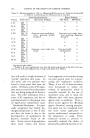
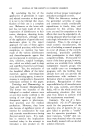
128 JOURNAL OF THE SOCIETY OF COSMETIC CHEMISTS TABLE 2--HExACHLOl•OrHENE (3%) IN rHIsoDEgU,© FOLLOWED BY TINCTUl•E ZErHII•AN© (1:1000) IN THE PKEOPEKATIVE DISINFECTION OF THE SKIN Swab Sampling Results Biopsy Findings Patient Total Count Microscopic Findings TAT Broth BH! Broth J.B. BA 0 -- 0 0 FDA 0 H.G. BA 0 -- 0 0 FDA 0 S.O. BA 0 -- 0 0 FDA 0 J.R.* BA 95 Gram-pos. cocci, staph. hemo- Gram-pos. cocci, staph. hemo- FDA 60 lytic gram-pos. baccilli, lytic gram-neg. diplococci, hemolytic hemolytic F.A. BA 0 -- 0 0 FDA 0 A.W. BA 0 -- 0 0 FDA 0 C.R. BA 0 -- 0 0 FDA 0 E.W. BA 30 Gram-pos. cocci, staph. non- Gram-pos. bacilli, 0 FDA 85 hemol. non-hemolytic E.N. BA 0 -- 0 0 FDA 0 G.P. BA 0 -- 0 0 FDA 0 M.D. BA 0 -- 0 0 FDA 0 See legend under table 1. * Patient J. R. was a herniotomy case, thus the sterile preparation of the skin in the case may be met with some difficulty due to larger and deeper hair follicles. tion will result in a high incidence of "sterile" operative skin areas. In this series only two patients were found to have areas that were not sterile. Of these a count of 95 organ- isms were recovered from the patient who was being prepared for herniot- omy. The other individual, with a count of 85 organisms, and the re- maining patients in this group were all laparotomy (abdominal) cases. Germicidal Deodorants. It is gen- erally recognized that freshly dis- charged perspiration is free of odor and that the latter is due to the decomposition of perspiration by bacteria normally found on the skin. In the control of perspiration odors many creams and lotions have appeared on the market during the past several years for counter- acting this unpleasant condition. Many, if not all, of these products were formulated to reduce the volume of perspiration which is normally excreted by the use of aluminum salts, and to mask the offensive odor with more pleasant agents such as perfumes. Thus, a direct action against the offending agents (bacteria) causing perspira- tion odors was not considered until the more recent application of certain antibacterial compounds to the deodorants or soaps. These chemicals served to prevent or materially reduced the ability of perspiration-splitting bacteria to act
Purchased for the exclusive use of nofirst nolast (unknown)
From: SCC Media Library & Resource Center (library.scconline.org)