THE ETIOLOGY OF INFECTIOUS DANDRUFF* By GEORGE 12. REm)•S. Lambert Pharmacal Company, Division of The Lambert Company, St. Louis, Mo. INFECTIOUS DANDRUFF, or pityriasis capiris, is recognized pro- fessionally as a disease of the scalp resulting in the formation of white or grayish and usually slightly greasy scales. The specific cause of this infection has been the sub- ject of much research over a period of many years. While different authorities have at one time or another implicated one or more specific micro6rganisms, they have generally concurred in the infectious nature of this condi- tion. Since the scalp is exposed to external contamination, more than one microSrganism is frequently present in dandruff scales and some authorities have taken the view that the condition may be a mixed in- fection. The infectious nature of the disease has been generally accepted even by those who were not con- vinced as to the specific etiological agent. This has been true at least since 1874 following the early studies of dandruff by Malassez (1). * Presented at the May 15, 1952, Meet- ing, New York City. 90 The present consensus is that dandruff is a pathological condition. In answer to the question, "Is ordinary dandruff without apparent scalp disease or symptoms, except the appearance of dandruff on the clothing, a physiological-or patho- logic condition?" the •ournal of the •lmerican Medical •lssociation (2) answered, "Dandruff is gener- ally considered a pathologic condL tion." Goodman (3), in a careful review of the subject, stated that the three types of organisms associated with dandruff and variously described as the "bottle bacillus," the "flask bacillus," and the "balloon bacillus" by the earlier dermatologists are all the same and recognized now as the causative agent of dandruff, namely Pityrosporum ovale. According to Savill, (4) this organism invades the epidermis resulting in scaling of the horny layer. Microscopic examination of the scales showed the bottle bacillus in the scales and also staphylococci between the scales. MacKee and Lewis (5) found Pityrosporum ovale on 70 per cent

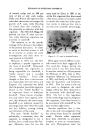
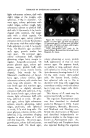
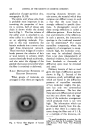
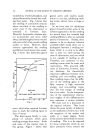
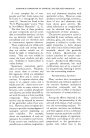
ETIOLOGY OF INFECTIOUS DANDRUFF 91 of normal scalps and on 100 per cent of dry or oily scaly scalps. Kelly and Adook (6) reported that seborrheic dermatitis encourages the growth of P. ovale, while Dowling (7) found that this condition is due primarily to infection with this organism. Also Mitchell-Heggs (8) pointed out that P. ovale and cer- tain other infectious organisms are involved in dandruff. The question its to the specific etiology of the disease is the subject of the present discussion. In order to arrive at the final answer, it will be of interest to review the early investigations and then more re- cent research in this field. Malassez in 1874 was the first to implicate a specific •rganism as the Cause of dandruff. Sabouraud (9) considered two organisms as being responsible fi•r dandruff, a "white coccus" and a so-called "bottle bacillus." Unna (10) thought at first that a micrococcus was responsible, but later Unna and Engman (l l) expressed the belief that the peculiar yeast-like organism known as the "bottle bacillus" is an important factor in infectious dandruff. These various investiga- tors and others have agreed, how* ever, that whatever the exact cause, dandruff is an infection caused by microi•rganisms that infect the scalp and hair follicles, causing scaling and irritation of the scalp. The term "bottle bacillus" is, technically, a misnomer, since the organism so designated is not a bacillus, but a small yeast-like fun- gus. However, since this was the term used by Unna in 1891 to de- scribe this organism first discovered a few years earlier, it has been useful to retain the name but with quota- tion marks to indicate that this is not the true scientific terminology. Figure I.--P. ovale in dandruff scales. Here again several different scien- tific names have been suggested this yeast-like fimgus during the years since it wits first discovered. It wits first classed its a Pi(vrosporum by Malassez in 1874, then as Pity- rosporum ,1Ialassezi by Sabouraud in 1895, and finally its Pityrosporum ovale by Castellani and Chalmers in 1913. This lltst name is the one now used to designate the small fimgus which hits been observed to be associated with dandruff since 1874. The fact is that regardless of the terminology used to designate this organism, it hits been known to be associated with dandruff for the past seventy-eight years. Another significant fact is that this is the only micro6rganism that has always been found in dandruff scales. Certain other organisms have been observed as secondary invaders or even as contaminants, but only Pilyro•porum ovale has
Purchased for the exclusive use of nofirst nolast (unknown)
From: SCC Media Library & Resource Center (library.scconline.org)