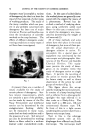
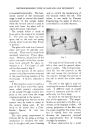
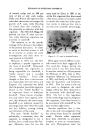
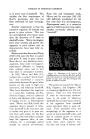
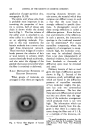
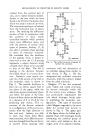
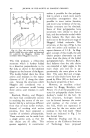
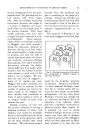
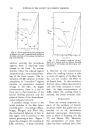
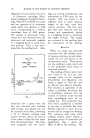
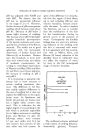
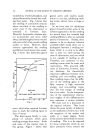
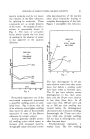
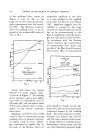
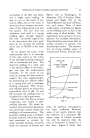
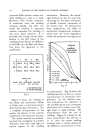
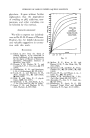
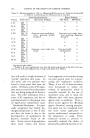
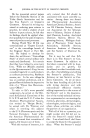
PHOTOMICROGRAPHIC STUDY OF HAIR SOILS AND DETERGENCY 83 is mounted horizontally. The hori- zontal control of the microscope stage is used to control the lateral movement of the sample holder while the vertical control is used to raise and lower the glass cell in which the action takes place. The sample holder is made of brass and is the shape of an inverted U. The arms are about one inch apart and on the ends are spring clamps which hold the fiber firmly in position. The glass cells used are of several types and must be specially con- structed. They may be made from standard laboratory Pyrex glass- ware. However, the portion of the cell in the path of the lens system must have optically fiat glass ce- mented to it. Two types of cells will be illustrated in Fig. 2. The next portion of the optical system is the objective lens mounted in the usual focusing medium of the microscope. A 16-min. objective is used. A 10X pairplan ocular is used as a part of the Leitz micro-ibso eqtdp- ment which permits observation of the sample through a prism eye- piece at the same time the image is being projected to the camera. The coupling from the ibso to the camera must be made to adapt to the camera being used. In the work to be shown here a Clue- Kodak Special 16 min. was employed. The only power requirement is 110-volt AC for the lamp, a stirring mechanism to circulate the solu- tion in the glass cell, and a heating unit to control the temperature of the solution within the cell. The stirrer is one made by Eastern Engineering, the speed of which is controlled by a suitable rheostat. Fig. 2 ]'he type of cell illustrated on the left is that used for general deter- gency studies. The stirring mecha- nism fits into the reservoir at the side and causes the circtdation of the solution through the portion of the cell in which the action takes place. The cell on the right is used studying the action of the bubbles of suds. A different type of sample mount is necessary and the cell it- self is only 1 or 2 min. deep. So much for the detailed descrip- tion of the apparatus. The magni- fication as recorded on the film or as viewed at the eyepiece is 60X. Of course, projection of the film onto the screen magnifies this many times but if viewed from the normal distance the impression received is approximately that of looking through the eyepiece. If direct observation by a small

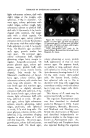
84 JOURNAL OF THE SOCIETY OF COSMETIC CHEMISTS group is desired instead of a motion picture, the camera and ibso are replaced by a suitable eyepiece in the microscope and a translucent screen used. The adaptation of this equip- ment to the study of other processes involving the action of liquids on single fibers is obvious. The optical system could be the same, the only changes being those required in the cell in which the action takes place. To show how this instrument works we have selected portions from two motion pictures. The first of these was prepared to show the difference in action on human hair between a soap shampoo and one made from an alkyl sulfate. The second portion is from a film prepared 'for the laundry trade. Here thread is used instead of hair and occasionally there is reference to a wash-wheel, but the picture represents the best photography of this type. REFERENCE (1) J. Soc. CosMwrlc CHEM., 2, 219 (1951) EXPERIMENTAL LOSS OF HAIR* By PETER FLESCH, M.D., Ph.D. Atssistant Professor of Research in Dermatology, University of Pennsylvania, Philadelphia, Penna. THE PROBLEM of common male baldness has given rise to more speculation and less objective ex- perimentation than almost any other problem in dermatology. One of the main reasons for failure to con- duct objective studies elucidating the etiology of common baldness has been lack of a suitable experi- mental tool. Prior to 1948, there was no organic compound known * Presented at the May 15, 1952, Meeting, New York City. t This work was done under a Damon Runyon Senior Clinical Fellowship and with the assistance of a grant from The Com- mittee on Research, Council on Pharmacy and Chemistry, American Medical Associa- tion. which would cause loss of hair in man as well as in animals. This situation changed abruptly beginning with World War II. At that time it was noted in the rapidly expanding synthetic neoprene rub- ber industry that many workers lost their hair in the polymeriza- tion plants where chloroprene, the parent substance, was converted to neoprene. This baldness was always reversible, involved the scalp only, and was not accompanied by any localized or generalized toxic symptoms. The offending compounds were identified as the intermediary (so-
Purchased for the exclusive use of nofirst nolast (unknown)
From: SCC Media Library & Resource Center (library.scconline.org)