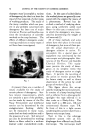
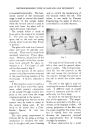
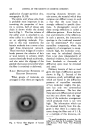
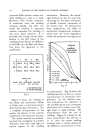
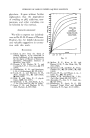
84 JOURNAL OF THE SOCIETY OF COSMETIC CHEMISTS group is desired instead of a motion picture, the camera and ibso are replaced by a suitable eyepiece in the microscope and a translucent screen used. The adaptation of this equip- ment to the study of other processes involving the action of liquids on single fibers is obvious. The optical system could be the same, the only changes being those required in the cell in which the action takes place. To show how this instrument works we have selected portions from two motion pictures. The first of these was prepared to show the difference in action on human hair between a soap shampoo and one made from an alkyl sulfate. The second portion is from a film prepared 'for the laundry trade. Here thread is used instead of hair and occasionally there is reference to a wash-wheel, but the picture represents the best photography of this type. REFERENCE (1) J. Soc. CosMwrlc CHEM., 2, 219 (1951) EXPERIMENTAL LOSS OF HAIR* By PETER FLESCH, M.D., Ph.D. Atssistant Professor of Research in Dermatology, University of Pennsylvania, Philadelphia, Penna. THE PROBLEM of common male baldness has given rise to more speculation and less objective ex- perimentation than almost any other problem in dermatology. One of the main reasons for failure to con- duct objective studies elucidating the etiology of common baldness has been lack of a suitable experi- mental tool. Prior to 1948, there was no organic compound known * Presented at the May 15, 1952, Meeting, New York City. t This work was done under a Damon Runyon Senior Clinical Fellowship and with the assistance of a grant from The Com- mittee on Research, Council on Pharmacy and Chemistry, American Medical Associa- tion. which would cause loss of hair in man as well as in animals. This situation changed abruptly beginning with World War II. At that time it was noted in the rapidly expanding synthetic neoprene rub- ber industry that many workers lost their hair in the polymeriza- tion plants where chloroprene, the parent substance, was converted to neoprene. This baldness was always reversible, involved the scalp only, and was not accompanied by any localized or generalized toxic symptoms. The offending compounds were identified as the intermediary (so-

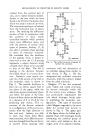
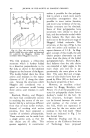
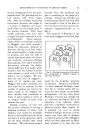
EXPERIMENTAL LOSS OF HAIR 85 called /•) polymers or dimers of chloroprene. These volatile, cyclic by-products, formed in the poly- merization process, temporarily in- terfered with hair growth. When painted on the skin of laboratory animals, at the site of application the dimers caused the hair to fall out with the roots after a latency period of eight to twelve days. These changes were always rever- sible. in spite of extensive re- search, the exact composition of the compounds which caused loss of hair among the industrial workers, is still unknown. Similarly, it has never been decided whether it was inhalation of the vapors or direct contact with the fumes which led to baldness. Although the chloroprene dimers are very potent and relatively non- toxic depilatory compounds, they offer little promise of becoming cosmetically useful. The dimers are rather unstable, very irritating, and have an offensive odor. Their chemistry is far from clarified. Purification of the potent crude mixtures invariably resulted in dim- inution or loss of depilatory po- tency. In spite of these short- comings, the chloroprene dimers proved extremely useful tools in the investigation of experimental baldness. They are the forerunners of an increasingly large group of depilatory compounds with certain common chemical and pharmaco- logic properties. In attempting to clarify the mode of action of the dimers of chloro- prene, we have found that after a short incubation period they in- activated the free sulfhydryl groups of a number of tissue proteins and of sulfhydryl compounds. The in- activation could be strikingly dem- onstrated also by histochemical methods. We pogtulated that the sulfhydryl inactivation was in some way related to the depilatory ac- tivity. If this assumption were correct, it should have followed that other chemically related sulfhydryl inhibitory compounds should pos- sess a depilatory action, similar to that of the dimers. In view of the fact that the --C = C-- groups appeared to be the reac- tive groups in the. dimer molecule, by combining with free sulfhydryl groups according to the equation: --HC•CH-- -f RSH -• RS--CH--CH•, we tested a large number of lipoid- soluble, unsaturated compounds on laboratory animals. Among these compounds a number of allyl esters and ethers caused hair loss that was similar in every respect to the bald- ness caused by the chloroprene di- mers. Although the allyl derivatives had the advantage over the dimers of being stable, they were considerably less potent and distressingly toxic, even after local application. Nevertheless it was of consider- able theoretical interest that local application of compounds as dif- ferent as the chloroprene dimers and the allyl derivatives, resulted in the same type of reversible hair loss. It became obvious that in- terference with hair formation was a common property of a large num-
Purchased for the exclusive use of nofirst nolast (unknown)
From: SCC Media Library & Resource Center (library.scconline.org)