98 JOURNAL OF THE SOCIETY OF COSMETIC CHEMISTS all the test animals. Definite im- provement resulted in an average of 3.7 days and complete disap- pearance of the symptoms was noted in an average of 12 days after treat- ment was started. Skin scrapings were also negative for Pityrosporum ovale in an average of 12 days. 4. The above constitutes con- clusive evidence as to the etiology of infectious dandruff. REFERENCES (1) Malassez, t., "Note sur le champignon de la pelade," ztrch. de physio. norm. et path., 1, 203 (1874). (2) "Queries and Minor Notes: Dandruff," your. Atmer. Med. •lssoc., 133, 734 (1947). (3) Goodman, H., "Cosmetic Dermatol- ogy," New York, McGraw-Hill Book Co. (1936), pp. 312-322. (4) Savill, A., "The Hair and Scalp," 3rd edition, Baltimore, Williams and Wil- kins (19,[4), pp. 153-168. (5) MacKee, G. M., and Lewis, G. M., Invest. DermatoL, 1, 131 (1938). (6) Kelly, D. E., and Arlook, T. D., Indiana State Med. Soc., •13, 1088 (1950). (7) Dowling, G. B., Brit. y. Dermatol., 51, 1 (1939). (8) Mitchell-Heggs, G. B., Brit. Med. y., 2, 1079 (1951). (9) Sabouraud, R., "Maladies du cuir chevelu Les maladies seborrheigues. Seborrhee, acnes, calvitie," Vol. I, Paris, Masson & Cie (1902), pp. 106. (10) Unna, Quoted by Hodara, M.. Etude sur le diagnostic bacteriologique de l'acne, 5*. d. real. cutan. et syphilol., 6, 516 (1894). (11) Unna and Engman, M. F., quoted from from Hodara, M., Ibid. (21) (12) Bizzozero, J., "Ueber die Mikrophyten der normalen Oberhaut des Menschen," I•irchows •lrch. f. path. •lnat., 98, 441 (1884). (13) MacLeod, J. M. H., and Dowling, G. B., "An Experimental Study of the Pityro- sporon of Malassez: Its Morphology, Cultivation, and Pathogenicity," Brit. y. Dermatol., 40, 139 (1928). (14) Benedek, T., "Cryptococcus Malassezi (Pityrosporum Malassezi Sabouraud, 1895)," Zentralbl. f. Bakt. (Abt. I), 116, 317 (1930). (15) Templeton, H. J., "A Study of Dandruff and of Pityrosporon of Malassez," •lrch. Derma)ol. & SyphiloL, 14, 270 (1926). . (16) Acton, H. W., and Panja, G., "Sebor- rhoeic Dermatitis or Pityriasis Capitis: A Lesion Caused by the Malassezia Ovale," Indian M. Gaz., 62, 603 (1927). (17) Moore, M., and Kile, R. L., "Pityro- sporum Ovale as a Causative Agent of Seborrheic Dermatitis," Science, 81, 277 (1935). (18) Moore, M., "Cultivation and Study of Pityrosporum Ovale, the So-Called Bottle Bacillus of Unna," Atrch. Der- matol. & Syphilol., 31, 661 (1935). (19) Moore, M., Kile, R. L., Engman, M. F., Jr., and Engman, M. F., "Pityro- sporum Ovale (Bottle Bacillus of Unna, Spore of Malassez)," Ibid., 33, 457 (1936). (20) Kile, R. L., and Engman, M. F., "Fur- ther Studies of the Relation of Pityro- sporum Ovale to Seborrheic Eczema," Ibid., 37, 616 (1938). Durfee, T., and Cousins, R. F., "Prac- tical Tests of Dandruff Preparations. Standard Remedies," 22, 3 (1936). (22) Report to Lambert Pharmacal Co. by Applied Research Laboratories, Inc. (T. Durfee and R. F. Cousins), entitled "The Therapeutic Efficacy of Listerine in the Treatment of Seborrheic Derma- titis, Dandruff." (23) Hodges, J.P. S., Brit. Med. y., 2, 225 (1951).

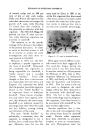
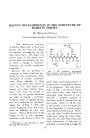
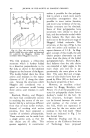
RECENT DEVELOPMENTS IN THE STRUCTURE OF KERATIN FIBERS* By R•e•^• STEELE Textile Research Institute, Princeton, New •7ersey THE MOLECULAR structure of keratin fibers such as wool and human hair has been the object of extensive investigation for the past thirty years. This paper will review some of the recent work in this field and describe one way in which a change in molecular structure can modify mechanical properties. Keratin, like all proteins, is composed of chain molecules pro- duced by the condensation poly- merization of a-amino carboxylic acids. About eighteen of these amino acids have been found in wool (16, 27). The amino acids present and their relative abun- dance vary from one protein to another, but all protein molecules are alike in having a polymeric backbone chain of peptide groups such as is indicated by the heavy zigzag line of l•'ig. 1. The side chains projecting from this back- bone are different for each acid present. Almost 50 per cent of the weight of wool or hair represents material in side chains, so that the *Presented at the December 6, 1951, Meeting, New York City. H.•xc•NH XNH '•CH•, 9 øo" -•i .... • iCH S CH 2 o.O CHa I OH Fig. 1 .--The backbone polypeptide chain common to proteins with side chains typical of human hair and wool. amino acids which predominate in a protein have considerable influence on its properties. The side chains shown in Fig. 1 are those of amino acids which have been found in reasonably large amounts in wool. Actually a complete analysis of the amino acids in keratin has not been made. Some $ to 10 per cent of the protein is not accounted for in the quantities of various amino acids which have been found. More- over, the order in which the known acids occur along the chain mole- cules has not been discovered, but some information of this sort is gradually accumulating through the 99
Purchased for the exclusive use of nofirst nolast (unknown)
From: SCC Media Library & Resource Center (library.scconline.org)