TALKING OF PERFUMES AGAIN opoponax, sesqui terpene alcohols and esters, sandalwood, vetivert and patchouli oils. These are now more easily identified as they are no longer masked by the more volatile light and medium odours lost during the period of standing. The examination is made mainly by a contrasting scheme. The perfume is gently rubbed into the back of the left hand (for right-handed people), this to allow freedom for writing and manipulation of the normal hand. The heat of the hand and the moisture present combine to provide a miniature but effective "steam-distillation" apparatus. The volatile products float gently but quickly from the hand and in perhaps twenty minutes have reached a stage of evaporation which might require 24 hours on the blotter. During this time a smelling slip is dipped into the perfume and constant reference to this, the hand and the three-day-old smelling slip, provides the necessary odour contrast so essential as a memory stimulant. Perhaps a seemingly small point, but the method of dipping the perfume is important. Firsfly, try to keep your technique automatically constant. Make your identification marks on the lower end of the slip in a position which will not be seen during examination. This to avoid an unconscious desire to cheat-- a most unhelpful practice. Pinch the end of the slip to form about three- quarter inch of channelling. Smell directly into this channel which concen- trates and directs the odours to the nose. Make sure the perfume does not brush the nose. It has also the advantage of keeping all the papers of a similar appearance as often the slip is dipped into the neck of a small bottle and pouring on to the slip may be a wasteful procedure. Often a difference in colour between original and experimental samples may make it difficult to avoid visual recognition. The first step is to identify the class of perfume involved. In too many cases the name, even when of a well-known floral character, may be mislead- ing, but the important thing is to "get into the mind" of the original com- pounder. Try to fathom just what he had in view. Florals, although varying immensely even for each named type, usually follow some basic pattern and it is not too difficult to strip a perfume of its fineries and to reach this basic accord. Complicated bouquets and fancy creations may be quite another matter and a more searching and critical examination is called for. This may require segregation of the .basic floral notes. Here again we are faced with the fact that ready blended floral perfumes may have been used or, alter- natively, the floral effects may have been brought about by the use of similar type ingredients as shown in the earlier table. Should we be dealing with a fairly simple floral perfume such as lilac, we can automatically expect to encounter phenyl ethyl alcohol, hydroxy- citronellal, anisaldehyde, heliotropin, terpineol and a j asmin complex. Perhaps we have a perfume on our shelves which is reminiscent of the sample. 19I

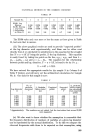
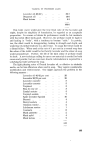
JOURNAL OF THE SOCIETY OF COSMETIC CHEMISTS A comparison between the two will soon show where the balances differ, which ingredients are excessive or deficient. In any case, we already know from experience how to compound something at least similar in odour to the sample. The compounding of the experimental sample is often tedious and time- consuming, and should be the work of a reliable junior or trainee, and in this connection the handling and blending of these samples is excellent training. Although the final production of a perfume on both laboratory and factory scale must be on a weight basis (on account of variation in specific gravities of the ingredients) it is often time-saving to work by volume where possible during earlier trials. The question of order of adding the ingredients may be important and special attention has to be given to the dissolving of solids where present. In earlier trials it is not always necessary to add the less odorous materials until the imitation reaches a reasonable standard. When one is dealing with a well-blended perfume and identification of the ingredient or even type is difficult, the previously mentioned association of ideas comes in handy. Each and every perfumer will have his or her own particular odour associations and will know the ingredients responsible for these effects. Towards the end of the evaporation life of a perfume I repeatedly meet a "cardboard" note, which is the result of a heliotropin- vanillin combination. Chrysanthemum-like odours arise from the use of phenyl acetate with certain essential oils, notably lavender. Wet bathing costumes is another of my association notes, and this inevitably means the presence of the anisyl odour grouping, e.g., anisaldehyde, anisyl alcohol or acetate. A Plasticine note invariably means the presence of amyl salicylate. One final odour which says "corduroy trousers" to me I can never describe to others and, quite frankly, I have yet completely to identify it to myself. So much for what, I must emphasise, is rarely the sincerest form of flattery. USING OUR FINISHED PERFUMES One may, of course, produce a range of perfumes and let the consumers try them out for themselves in their various preparations. This is, however, a far from satisfactory approach, satisfactory that is to either producer or consumer. I have, in a previous talk, mentioned some of the problems involved in producing perfumes for soaps, creams, lotions and powders. These are real and difficult problems indeed and call for both skill and knowledge: knowledge of both the perfumery ingredients and the final preparation. Perhaps an example of how one type of perfume must be modified for different products would be of interest. Let us select the popular lavender odour for this example. For use in toilet water, that is a preparation basically 5 per cent lavender perfume, 80 per cent alcohol and 15 per cent water, we could make a simple and effective blend as follows: 192
Purchased for the exclusive use of nofirst nolast (unknown)
From: SCC Media Library & Resource Center (library.scconline.org)