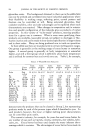
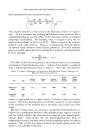
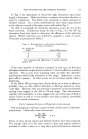
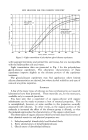
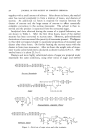
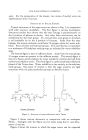
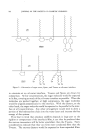
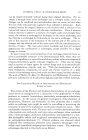
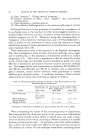
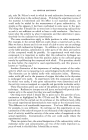
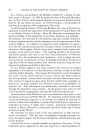
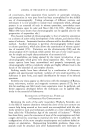
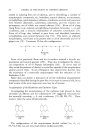
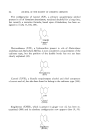
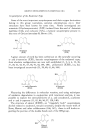
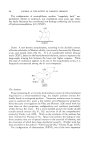
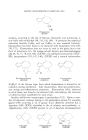
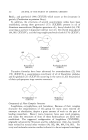
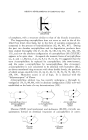
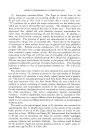
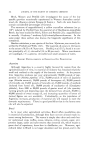
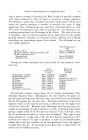
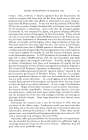
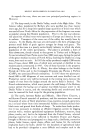
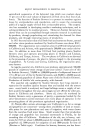
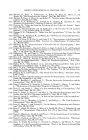
NEW SILICONES FOR THE COSMETIC INDUSTRY 235 fluid represented by the structural formula: o o [1 Me Me Me II COCH2 Si--O(Si•)• SiCH2OC n 5- 0 OH Me Me Me •OH The simplest structure in this series is the disiloxane, where n is equal to zero. As n is increased the resulting fluid behaves more and more like a dimethylpolysiloxane and the effect of the salicylate radical on physical properties is diminished. For example, when n is equal to zero, the vis- cosity of the polymer is 33.2 cs. at 25øC. When n equals 4 the viscosity drops to a low value of 18 cs. Then, as n increases the viscosity follows an upward trend similar to other silicone polymers. If n were infinitely great, we would expect that the resulting fluid would be indistinguishable from its analogue, Me Me3SiO(SiO).SiMe3 n --• •o Me The effect of the salicylate group is still evident, however, in a polymer containing 12 dimethylsiloxane units. A fluid of this length is compared with a dimethylpolysiloxane fluid in Table 1. Note that the salicylate TABLE 1--TYPICAL PROPERTIES OF SALICYLATE END-BLOCKED FLUIDS COMPARED TO DIMETHYL POL¾SILOXANE FLUID Specific Surface Viscosity, Freezing Refractive Gravity, Tenelan, Fluid C•olor cs of :75 C• Point Index, :75 C• 25 C•/25 C• dyne/cm Sollcylate end- water 27.2 --75 C 1.4348 1.025 23.5 blocked white Dimethyl poly- water 20 --60 C 1.4000 0.955 20.5 siloxone white radical is responsible for a higher density, refractive index and surface tension. The lower freezing point is probably caused by an interruption of the symmetry of the molecule due to the bulky ring at each end of the chain. Because of these facts any salicylate end-blocked dimethylsiloxane is likely to be a compromise,between a fluid predominantly organic in nature and one which exhibits the characteristics expected from dimethylpoly- siloxane fluids. These fluids, like the dimethylpolysiloxane fluids of comparable viscosity, are water-white liquids possessing rather low surface tensions. Due to this low surface tension, the fluids spread easily and deposit a non-oily film on the skin.

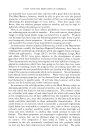
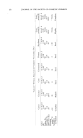
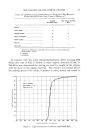
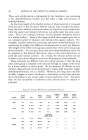
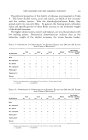
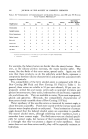
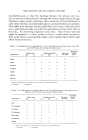
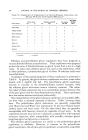
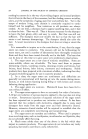
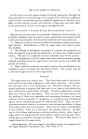
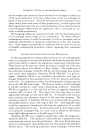
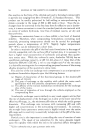
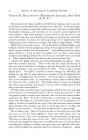
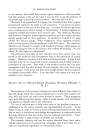
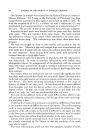
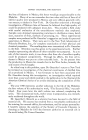
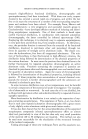
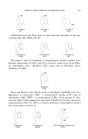
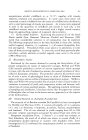
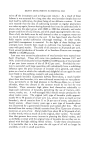
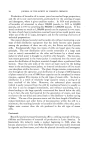
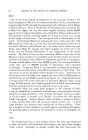
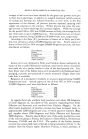
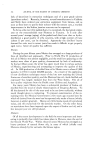
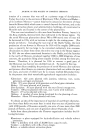
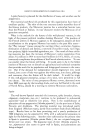
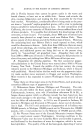
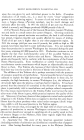
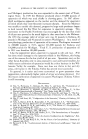
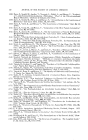
236 JOURNAL OF THE SOCIETY OF COSMETIC CHEMISTS The salicylate end-blocked fluids contain an organic ester linkage. In this respect they differ from the products we will discuss later where the ester contains a carbon-oxygen-silicon linkage. In general, the organic ester linkage is much more stable toward hydrolysis than the carbon- oxygen-silicon linkage. If hydrolysis should take place, however, the products are likely to be salicylic acid and a high molecular weight di- methylpolysiloxane. TABLE 2--COMPARISON OF COMPATIBILITY OF SALICYLATE END-BLOCKED FLUIDS AND 200 FLUIDS WITH VARIOUS MATERIALS* Solicylote Dow Corning 200 Fluid End Blocked Fluid** 20cs Beeswax ...................................... C Lanaiin ...................................... C Mineral Oil ................................... C Petrolotum ................................... C Paraffin ..................................... C Ozokerite .................................... C Sesame oil ................................... i Tested at room temperature as a m•x made up of 1 part sd•cone to 10 parts material listed. M%S•O Content -- 12 units. C--compat•ble •--incompohble TABLE 2A--CoMPARISON OF COMPATIBILITY OF SALICYLATE END-BLocKED FLUIDS AND 200 FLUIDS WITH VARIOUS MATEKIALS* Solicylote Dow Corning 200 Fluid End Blocked Fluid** 20 cs Dow Corning •.00, 100 cs ....................... Dow Corning 555 .............................. Water ...................................... ?0% Isoproponol ............................. 95 % Ethanol .............................. 99% Isoproponol ............................. Ethylene glycol ............................... Propylcnc glycol .............................. Tested at room temperature os o m,x mode up of 1 port s,hcone to lO ports material hsted Me,S•O Content-- 12 umts C---compatible i--incompatible
Purchased for the exclusive use of nofirst nolast (unknown)
From: SCC Media Library & Resource Center (library.scconline.org)