RECENT DEVELOPMENTS IN ESSENTIAL OILS 293 research (high-efficiency fractional distillation, chromatography and spectrophotometry) had been introduced. With these new tools, terpene chemistry has entered a second rapid era of progress, and within the last five or six years the structures of a number of the most puzzling sesquiter- penes and azulenes have been solved. For example, •orm, Herout and their collaborators--a very progressive and successful research group in Czechoslovakia--have developed efficient methods of isolating and identi- fying sesquiterpene compounds. One of their methods is based upon careful fractional distillation, in combination with repeated adsorption chromatography, the latter controlled by infrared spectroscopy (146). Employing this technique, it is relatively easy to separate sesquiterpenes, in very pure form and without loss, from complex mixtures. In the labora- tory, the particular fraction is removed from the essential oil by fractional distillation, dissolved in petroleum ether and percolated through ten times its quantity of strongly active aluminum oxide. The eluate con- tains the hydrocarbons, free from all oxygenated admixtures. The mix- ture of hydrocarbons is then fractionated in high-efficiency columns, the distillation being followed by determination of the physical properties of the various fractions. In most cases the portions thus obtained have to be further fractionated by repeated adsorption chromatography on active aluminum oxide. Fractions containing the compound in question are dissolved in petroleum ether and chromatographed over one hundred times the quantity of adsorption medium. Again the course of chromatography is followed by determination of the physical properties, including infrared spectra. If these properties show accumulation of several chemical com- pounds the mixture is further chromatographed until the substances are obtained in absolutely pure form. In some instances distillation even at low temperatures may be harmful to certain components of the essential oil under investigation--for example, oils of chamomile or wormwood. In such cases the oil is not distilled, but is diluted with petroleum ether and submitted directly to repeated chromat- ographic separation. Mere fractionation by distillation is not suited to the separation of oxy- gen-containing sesquiterpenes. The experience of gorm, et al., has shown that in such cases repeated adsorption chromatography with a great excess of only slightly active aluminum oxide gives much better results. It has also been found that for the actual identification of the separated sesquiterpene compounds infrared spectrophotometry offers an almost ideal tool, particularly in view of the fact that only very small quantities of the material (20 to 30 milligrams) are required. The method can also be used most successfully for the elucidation of the structural formulas of the isolated compounds. Taking advantage of these new techniques gorm and his associates suc-

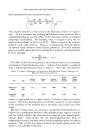
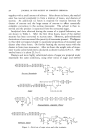
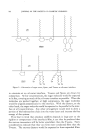
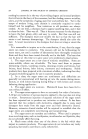
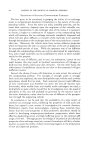
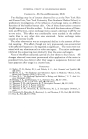
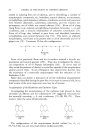
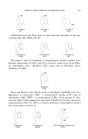
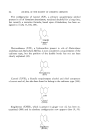
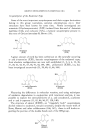
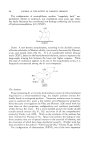
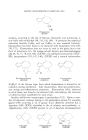
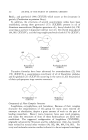
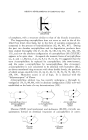
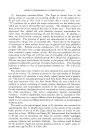
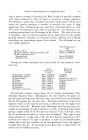
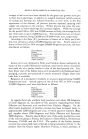
294 JOURNAL OF THE SOCIETY OF COSMETIC CHEMISTS ceeded in isolating from oil of calamus, and in identifying, a number of sesquiterpenic compounds, viz., humulene, natural elemene, ar-curcumene, caryophyllene, natural guaiene, selinene, d-cadinene, acorone and isoacorone (two isomeric diketones), calamen•ne, calacorene, and two tricyclic ses- quiterpenes, one of which was named calarene (154). From oil of ylang ylang gorm, et al., isolated caryophyllene, humulene, farnesene 3,-, & and e-cadinene, and a tricyclic hydrocarbon of unknown constitution (73). From oil of hops they isolated in pure form, and identified, humulene, caryophyllene and natural farnesene (64, 155). The latter, an aliphatic sesquiterpene, was found to be present also in oil of chamomile and oil of ginger root (72). Farnesene (I) has this configuration: Farnesene (i) From oil of patchouly gorm and his co-workers isolated a bicyclic ses- quiterpene and natural guaiene (150). They also investigated the chemi- cal composition of oil of Populus balsamifera (161). In carrot seed oil they noted the presence of daucol, a crystalline epoxide of the sesquiterpene alcohol carotol (144). In oil of bergamot they observed for the first time the occurrence of a monocylic sesquiterpene with the structure of 1-•- bisabolene (146). Space does not permit a discussion of all the individual sesquiterpenic compounds identified during the past five or six years in essential oils, but a brief review of the more important ones may be of interest. Sesquiterpenes of the Bisabolene and Cadinene Types Investigating the sesquiterpenes of the cadinene type present in Java citronella oil, Herout and his collaborators (74? suggested structures for the naturally occurring 3,-, & and e-cadinenes (75) (II, III, IV). These isomers yield the same dihydrochloride. •y-Cadinene &Cadinene •-Cadinene (II) (III) (IV) The configurations of the sesquiterpene alcohol cadinol (•-, •-, 3'-) (V, VI, VII),.too, are now much better understood (144).
Purchased for the exclusive use of nofirst nolast (unknown)
From: SCC Media Library & Resource Center (library.scconline.org)