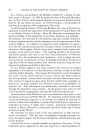
RECENT DEVELOPMENTS IN ESSENTIAL OILS 307 case of quite a number of essential oils, Brazil could not possibly compete with those produced in the Far East as primitive cottage industries. Nevertheless, a great deal of progress has been made lately in Brazil and today the country produces a number of essential oils, some in large quantities, from wild-growing trees and from cultivated plants as well. The recent developments have been stimulated by a few pioneers, out- standing among them Joao Dietberger in Sao Paulo. The bulk of the oils is exported some are absorbed eagerly and at high prices by the rapidly growing domestic industries of consumers' goods, inflation and exchange restrictions not permitting imports from abroad. The following oils are now chiefly exported: Total Production in 1955 Oil Bols de Rose ................................... Almost 1,000,000 lb. Oil Ocotea cymbarum (Brazilian Sassafras Oil) .......... Almost 1,750,000 lb. Oil Mint (Mentha arvensis) Dementholized .................................. Almost 300,000 lb. Menthol Cryst ................................... Almost 265,000 lb. Among the newly developed oils, used mostly by the domestic indus- tries, are: Total Production in 1955 Oil Eucalyptus citriodora .......... About 150,000 lb. Oil Eucalyptus globulus ........... About 13,000 lb. Oil Sweet Orange ................ About 15,000 lb. Oil Lemon ...................... About 7,000 lb. Oil Vetiver ...................... About 1,100 lb. Oil Lemongrass .................. About 5,000 lb. Oil Citronella ................... Lost by frost Oil Palmarosa ................... About 1,700 lb. Oil Ocimum gratissimum .......... About 2,000 lb. Estimated Production for 1956 165,000 lb. 40,000 lb. Increased quantity (?) Increased quantity (?) 1,200 lb. 35,000 lb. 4,500 lb. 4,500 lb. 4,500 lb. Of particular interest among these oils is Ocimum gratissimum (ram. Labiatae), Eugenol Type. Belonging to the mint family, this plant can be cultivated and harvested like any mint the yield of oil varies between 88 and 132 pounds per acre per year. Principal constituent of the oil is eugenol, which can be isolated and used as substitute for the eugenol de- rived from clove oils. Recently Jogo Dierberger and his associates suc- ceeded in developing, by plant selection, a strain of Ocimum gradssirnum giving a higher yield of oil (0.5 per cent instead of 0.3 to 0.4: per cent), the oil containing as much as 74: per cent of eugenol. This type is now being planted on a large scale, with the first harvest expected in 1957. Growers even hope to be able to produce so much oil of Ocimum gratis- sireurn that some day vanillin can be manufacturered from the eugenol isolated from this oil. At the present time Brazil has to import 20 to 25 metric tons of vanillin per year.

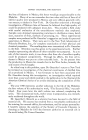
308 JOURNAL OF THE SOCIETY OF COSMETIC CHEMISTS Formosa ,4. Citronella Oil. The citronella oil industry of Formosa made a modest beginning in 1912, when a single root stock was introduced from Java. In the course of the ensuing years production was gradually in- creased, with all the oil absorbed by the newly established industry of aromatic isolates in Japan. It was only after the end of World War II that Formosa appeared on the international market as the world's heaviest supplier of citronella oil, by far outranking Guatemala and Java. In 1953, for example, Formosa produced about 4.5 million pounds of this oil, which quantity of course brought about a sharp decline in prices and practically forced the growers and distillers in Guatemala out of business. Formosa can easily underbid other countries because its entire citronella industry is based upon primitive family and cottage operations, with no consideration for wages, overhead expenses, etc. If some day Formosa should be unable to supply the world market with citronella oil, for example, on account of political difficulties, the price of this important oil would undoubtedly rise sharply. It is for this reason that the American essential oil industry has every interest in encouraging producers in Gautemala by paying prices that leave at least some return. B. Orthodon linalooliferum Oil. Another interesting development that has lately taken place in Formosa is the experimental cultivation of Ortho- don linalooliferum Fujita, an herb of the family Labiatae, which can be planted and harvested like any mint. Yield of oil is approximately 50 pounds per acre. The oil contains about 80 per cent of d-linalool hence it offers good possibilities as a source for the isolation of natural linalool. As such, it could perhaps replace the Brazilian oil of bois de rose which is distilled from the wood of wild growing trees. In other words, the linalool could be obtained from herb material cultivated on regular plantations. Further experimentation is required to arrive at a definite conclusion as to the quality of this linalool. Fralloee Lavender and Lavandin Oils. In the south of France lavender oil is still produced partly from wild growing and partly from cultivated plant ma- terial. Collection of the wild growing plants being a difficult, backbreak- ing and expensive task, many attempts were made in the early twenties to cultivate the true lavender (Lavandula oflicinalis Chaix) on regular plantations, where the plants could be harvested and transported to near-by distilleries without too much trouble. Unfortunately, however, most of these attempts failed because the fields decayed prematurely, i.e., only a few years after planting, thus causing considerable loss to the growers. (It takes about three years to bring a newly planted lavender field into full productivity, and a healthy field should last at least eight years to
Purchased for the exclusive use of nofirst nolast (unknown)
From: SCC Media Library & Resource Center (library.scconline.org)