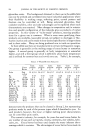
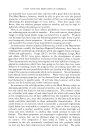
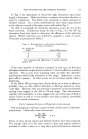
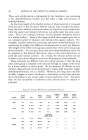
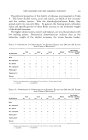
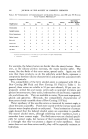
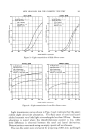
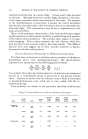
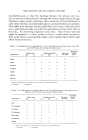
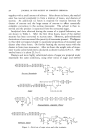
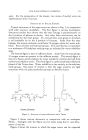
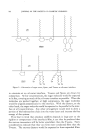
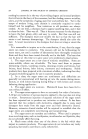
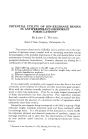
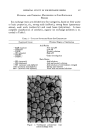
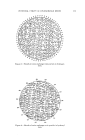
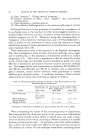
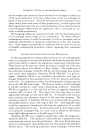
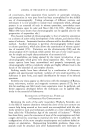
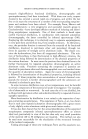
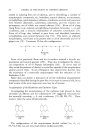
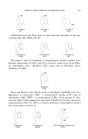
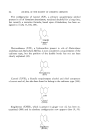
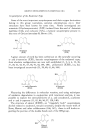
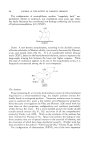
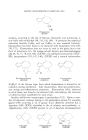
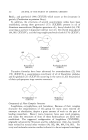
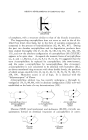
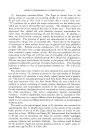
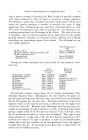
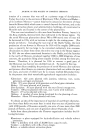
THE SUGAR ESTERS IN COSMETICS 251 ester. For the preparation of the diester, two moles of methyl ester are employed per mole of sucrose. STRUCTURE OF SUGAR ESTERS Typical structures of the sugar esters are shown in Fig. 1, in comparison with other nonionic emulsifiers. The first figure is sucrose mono61eate. Structural studies have shown that the ester linkage is predominantly on the 6 position of glucose as shown. Any other fatty acid moiety can be substituted for the oleyl group. If a second fatty acid group is attached, it will probably be on the 6 position of fructose. Aside from the ester linkage, the sucrose molecule contributes 10 oxygen atoms for water solu- bility. Seven of these are hydroxyl groups. This contribution is equivalent to a minimum of 10 ethylene oxide groups, as indicated by water solubility data. The bottom figure is that of raffinose oleate. Aside from the ester group, 15 oxygen atoms are present in the raffinose moiety. The second figure is that of a Tween, which employs for water solubility a hexitan derived from sorbitol and ethylene oxide. The third figure is a polyoxyethylene alkylated phenol of the Triton class. Water solu•bility is due entirely to the ethylene oxide groups. One point of interest is that the sugar moieties are rigid structures while the polyoxyethylene groups are flexible chains. CHz =0 Sucrose •/•tearate •0 Tween Oh Figure 2.--Structure of sucrose distearate and a Tween. Figure 2 shows sucrose distearate in comparison with an analogous Tween. Analogies with the Spans can be made using the tri-and tetra- esters of sucrose. Figure 3 shows the manner in which the sugar esters can be expected

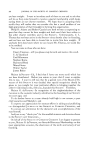
252 JOURNAL OF THE SOCIETY OF COSMETIC CHEMISTS \ ( ( ( ß 0// Water 0/I o J•-o o co co $ OH 0 Water OH • (OH •H • OH Figure 3.--Orientation of sugar esters, Spans, and Tweens at oil-water interfaces. to orientate at an oil-water interface. Tweens and Spans are drawn for comparison. At low concentrations, the sugar molecule would be expected to lie flat, covering as much of the oil-water interface as possible. When the molecules are packed together, at high compression, the sugar molecules would be aligned perpendicular to the interface. With the diesters, on the other hand, the sugar molecule would be expected to lie parallel to the inter- face at all concentrations. Any other arrangement would tend to draw a portion of the hydrocarbon chain into the water layer and increase the free energy of the system. If we bear in mind that emulsion stability depends in large part on the rigidity or compactness of the interfacial film, it can then be predicted that the sucrose monoesters will be better emulsifiers than the Tweens. Steric considerations indicate that they can form more condensed films than the Tweens. The sucrose diesters would be expected to form expanded films.
Purchased for the exclusive use of nofirst nolast (unknown)
From: SCC Media Library & Resource Center (library.scconline.org)