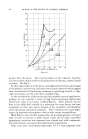
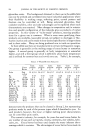
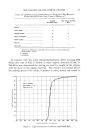
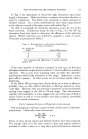
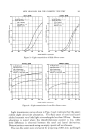
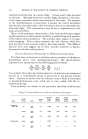
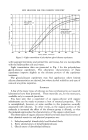
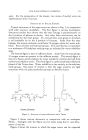
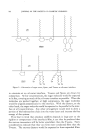
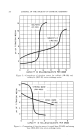
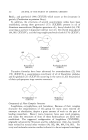
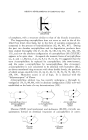
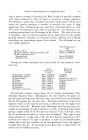
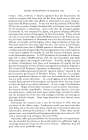
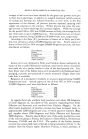
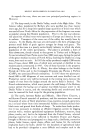
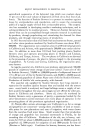
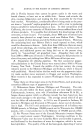
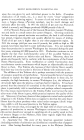
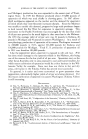
FATTY ACIDS AND DERIVATIVES IN COSMETICS 229 fractionated coconut or palm kernel fatty acids to give specific composi- tions with physical and chemical characteristics most desired in the choco- late industry. Further development of the field brought forth displaced glycerides (18-19) where given fatty acid components in the same oils could be ad- vantageously displaced with other fatty acids to yield glycerides having the desired chemical and physical properties. Hydrogenation to stabilize and increase the melting or softening point of the glyceride was considered as another step in the development of more desirable end products. Kernel oils hydrogenated to complete saturation began to be introduced in the trade and found use especially in the biscuit coating field. Many such modifications now exist for a variety of edible uses. Ester-ester exchange (20-23) or rearranged glycerides at random dis- tribution with subsequent hydrogenation brought forth still another variety of hard butters where not only the kernel oil was utilized, but also some of the domestic oils such as cottonseed oil were used in conjunction with the kernel oils. At the present time a highly developed and satisfactory assortment of lOO 90 80 70 o 60 2• 50 -- 4 40 30 0 õ 10 1õ 20 2õ 30 5• % TRIGLYCERIDE IN VEGETABLE OIL Ft•t•RE 2.

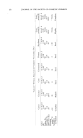
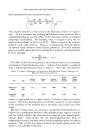
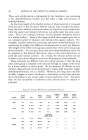
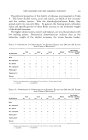
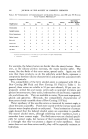
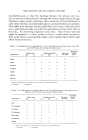
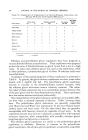
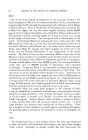
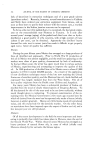
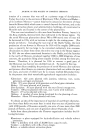
230 JOURNAL OF THE SOCIETY OF COSMETIC CHEMISTS glycerides exists. The background obtained in their use in the edible field can now be utilized and correlated into many industrial applications where their flexibility in melting range, softening point, crystal pattern and fracture can be controlled at will. Being saturated glycerides, their oxidative stability, color and odor advantages can be exploited where such characteristics are required. Mere changes in composition and/or orienta- tion and specific configuration of the molecule give us products of varied properties. In this variety of "tailor-made" products, meeting specifica- tions for a given use is common. What is even more gratifying, these products are available, reasonably priced, not subject to shortages or fluc- tuation in price and can be made toyour desired specification in largevolume and in short order. Many are being produced now in tank car quantities. In their edible use they are manufactured in certain melting point ranges. One group is generally at the melting range of cocoa butter or somewhat higher. A second group is generally at body temperature or somewhat higher, and still a third group which is definitely above body temperature and is utilized for summer heat and torrid zone use. Table 1, for example, TABLE 1--HARD BUTTER ANALYSIS Corn- Corn- Corn- Com- Corn- Corn- Cocoa position position position position position position Butter A B C D E F Color Pale 35.0/3.8 20.0/2.7 20.0/3.7 15.0/2.0 15.0/2.0 15.0/2.5 yellow ffa 0.5 0.05 0.05 0.05 0.02 0.01 0.08 I.V. 35-40 3.0 1.3 3.0 2.4 2.3 1.9 Sap. No. 190-200 234.0 240.5 242.4 239.0 235.4 239.0 M.P. w., øF. 82-96 112.3 100.0 102.9 108.3 109.8 104.0 I.F., øF. 82-89 94.6 90.0 89.6 90.0 94.6 90.3 S. P., øC. 29-31 34.3 29.6 30.5 29.5 32.7 31.4 M.P., cc., øF. 92-96 116.0 101.8 103.5 112.0 113.0 105.5 Caproic, % .. 0.15 0.18 0.12 0.11 Caprylic, % .. 13177 3.16 5170 3.86 4.31 3.89 Capric, % .. 1.62 3.66 3.72 3.19 3.73 5.72 Lauric, % .. 41.89 40.43 44.13 48.10 3&. 18 33.43 Myristic, % 18.87 19.45 16.02 14.06 15.40 13.44 Palmitic, % 2414 14.08 13.52 12.52 6.15 11.43 18.07 Stearic, % 35.4} 22.77 19.63 19.91 24.46 31.83 25.44 Unsat., % 40.2f demonstrates the products that can be classed in Group 2, but representing products made by each of the process types which I described to you. In each product, however, the lower or higher melting point characteristics can be controlled quite easily. The cosmetic industry, for example, for years has used cocoa butter for any number of uses such as lipstick, creams, ointments, dye vehicles, lubri- cants, etc. Cocoa butter has been used despite the many inherent short- comings which it contains. The advantages of cocoa butter have made its
Purchased for the exclusive use of nofirst nolast (unknown)
From: SCC Media Library & Resource Center (library.scconline.org)