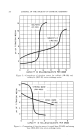
POTENTIAL UTILITY OF ION-EXCHANGE RESINS 263 cent by weight resin, seemed to depend primarily on the degree of adherence of the resin combination to the skin, rather than on the ion exchange ca- pacity of the resin mixture. Since the minimum duration of protection was about twelve hours with some of these preparations, it would appear that Ikai's experiments point the way to the formulation of new deodorant prod- ucts with greater effectiveness per application than is possessed by cur- rently available preparations. The foregoing studies are concerned entirely with the deodorizing action of ion exchange resins, singly and in combination. To obtain effective antiperspirant action, it would be necessary to add an astringent such as aluminum chlorhydrate or aluminum sulfocarbolate to the resin formula- tion. Such reagents can probably be combined with the resins by the use of suitable compounding procedures without impairing their adsorption activity. FACTORS AFFECTING COMPOUNDING PROCEDURES In selecting appropriate compounding techniques Gr ion exchange poly- mers, it is necessary to consider the physical and chemical properties which control their ability to adsorb the malodorous components of perspiration. These factors can be seen more clearly by using as a model one of the resin combinations shown to be effective in Ikai's studies. The combination of the carboxylic exchanger, Amberlite XE-64, and the strongly basic quater- nary amine anion adsorbent, Amberlite XE-98 (IRA-411) is a good ex- ample. Amberlite XE-64 is an insoluble polycarboxylic acid type ex- changer produced by the copolymerization of divinyl benzene and metha- crylic acid. It is supplied as a white, free flowing powder having a particle size in the 300-400 mesh range. The physical stability of this exchanger is entirely satisfactory under usual compounding conditions. Amberlite XE-64, as supplied, is in the acid Grin and has an apparent dissociation constant (pK) of about 4.0. This means that the resin does not have appreciable exchange activity below pH 4.0. As the pH of the environ- ment increases, the adsorption activity of the resin also increases. The saturation capacity of Amberlite XE-64 is not attained until the environ- mental pH reaches a value in the range of 10.0-11.0. Such high pH values would be experienced immediately Gllowing the application of an alkali soap to the surface of the skin. As shown previously by the titration curve of a carboxylic exchanger (Fig. 5), a resin such as Amberlite XE-64 pos- sesses high buffering capacity in the pH range of 5.0-6.0. Amberlite XE-98 is now supplied commercially under the designation, Amberlite IRA-411. This quaternary amine polymer is prepared by first copolymerizing styrene and divinyl benzene. The resin beads thus pro- duced are subsequently chloromethylated and then treated with dimethyl- ethanol amine. The resulting quaternary amine exchanger evolves from

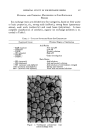
264 JOURNAL OF THE SOCIETY OF COSMETIC CHEMISTS this reaction in the form of the chloride salt and is furnished commercially in particle size ranging from 20 to 50 mesh (U.S. Standard Screens). This product can be readily pulverized by ball milling or micropulverizing to obtain a powder in the range of 300 to 400 mesh or finer. Since the ex- changer must be converted to the free base form for effective use in deodor- ants, it is more convenient to treat the standard particle size material with an excess of sodium hydroxide, rinse free of residual caustic, air dry and then pulverize. Quaternary ammonium bases as a class exhibit a low level of thermal stability. Therefore, when compounding formulations containing such materials, processing temperatures should not be carried for prolonged periods above a temperature of 50øC. Slightly higher temperatures (60ø-70øC.) can be tolerated for a short time. In order to maintain the pH of the final resin formulation in the range of 5.0-6.0, compatible with the surface pH of normal skin, it is necessary to have a higher total concentration of carboxylic acid groups than quater- nary amine sites. While the carbox¾1ic resin, Amberlite XE-64, has an equilibrium exchange capacity, at pH 5.0-6.0, about 1.5 times that of the Amberlite IRA-411 (XE-98), a two to one weight ratio* of the two resins is a desirable starting point for compounding purposes because of the strong alkaline properties of the quaternary amine resin. The activity of the ion exchange resin components in an antiperspirant- deodorant formulation depends upon the following factors: (a) Degree of dissociation of the functional groups in the desired pH range of 5.0-6.0. (b) The rate of exchange or the rapidity with which the resins reach equilibrium with the ionizable components of perspiration. (c) The affinity of the various malodorous constituents for the exchange sites of the resins. (d) The rate of migration of ions through the vehicle employed as the compounding base. A carboxylic exchanger reacts similarly to any weak organic acid in that the rate of displacement of the hydrogen ion is slow at the lower end of the effective pH range, i.e., the minimum pH value at which the acidic groups dissociate. This exchange rate increases with increasing pH and with higher salt concentrations in the surrounding environment. In contrast, the strongly basic quaternary amine resin is highly ionized over the entire pH range and its reactivity is essentially independent of the pH of the reac- ting medium. Particle size is also important in controlling the rate of reaction of resin exchangers. The speed of ion adsorption by the resins depends largely upon the rapidity with which the ions to be adsorbed diffuse throughout * 2 parts carboxy]ic resin, 1 part quaternary amine resin.
Purchased for the exclusive use of nofirst nolast (unknown)
From: SCC Media Library & Resource Center (library.scconline.org)