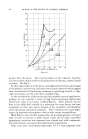
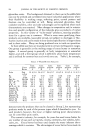
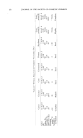
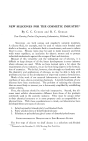
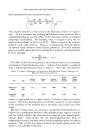
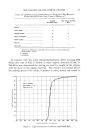
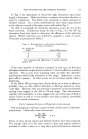
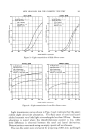
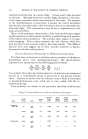
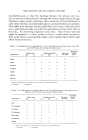
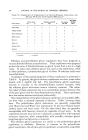
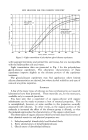
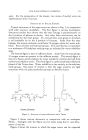
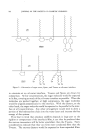
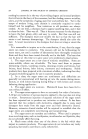
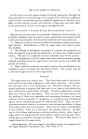
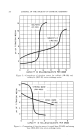
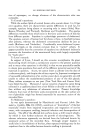
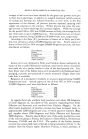
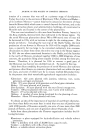
NEW SILICONES FOR THE COSMETIC INDUSTRY 247 • eo ,( 4o _ Cell = Standord Path Lenth: 1 cm /' • / low Me•SiO content medium MG•SiO •ntent ./ •- • high M•SiO cantent / // / 220 240 260 280 300 320 340 360 380 400 420 V•AVE LENGTH, rmlhrnicrons Figure 5.--Light transmission of polyethylene glycol-siloxane copolymers. with isopropyl myristate and animal fats and waxes, but are incompatible with the hydrocarbon oils and waxes. Light transmission data are presented in Fig. $ for the polyethylene glycol-siloxane copolymers. The absorption characteristics of these copolymers improve slightly as the siloxane portion of the copolymer increases. The glycoLsiloxane copolymers may find application where limited silicone characteristics are desired, but where alcohol solubility and ease of removal are prime requisites. SUMMARY A few of the many types of silicones we have synthesized in our research laboratories have been presented. These materials are, for the most part, available only in research quantities. You have seen that a copolymer of an organo-silicone with organic substituents can be made to possess a host of unusual properties. This is accomplished, however, at some sacrifice to the properties normally associated with silicones. In other words, as the organic portion of the molecule is increased the effect of the siloxane group is diluted so that the molecule approaches the characteristics of the organic substituent. The three types of organo-silicones which have been described in terms of their chemical reactivity and physical properties are: 1. Salicyloxymethyl dimethylsilyl end-blocked fluids 2. Fatty alcohol esters of dimethylpolysiloxane 3. Glycol esters of dimethylpolysiloxane

248 JOURNAL OF THE SOCIETY OF COSMETIC CHEMISTS All of these materials are more compatible in conventional cosmetic in- gredients than the dimethylpolysiloxane fluids. The salicylate end-blocked fluids may find use as a water repellent sunscreen material in suntan lotions. The wax-like fatty alcohol esters may be useful in solid preparations such as lipstick and lip pomade. The glycol-siloxane esters, because of their un- usual solubility characteristics, may be useful where their hydrolyric in- stability can be used advantageously. Each of these new silicones is capable of being modified in a variety of ways. Furthermore, it is possible to add still other groups to the siloxane molecule. Thus, the number of silicones potentially available is great. The actual number used, however, is limited only by the ingenuity of the silicone chemist in synthesis and the ability of the cosmetic chemist to define the characteristics he desires. SOCIETY COSMETIC CHEMISTS GILTMORE HOTEL, NEW YORK CITY MAY 18, 1956 REGISTRATION 9:00 A.M. PRESENTATION OF PAPERS 9:30 A.M. MEETING OPEN TO MEMBERS AND NON-MEMBERS The Society of Cosmetic Chemists Meeting to be held at the Biltmore Hotel, New York City, May 18, 195G, will offer the following program: "The Behavior of Perfumery Materials in Thioglyeolate Solutions," E. Sagarin and 3/1. Balsam. "The Measurement of Static Charge on Hair," It. Henkin, V. C. Ester and C. Nlills. "A New Permanent Waving Process," R. E. Reed. "The Use of Iodophors in Cosmetics," A. Cantor, fl. Nlost and M. Shelanstri. "The Analysis of Lipstieks," Paul W. Jewel. "Laboratory Evaluation of Potential Caries-Preventive Agents in Dentifrices, S.D. Gershon, O. W. lgeiditch and D. J. Martin. "Some Practical Problems in the Formula- tion of Aerosol Hair Sprays," It. R. Shepherd.
Purchased for the exclusive use of nofirst nolast (unknown)
From: SCC Media Library & Resource Center (library.scconline.org)