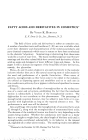
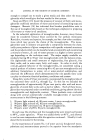
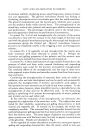
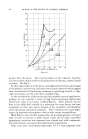
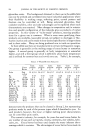
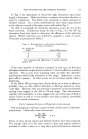
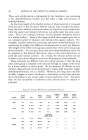
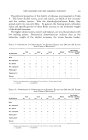
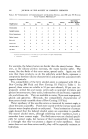
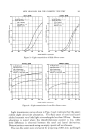
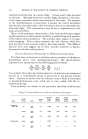
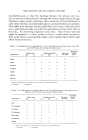
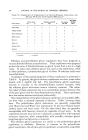
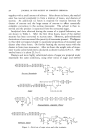
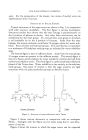
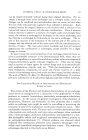
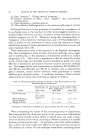
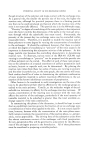
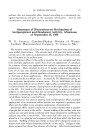
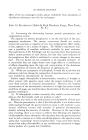
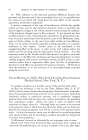
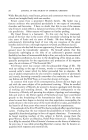
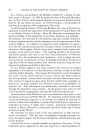
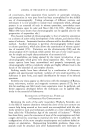
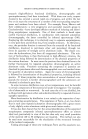
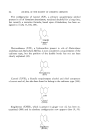
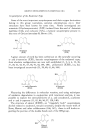
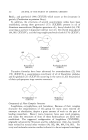
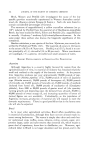
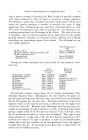
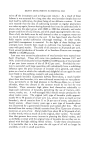
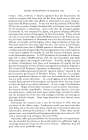
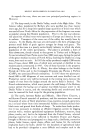
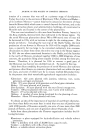
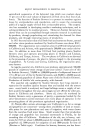
RECENT DEVELOPMENTS IN ESSENTIAL OILS 297 Sesquiterpenes of the Eudesmol Type Some of the most important sesquiterpenes and their oxygen derivatives belong to this group (santalene, santalol, alantolactone, etc.) their structures have been known for some time. Newly investigated are artemisin (8-hydroxysantonin) (XIX) isolated from the seed of Atrtemisia maritima (144), and carissone (XX), a ketonic sesquiterpene present in the roots of Carissa lanceolata R. Brown (19). ¾7,o O:C 0 Artemisin Carissone (XlX) (XX) A great amount of work has been carried out on the naturally occurring a- and 3-santonins (XXI), lactonic sesquiterpenes of the eudesmol type their absolute configurations are now well established (1, 2, 3, 4, 12, 36, 37, 39, 41, 43, 45, 65, 66, 91, 92, 144, 184). •-Santonin (XXII), too, has been investigated extensively (31, 38, 40, 45, 46, 144). o I I O--C--O O:C--O and •-Santonin •k-Santonin (XXI) (XXlI) Measuring the differences in molecular rotation, and using techniques of oxidative degradation in conjunction with rotational analysis, it was possible to explore the stereochemistry of a- and 3-eudesmol, a-selinene and a- and •-cyperone (11, 85, 86, 96, 97, 138, 140). The structure of elemol (XXIII), an "irregularly built" sesquiterpene alcohol related to eudesmol, remains uncertain, despite the recent work of •orm, Herout and other collaborators (166, 167) there is still doubt re- garding the position of the double bonds and of the OH group. Elemol (XXIII) (?)

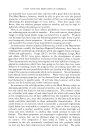
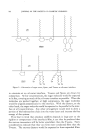
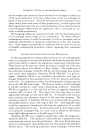
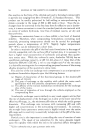
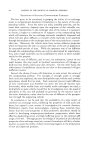
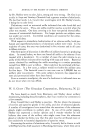
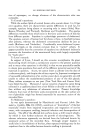
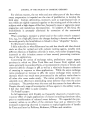
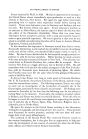
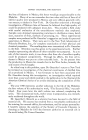
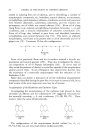
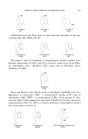
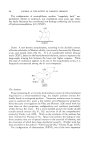
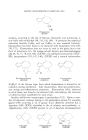
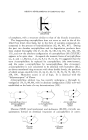
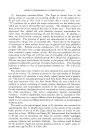
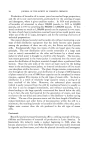
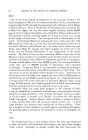
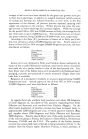
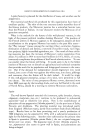
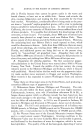
298 JOURNAL OF THE SOCIETY OF COSMETIC CHEMISTS The configuration of eremophilone, another "irregularly built" ses- quiterpene related to eudesmol, was established some years ago (144), but lately Geissman has contributed new findings confirming the structure of hydroxyeremophilone (61) (XXIV). OH i i I I Hydroxyeremophilone (xxlv) Iresin: A new ketonic sesquiterpene, occurring in the alcoholic extract oflresine celosioides (a Mexican shrub), was recently discovered by Djerassi, et aL, and named iresin (50, 51). It is of considerable interest because iresin (XXV), based on the bicyclofarnesol skeleton, seems to represent the long-sought missing link between the lower and higher terpenes. While this type of cyclization appears to be rare in the sesquiterpene series, it is frequently encountered among the di- and triterpenes. • / C---O HO%I , ItOH•C CH• Iresin (xxv) The .4zulen e s These interesting bi- or tricyclic hydrocarbons consist of a five-membered ring fused to a seven-membered ring the simpler azulenes contain five double bonds in conjugated position. Numerous azulenes occur in nature, some in essential oils quite a few exhibit anti-inflammatory properties. Since the early investigations by Pfau and Plattner (128) much work has been done on their properties, configurations and synthesis, particularly within the last five years. For a more detailed picture the reader should consult several surveys (63, 67, 132) and most of all the comprehensive review by Treibs, et aL (180). Work on the synthesis of the azulenes has been reviewed by Thomas (174). Space here permits the listing of only those azulenes that are of special interest to the essential oil chemist, and the structures of which have been elucidated recently. (Earlier work has been described in the author's "The Essential Oils," Volume II, pp. 127 if.) The configuration of chamazulene (XXVI), one of the most important
Purchased for the exclusive use of nofirst nolast (unknown)
From: SCC Media Library & Resource Center (library.scconline.org)