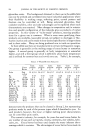
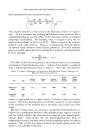
THE SUGAR ESTERS IN COSMETICS :253 As a consequence, they would be poorer emulsifiers than the Spans, but good demulsifiers and good antifoaming agents. SURFACE ACTIVITY OF THE SUGAR ESTERS Surface and interfacial tension values for the sugar esters in comparison with other surfactants are shown in Table 2. It can be seen that the TABLE 2--SURFACE AND INTERFACIAL TENSION VALUES Or NONIONIC SURFACTANT SOLUTIONS AT ROOM TEMPERATURE Surface Tension at 0.1%, Dynes/cm. Interfacial Tension at 0.1% rs. Nujol, Dynes/cm. Sucrose laurate 33.7 7.9 Sucrose myristate 34.8 7.0 Sucrose palmitate 33.7 6.2 Sucrose stearate 34.0 7.7 Sucrose oleate 31.5 5.0 Tall oil-polyoxyethylene con- densate 41.0 7 2 Polyoxyethylene-polyoxypropylene condensate 48.0 16.1 Tween 20 37 7.5 Tween 40 41 10.5 Tween 60 44 11.5 Tween 80 42 11.0 values obtained with the sugar esters are quite comparable to those obtained with other useful non ionics. The foaming tendencies of the sucrose esters decrease with an increase in the size of the fatty acid group. Sucrose monolaurate is a moderate roamer while sucrose monostearate and the diesters are essentially non- roamers. The wetting properties of the sucrose esters also decrease with an increase in the size of the hydrocarbon chain. Thus sucros.e monolaurate is the best wetting agent and sucrose monostearate is the poorest. In general, the monoesters are fair wetting agents. Stable emulsions are readily prepared using combinations of sucrose monoesters and the Spans or glyceryl monostearate. The ratio of mono- ester to the nonsugar esters depends upon whether an ofw or w/o emulsion is required. All of the sucrose monoesters are good detergents, built for heavy duty detergency and comparable to sodium dodecylbenzene sulfonate. ADVANTAGES OF THE SUGAR ESTERS IN COSMETICS Modern technology has provided the cosmetic chemist with a wealth of raw materials for his creams, lotions, aerosol sprays and cosmetic sticks. He can make selections from a very wide variety of natural and synthetic gums, emulsifiers, oils, dyes, perfumes and flavors. There appears to be

254 JOURNAL OF THE SOCIETY OF COSMETIC CHEMISTS nothing he cannot do in the way of providing elegant and unusual products that will excite the fancy of the consumer, heal her chafing, remove wrinkles, odors, and the symptoms of aging, paint her and perfume her. Yet in the tempo of modern living, each chemist is constantly required to outdo himself and his neighbors. New variations in old products are always needed. At one time, a shampoo had to appear sparkling clear, and it had to clean the hair. That was all. Then it became necessary for the shampoo to leave the hair glossy, silky and easy to comb. But that was still not suflScient. The shampoo must now modify the hair so that the hair will retain a curl between shampooings. The shampoo should also color the hair. A recent innovation is the shampoo that does not sting or smart the eyes. It is reasonable to inquire as to the contribution, if any, that the sugar esters can make to cosmetics. The answers will not be forthcoming for many years, not until a number of laboratories have thoroughly evaluated them and they have been tested clinically and in the field. The best that can be done at this time is to give some very preliminary observations. 1. The sugar esters are a new class of nonionic emulsifiers. Some are water-soluble, others are oil-soluble. We have used them to prepare lubricating creams, vanishing creams, cleansing creams and lotions, hair lotions, hand lotions, baby lotions, ointments and toothpastes. Stable products have been prepared with a minimum of effort, indicating that they are good emulsifying agents for use in cosmetic products. 2. As a class, the sugar esters are nonroamers and diflSculties are generally not encountered with beating air into the creams during manu- facture, or with lotions foaming during filling or with lotions and creams lathering during application. 3. The sugar esters are nontoxic. Mammoth doses have been fed to rats without ill effect. 4. The sugar esters appear to have an extremely low order of irritation. A 10 per cent solution of sucrose stearate applied to the eyes does not sting or smart. Intravenous injection of aqueous solutions of the sugar esters has been reported not to produce any irritation or redness. It has been reported that two subjects with dermatitis, allegedly due to soap, used detergent bars made from the sugar ester and their dermatitis cleared. However, extensive clinical studies will be required to establish that the sugar esters are completely nonirritating and nonsensitizing. 5. The sugar esters are tasteless and odorless. When used in prepara- tions involving taste, such as toothpastes, mouthwashes and lipsticks, they do not adversely affect ttavo• ing. 6. Much more subtle than any of the above is the feel which they impart to cosmetic products. The sugar esters do not introduce any tacky sensation, but tend to contribute a soft, velvety feel.
Purchased for the exclusive use of nofirst nolast (unknown)
From: SCC Media Library & Resource Center (library.scconline.org)