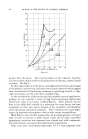
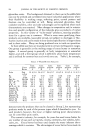
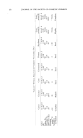
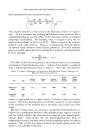
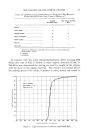
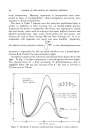
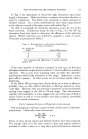
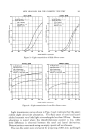
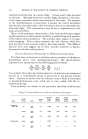
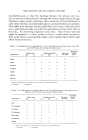
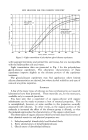
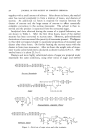
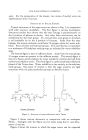
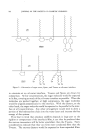
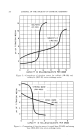
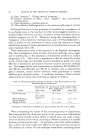
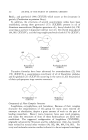
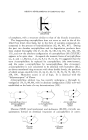
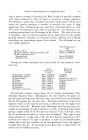
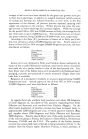
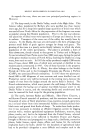
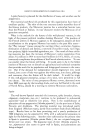
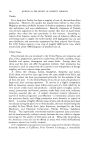
NEW SILICONES FOR THE COSMETIC INDUSTRY 239 In Fig. 2 the dependence of ultraviolet light absorption upon chain length is illustrated. Methyl salicylate, a common ultraviolet absorber, is used for comparison. The fluids were evaluated as dilute solutions in absolute ethanol. As a result, determinations were made using ethanol as the reference instead of the empty quartz cell used for Fig. 1. No shift in wavelength for maximum absorption occurs for any of the fluids examined. Calculations using the data in Fig. 2 for the 305 mu absorption band were made to determine the efficiency of the salicylate radical. Methyl salicylate was arbitrarily assigned a value of unity. These data are presented in Table 3. TABLE 3--EFFECTIVENESS OF SALICYLATE END-BLOCKED FLUIDS AS SUNSCREEN No. of Me2 SiO Units Order of Effectiveness* 4 ..................... 1.13 8 ..................... 0.86 12 ..................... 1.68 * As compared with effectiveness of methyl salicylate rated as 1.0. If the same quantity of salicylate is present in each case, we find that the higher molecular weight silicone is about 1.7 times as effective as methyl salicylate. This is even more surprising when one finds that dimethyl- polysiloxanes exhibit little absorption in this range. Apparently a syner- gistic effect is present. In other words, we do not know exactly what is happening. In the 290 to 320 mu range these silicone fluids are at least as effective, probably more so, than methyl salicylate in filtering destructive ultra- violet light. However, they are relatively transparent to the less harmful, tanning wave lengths in the 350 to 370 mu range. This characteristic together with insolubility in water suggests the use of this type of fluid in suntan lotions as well as in non-cosmetic uses such as paints, automobile polishes and textile treatments. F^TT¾ ALCOHOL ESTERS OF DIMETHYLPOLYSILOXANE The second group of silicones consists of fatty alcohol esters of dimethyl- polysiloxane. Chemically, these silicones are: Me Me RO(SiO)nSiOR n 5 0 Me Me Esters of octyl, lauryl, stearyl and behenyl alcohols have been prepared. The average value of n has been varied so that each organic alcohol is attached to either a short or a long chain polymethylsiloxane molecule.

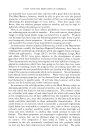
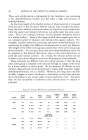
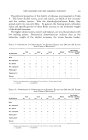
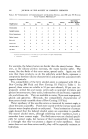
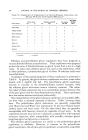
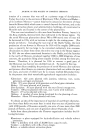
240 JOURNAL OF THE SOCIETY OF COSMETIC CHEMISTS Thus, each alcohol group is represented by two members one containing a low dimethylsiloxane content and the other a high concentration of dimethylsiloxane. As the chain length of the alcohol portion of these materials is increased from the octyl to the 22 carbon behenyl radical, some changes take place. First, the lower alcohols yield esters which are liquids at room temperature while the stearyl and behenyl derivatives are solids under the same condi- tions. This is not unusual, however, for the alcohols themselves behave in a similar fashion. Second, the longer alcohol chain lengths give rise to an increased number of siloxane units between the organic radicals. For example, consider molecules containing equivalent dimethylsiloxane con- centrations by weight, but different end groups such as octyl and behenyl. The weight of the behenyl end groups exceeds that of the octyl end groups almost fourfold. It is evident, then, that more dimethylsiloxane units will be required in the behenyl derivatives than in the octyl derivatives to yield the same silicone content. As a result, the siloxane portion should be able to exert more influence on the over-all properties of the molecule. These materials are different from the normal silicones in that the long chain alkyl group is attached to the silicone through an oxygen rather than by a direct carbon to silicon bond. In the presence of alkaline or acid catalyst, these silicones can be hydrolyzed to yield a high molecular weight dimethylpolysiloxane and an alcohol. However, the long chain alcohols do offer a degree of stearic hindrance to hydrolysis so that these silicones do not hydrolyze to any extent under normal condition• of use. Certainly they are less susceptible to hydrolysis than silicate esters of ethanol or propanol. TABLE 4--TYPICAL PROPERtrIES OF SILICONE ESTERS Refractive Specific Surface MezSiO Melting Viscosity, Index GrayiCy Tension Alcohol Content Color Point cs at 25 C 25 C 25 C/25 C dyne/cm Oct¾1 low straw --70 C 4.8 1.4208 0.84b 27.5 high It. straw --70 C 6.2 1.4176 0.887 25.8 Lauryl low It. straw 1:1 C 15.6 1.4:168 0.856 28.5 high It. straw 14 C 15.:1 1.4256 0.896 24.8 Penetration IASTM D5-52) Stearyl low It. ton 45-48 C 27 high white 40-4:1 C :180 Behenyl low tan 48-5:1 C 18 high tan 25-30 C 187
Purchased for the exclusive use of nofirst nolast (unknown)
From: SCC Media Library & Resource Center (library.scconline.org)