POTENTIAL UTILITY OF ION-EXCHANGE RESINS 267 COMMENTS--BY FRANZ HERRMANN, M.D. Two findings may be of interest observed by us at the New York Skin and Cancer Unit, New York University Post-Graduate Medical School, in preliminary investigations of the influence of exchange resins on different functions of the healthy human skin. One of these observations concerns the pH response of the skin surface. In line with the observations of Otten- stein and Thurmon, cation exchange resins caused a decrease in pH by one to two units. This effect was considerably more marked in the axillary vaults than in any other skin area examined. Anion exchange resins caused an increase in pH. The other observation was an unexpected decline in the amount of ther- mal sweating. This effect, though not very pronounced, was encountered with sufficient frequency to be regarded as significant. The resins were not mixed with any aluminum salt or other astringent. The cation exchangers inhibited the outpouring more distinctly than the anion exchangers. None of the effects outlasted a period of a few (three to four) hours. All changes observed were most pronounced after application of the resins in powdered form, less distinct after their usage in suspensions (lotions) and least apparent after usage in a creamy base. REFERENCES (1) Shelley, W. B., Hurley, H. J., and Nichols, A. C., drch. Dermatol. and Syphilol., 68, 428 (1953). (2) Martin, G. J., "Ion Exchange and Adsorption Agents in Medicine," Boston, Little, Brown and Company (1954), p. 89 et. seq. (3) Root, M. J., "Ion Exchange Applications in Biology and Medicine," N.Y. dcad. Sci- ences Monograph (1953). (4) Heming, A. E., and Flannagan, T. L., Federation Proc., 10, 307 (1951). (5) McChesney, E. W., 5 t. Lab. Clin. Med., 38, 199 (1951). (6) Thurmon, F. M., and Ottenstein, B., 5 t. Imestigative Dermatol., 18, 333 (1952). (7) Thurmon, F. M., U.S. Patent 2,653, 902. (8) Thurmon, F. M., U.S. Patent 2,684,321. (9) Thurmon, F. M., Ottenstein, B., and Bessman, M. J., 7. Investigative Dermatol., in press. (10) Ottenstein, B., Boncoddo, N., Bessman, J. J., and Thurmon, F. M., Ibid., 22, 349 (1954). (11) Ikai, K., Ibid., 23, 411 (1954).

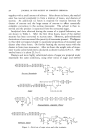
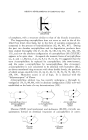
1955 SEMINAR DISCUSSION Summary of Discussions on the Use of Radioactive Isotopes in Cosmetic Research, Morning of September 15, 1955 PAUL NUMEROF (The Squibb Institute for Medical Research, New Brunswick, N.J.) In listening to the presentations this morning I have the impression that it is possible to obtain a considerable amount of information from the judi- cious application of radioactive isotopes. However, I would like to express some words of caution against going overboard in the application of this technique. As powerful a tool as radioisotopes are, they are still no sub- stitute for good experimental technique, and I should like to enter a plea in that direction. Radioactive isotopes still do not permit one t6 become sloppy in the design of his experiments, in the way in which they are carried out and in the manner in which the results are interpreted. I should like to illustrate these comments with a few remarks that came to me as the members of the symposium were presenting their discussions. The use of isotopes will, of course, tell you where what you have goes and how much of it gets there. However, what one measures is really only radioactivity and, while this may suffice for the determination of inorganic radioactive materials, this need not be the case with fairly complex organic products. For example, with inorganic materials such as the ions of sodium, Dr. White in measuring sodium 22 knows that this is the only material that he is rneasuring--that's all there could be. The same comments apply to the absorption of inorganic materials through the skin. However, this does not apply to experiments in which certain labile groups are radio- active. For example, take the esters of organic acids. If one is studying the stability of fats in different formulations, etc., one might run into trouble. For example, if one were to prepare a compound in which this group out here were labeled, one might find that this labile group might be removed during some stage of the experiment. For exam- 268
Purchased for the exclusive use of nofirst nolast (unknown)
From: SCC Media Library & Resource Center (library.scconline.org)