FATTY ACIDS AND DERIVATIVES IN COSMETICS 233 oil when considered in light of its specific composition and orientation of the fatty acids present, gives some startling changes. You will note that both compounds A and B possess characteristics which are desirable to the cosmetic chemist when compared with the customary oils he has used. They are given as examples merely to demonstrate the many possibilities which exist even in the known products and reactions at our disposal. REFEI•ENCES (1) Ralston, A. W., "Fatty Acids and Derivatives," New York, John Wiley & Sons, Inc. (1948). (2) Hilditch, T. P., "The Chemical Constitution of Natural Fats," New York, John Wiley & Sons, Inc. (1940). (3) Markley, Klare S., "Fatty Acids, Their Chemistry and Physical Properties," New York, Interscience Publishers, Inc. (1947). ' (4) Bally, Alton S., "Industrial Oil and Fat Products," New York, Interscience Publishers, Inc. (1945). (5) Bally, Alton S., "Melting and Soldification of Fats and Fatty Acids," New York, Inter- science Publishers, Inc. (1950). (6) Eckey, E. W., "Vegetable Fats and Oils," New York, Reinhold Publishing Corp. (1954). (7) Jamieson, George S., "Vegetable Fats and Oils," New York, Reinhold Publishing Corp. (1943). (8) Bloor, W. R., "Biochemistry of the Fatty Acids and Their Compounds," New York, Reinhold Publishing Corp. (1943). (9) "Symposium on the Molecular Structure of Fats and Oils," Chem. Rev., 29, (1951). (10) "Oils and Fats, Composition of Physical Properties Chart," New York, E. F. Drew and Co., publication. (11) Feuge, R. O., "Interfacial Tension of OiLWater Systems Containing Technical Mono- and Diglycerides," 5 t. .aim. Oil Chemists' Soc., 24, 49 (1947). •12) Gros, A. T., and Feuge, R. O., "Modification of Vegetable Oils. X. Effect of Mono- glycerides on the Interfacial Tension of Oil-Water Systems," Ibid., 28, 1 (1951). (13) Alsop, W. G., and Percy, J. H., "Stabilization of Oil-in-Water Emulsions with Mono- glycerides," Proc. Sci. Sect. Toilet Goods ?lssoc., No. 4, 24 (1945). (14) Bennett, H., "Monoglycerides Finding Wider Uses in Industry," •7. Commerce, Sept. 4 (1951). (15) Drew, E. F., U.S. Patent No. 2,238,441. (16) Eckey, E. W., U.S. Patent No. 2,378,006. (17) Barsky, G., U.S. Patent No. 2,182,332. (18) Barsky, G., U.S. Patent No. 2,424,979. (19) Mueller, H., U.S. Patent No. 2,585,027. (20) Eckey, E E. W., U.S. Patent No. 2,442,532. (21) Eckey, . W., U.S. Patent No. 2,442,536. (22) Eckey, E. W., U.S. Patent No. 2,442,537. (23) Gooding, C., U.S. Patent No. 2,309,949. (24) "Preparation and Properties of Acetostearine," Circular CA 21 Southern Regional Re- search Laboratories (Dec. 6, 1951). (25) Feuge, R. O., Vicknair, E. J., and Lovegren, N. V., "Modification of Vegetable Oils. XII. Plasticity of Some Aceto Derivatives of Monoste•rin," 5 t. .aim. Oil Chemists' Soc., 29, 11 (1952). (26) Feuge, R. O., Vicknair, E. J., and Lovegren, N. V., "Modification of Vegetable Oils. XIII. Some Additional Properties of Aceto-stearin Products," Ibid., 30, 283 (1953). (27) Feuge, R. O., Gros, A. T., and Vicknair, E. J., "Modification of Vegetable Oils. XIV. Properties of Aceto-Oleins," Ibid., 30, 320 (1953). (28) Lange, et al., U.S. Patent No. 2,626,952. (29) Baur, F. J., et al., U.S. Patent No. 2,614,937. (30) Baur, F. J., U.S. Patent No. 2,615,160. (31) Jackson, F. L., U.S. Patent No. 2,615,1•9.

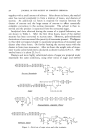
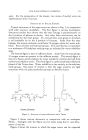
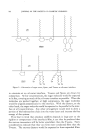
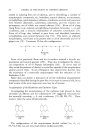
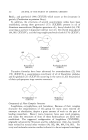
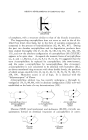
NEW SILICONES FOR THE COSMETIC INDUSTRY* By C. C. Cu•.I•I and R. C. GERGLE Dow Corning Product Engineering Laboratories, Mid/an, Mich. SILICONES ARE both unique and singularly versatile materials. A silicone fluid, for example, may be used to release resin bonded sand shells in a foundry as a dielectric fluid in transformers, and even to relieve bloat in cows. Silicone resins may be used to make masonry and brick walls water repellent as insulation for electric motors and to protect industrial smokestacks against the ravages of heat and moisture. Because of this versatility and the widespread use of silicones, it is difficult to keep abreast of all the latest developments in every industry where silicones are used. While we have learned quite a bit about the requirements of your industry, we are far from being experts in the formula- tion of cosmetics. We do feel, however, that through our familiarity with the chemistry and applications of silicones, we may be able to help with problems you face in the development of improved cosmetic formulations. Much of the work of our research laboratories is directed toward the synthesis of new, silicon-containing chemicals. Literally hundreds of new silicones have been synthesized. The problem of selecting the silicones that are most likely to interest you is fortunately simplified by establishing certain criteria. First, the silicones should be relatively inexpensive. Second, the sili- cones must exhibit characteristics different from those of the products commonly used in the cosmetic industry. They must be unique either in their chemical structure or in some property such as compatibility or physical form. With these considerations in mind, our laboratories have developed three new types of silicones: 1. Salicyloxymethyl dimethylsilyl end-blocked fluids 2. Fatty alcohol esters of dimethylpolysiloxane 3. Ethylene or polyethylene glycol esters of dimethylpolysiloxane SALICYLOXYMETHYL DIMETHYLSILYL END-BLOCKED FLUIDS The first type of silicone we shall' discuss is a salicylate end-blocked * Presented at the December 15, 1955, Meeting, New York City. 234
Purchased for the exclusive use of nofirst nolast (unknown)
From: SCC Media Library & Resource Center (library.scconline.org)