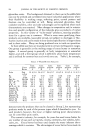
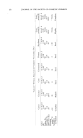
272 JOURNAL OF THE SOCIETY OF COSMETIC CHEMISTS Our interest in isotopes was aroused by the General Electric Company's Silicone Division. Dr. Leung at the University of Pittsburgh has been using silicones as protective films against acid attack on teeth in vitro. So with the cooperation of G. E., a silicone oil with a radioactive C TM was synthesized, and incorporated into a toothpaste at a concentration of 1.7 per cent. The activity of the oil was about 0.5 microcurie per milligram. Extracted human teeth were brushed with the paste and then brushed with water. This was repeated three more times. The teeth retained the radioactive silicone to an extent which calculated to be three mono- molecular layers deep. (The radioactivity was about three times back- ground.) We were encouraged by these in vitro results, and decided to test the silicone in vivo. Miniature pigs and mongrel dogs were anaesthetized and their teeth were brushed with the radioactive silicone paste thirty seconds for each quadrant. After rinsing with water, teeth were extracted at various times up to forty-eight hours. The extracted teeth were mounted in planchets, and the radioactivity was determined. In order to correlate radioactivity with surface area, photographs (about 3 X enlargements) of the planchets with the mounted teeth were taken, and printed through a tracing of millimeter cross section paper. The squares presented by the tooth surface to the Geiger tube were then counted. The results which are preliminary and not statistically significant show that dog's teeth retained the silicone to a very small degree (the most active tooth had only eight counts per minute per square centimeter after twenty- four hours). The teeth extracted immediately showed a low order of activity of about 25 cts./min./cm. 2. It was observed that molars differed from bicuspids and that the buccal surface of a tooth differed from the lingual surface. In pigs, the initial radioactivity on the teeth was only about 3 cts./min./cm. 2 and was not detectable after six hours. Not only do the different faces of the tooth differ in their ability to ab- sorb and retain radioactive substances, but the age of the tooth since erup- tion also plays a part. If the four first molars of an animal are considered, a difference of one week in the eruption time would affect the rate of adsorption. The earlier erupting tooth is more resistant to adsorption and penetration of substances. The proximity of the saliva ducts to the teeth is different in the upper jaw than in the lower jaw so that ehe radioisotope-labeled substance may be washed away faster from one surface than from another in the same mouth. Carious teeth adsorb materials much more readily than sound ones as was already mentioned by Dr. Nelson so that the condition of the tooth must also be noted. The work will continue, and I am sure that adequate samples of tooth

1955 SEMINAR DISCUSSION 273 surfaces that are reasonably alike, treated according to a statistically de- signed experiment, will give us the necessary information. And we will not hesitate to use the information in our advertising. Summary of Discussions on Mechanism of Antiperspirant and Deodorant Activity, Afternoon of September 15, 1955 W. G. FRv. I)V.•.L (Lambert-Hudnut Division of Warner- Lambert Pharmaceutical Company, St. Louis 6, Mo.) My remarks today fall in line with what the speakers have told you plus some added observations. My remarks deal with practical work actually carried out in the axilla on antiperspirant effect, deodorant effect and num- bers of bacteria in the axillary area. Antiperspirant effect in the axilla is possible but not complete and this from multiple applications rather than from one application of a product. As a matter of fact, one application has tended to increase the amount of perspiration. Data obtained in vivo on 13 people using multiple applica- tions of a 15 per cent aluminum sulfate antiperspirant cream, when evalu- ated by a statistician, showed significant alteration in axillary perspiration on the basis of those applications. Maximum diminution of perspiration in a treated axilla was 60 per cent. As stated by Dr. Herrmann earlier, we have asymetric perspiration in some areas. For an individual, we found that there were definite ratios of left to right axilla, varying from one to one to almost double the amount of perspiration in the right axilla as compared to the left. For work in this field, it was necessary to screen a number of subjects to eliminate those that did not perspire sufficiently since we were interested in obtaining at least 100 rag. of perspiration during a time inter- val of fifteen minutes to one-half hour. To summarize this portion dealing with antiperspirant effect, multiple applications of an aluminum sulfate product are required to produce some effect and that effect is not complete suppression of perspiration. Deodorant effect studies conducted in our plant showed that a number of people had no odor in the axilla. Actual sniffing of the axillary area was carried out and odor levels correlated with those obtained by swabbing the axillary area with a cotton ball. The cotton ball after use as a swab was placed in a 1-oz. glass jar and stoppered with a lid from which the liner was removed. Sniffing of these jars within an hour after taking the swab cor- related with odor values determined directly in the axilla. Judges of odor levels required but about five minutes of training. Odor levels mentioned
Purchased for the exclusive use of nofirst nolast (unknown)
From: SCC Media Library & Resource Center (library.scconline.org)