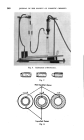
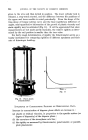
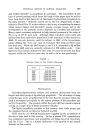
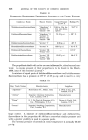
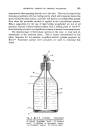
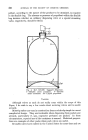
INTRODUCTION TO THE RHEOLOGY OF DISPERSE SYSTEMS A Lecture delivered to the Society on Thursday, March 8th, 1956 A. DE WAELE, F.R.I.C., F. INsT. P.* The differences between Newionian fluids, non-Newtonian fluids and plastic bodies are explained. Rheological diagrams are interpreted and are shown to be of value for product control purposes and for studying storage stability. WHILST rheological measurement refers to the dynamic behaviour of a deformable body, the science of rheology covers the relationship between the data from the rheological examination and structure or internal arrange- ment of the body. In a true (Newtonian) fluid, such measurement is confined to that of viscosity, which may be simply defined as its resistance to flow. When a fluid is set in a streamline motion between containing walls, the surfaces of the latter exert such a resistance on the immediate contiguous layers of the fluid as to cause within it a differential velocity. Thus liquid contained in the annular space between an outer rotating and an inner stationary cylinder moves as it were in layers, each having a different velocity to its neighbour (Fig. 1). When liquid flows through a capillary, the velocities within it are maximum in the centre of the capillary and zero at the wall (Fig. 2). The relationship between velocities in the streamline situated 1 cm. apart from one another is known as the velocity gradient, or the rate of shear. Fig. 1. Fig. 2. Differential velocities of Fluid in Coplanar and Capillary Shear. * Gestetner, Ltd., Tottenham, London, N. 17. 336

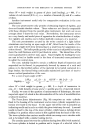
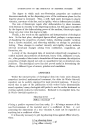
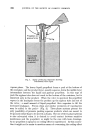
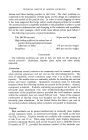
INTRODUCTION TO THE RHEOLOGY OF DISPERSE SYSTEMS 337 In either of the cases stated the internal deformation of the liquid must derive from an opposinõ reaction, and this motion, in the case of the con- centric cylinders, must be balanced by a stress on the stationary cylinder and realised as a torque. In the case of capillary flow, the opposinõ reaction is the stress or pressure causinõ the flow. This may be a hydrostatic head or a pressure applied to one end of the capillary. The viscosity of a liquid is, then, the relationship between a stress and a rate of shear. It can be measured in a concentric cylinder viscometer (Fiõ. 3) by determininõ the torque or annular deflection indicated on the stationary cylinder when this is suspended on a torsion wire and a õiven velocity of rotation is imparted to the outer cylinder. In capillary instru- ments it is usual to determine the relative (time x density) for a õiven volume to be discharõed as compared with that of a known standard. Thus t• X d• • INNER CYLINDER OUTER CYLINDER MIRROR WIRE SCALE TELESCOPE. Fig. 3. View from above into annular space between concentric cylinders.
Purchased for the exclusive use of nofirst nolast (unknown)
From: SCC Media Library & Resource Center (library.scconline.org)