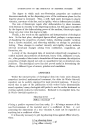
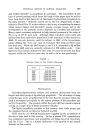
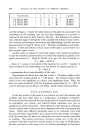
TECHNICAL ASPECTS OF AEROSOL PACKAGING 359 only depend on the personal opinion of the aerosol manufacturer and the taste of the consumer, but is also bound up with the various conditions within the pack. The conditions prevailing in a shaving cream aerosol containing water and alkaline constituents differ considerably from those in a room deodorant in which an inert active ingredient and the solvent are the only determining factors, and each and every aerosol product presents a separate problem so far as the perfume is concerned. The propellent, inert in certain circumstances, may be highly activated in other cases so far as the unwanted effects on the perfume are concerned. It will now be clear that a great deal of research and co-operation between chemists and perfumers is necessary in order to develop a varied series of perfumes the stability of which can be guaranteed under aerosol conditions. The problems attending the perfuming of aerosols may be conveniently summarised as follows: 1. Incompatibility of the perfumes, propellents or other ingredients. 2. Poor solubility of the odiferous substances. 3. Corrosion. 4. Irritation of skin and/or mucous membrane. More extensive discussions of the problems involved in aerosol perfuming may be found in recent publications by leading perfumery houses 'o-" and in a recent paper by Pickthall.'• HANDCREAMS The following handcream formulation, developed in conjunction with W. J. Bush & Co., Ltd., has been found to be satisfactory for packing even in internally plain aluminium aerosol containers: Stearic acid 160.0 g. Lanette wax 11.2 g. Lanolin 32-0 g. Triethanolamine 64.0 g. Glycerol 160.0 g. Sorbirol 70 per cent 96.0 g. Sodium benzoate 1.6 g. Distilled water 1056.0 g. The aerosol container is charged with 90 parts by weight of the above cream and 10 parts by weight of dichlorodifluoromethane propellent. SHAMPOOS Our experience to date with shampoo formulations has shown sodium lauryl sulphate to be satisfactory in internally plain aluminium dispensers, even when using a propellent mixture containing trichloromonofluoro-

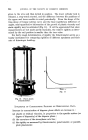
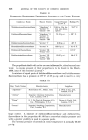
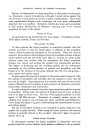
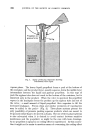
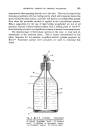
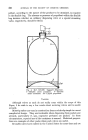
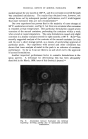
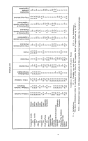
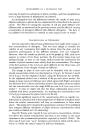
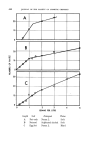
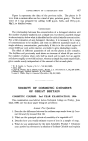
360 JOURNAL OF THE SOCIETY OF COSMETIC CHEMISTS methane. For these tests, "Empicol L.Z.V." paste (supplied by Marchon Products Ltd.), "T. J." paste (supplied by Chas. Bedeman, Ltd.) and "Cycloryl pastes 30C50E and 33" (supplied by Cyclo Chemicals, Ltd.) were used. On the other hand, corrosion has always been experienced with formulations based on triethanolamine lauryl sulphate, and in this respect our findings appear to be completely opposite to those reported from the United States. SHAVING CREAMS According to van Beem '5 the following are satisfactory aerosol shaving creams for use in lacquered containers: Stearic acid 20.6 g. Triethanolamine 9.4 g. Lanolin 1.5 g. Glycerin 5.0 g. "Texapon extract N.40"* 9.5 g. "Comperlan"* 0.6 g. Water 200.0 g. II Stearic acid 20.6 g. Triethanolamine 9.4 g. Lanolin 1.5 g. Glycerin 5.0 g. "Tween 60"• 15.0 g. Water 200.0 g. * Supplied by Deutsche Hydrierwerke, GMBH, Dusseldorf. ½ Supplied by Honeywill-Atlas, Ltd. The charge in each case amounts to 90 parts by weight shaving cream and 10 parts by weight dichlorodifluoromethane. An interesting point arose with Formulation II. It was found that slight corrosion took place when the amount of "Tween 60" was increased to 25 g., and very severe corrosion, in spite of the internal lacquering, took place when this was increased further to 50 g. This is another example of the care necessary when formulating aerosol products. (See Fig. 5.) SUN TAN OR SUN DEFLECTANT PREPARATIONS Sun tan, also known as sun deflectant, preparations are very popular, and a number of sun-screening agents are satisfactory for use in this type of aerosol pack, viz.:
Purchased for the exclusive use of nofirst nolast (unknown)
From: SCC Media Library & Resource Center (library.scconline.org)