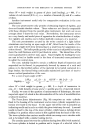
386 JOURNAL OF THE-SOCIETY OF COSMETIC CHEMISTS stored in the material. It is also necessary to find a plasticiser which is not readily leached out of the P.V.C. by ,the product. P.V.C. tends to decompose when subjected to elevated temperatures or sunlight.' This degradation consists of th? loss of hydrochloric acid, which leaves double bonds in the resin chain. -- CH, -- CH = CH -- CHC1 -- CH• --CHC1 -- --•-- CH• --CH = CH--CH=CH--CHC1-- +HC1 A series of reactions of this type would leave conjugated double bonds in the polymer chain. These conjugated polyene structures are responsible for the colour developed by a degraded P.V.C. After formation, the polyenes may readily react with atmospheric oxygen, resulting in the colour of the polyenes either being bleached or intensified. In order to help prevent this degradation of P.V.C., stabilisers are added which will react with the liberated hydrochloric acid. Typical stabihsers are lead, cadmium or calcium stearates, litharge, dibutyl tin dilaurate and some epoxy compounds. In general, those stabilisers which are anost efficient at taking up the liberated hydrochloric acid are the best for prevention of discoloration of the plastic, but there are some exceptions. A typical commercial P.V.C. supplied in sheet form consists of about 60 per cent polymer, 35 per cent plasticiser and 2 to 5 per cent stabiliser. The softening of po]yvinyl chloride may also be achieved by co-polymer- is[ng. Vinyl chloride toohomer is co-polymerised with another monomer, the rates of polymerisation of the two monomers being similar. Suitable secondary components are vinyl acetate, vinylidene chloride, acrylic esters and acrylonitrile. The internal plasticisation afforded by co-polymerising can give sheets with characteristics which cannot be obtained by the use of polyvinyl chloride plus plasticisers alone. There are many co-polymers possible and it seems most likely that future developments in P.V.C. sheets will be largely based on co-polymers. GENERAL PROPERTIES OF POLYVINYL CHLORIDE SHEETS A plasticised P.V.C. sheet should be colourless, almost transparent and free from imperfections, such as bubbles or pin_holes. After ageing, either for long periods at normal temperatures or for short periods at elevated temperatures or in sunlight, the P.V.C. becomes darker in colour and less transparent, and it is necessary to find a sheeting which will give the desired storage life. It should be borne in mind that ageing in the presence of a cosmetic preparation may be at a very different rate from ageing of the P.V.C. alone. P.V.C. sheet used for the packaging of cosmetic preparations usually has a thickness of 0.005 in. to 0.015 in., and this should be uniform.

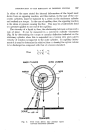
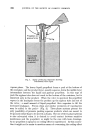
POLYVINYL CHLORIDE AS A PACKAGING MATERIAL •7 Strength, Extensibility and Flexibility The breaking strength and extensibility are normally measured by a device similar to that used for textile fibres. The breaking strength is not, in itself, a very useful measurement, bat extensibility measurements at different temperatures give an indication of the behaviour of a sheeting materiM at various temperatures. This informatio• can have considerable value in the determination of the dimensional distortions that may occur if the printing, filling and welding operations are conducted at different atmospheric temperatures. Impact strength may be measured by any suitable ballistic method. The thickness of sheet P.V.C. used for cosmetic packaging is usually too thick for a fMling ball method, something heavier being required, such as a heavy pendulum. The pendulum is dropped from a series of different heights and the angle of arc needed to break the test sample foun. It will be found that the impact strength of P.V.C. sheet samples varies with temperature, and this information can be very useful in helping to select a suitable polymer, as a major fault of P.V.C. is the readiness with which it becomes brittle at low temperatures. Changes of plasticise• will give rise to differing behaviour at low temperature and a careful selection of plasticiser can often give a sheet with the desired resistance to low temperature, without at the same time being too soft at normM temperatures. Tearing strength is of little importance as the usual thickness of P.V.C. sheeting used has sufficient tearing strength to overcome any practical needs. Refractive Index The refractive index of P.V.C. sheet can be measured by Becke's method,* which depends upon microscopicM examination of the edge of a piece of sheet material immersed in liquids of different refractive index. Care must, however, be taken to choose liquids which do not have the effect of leaching out any of the plasticisers used in the sheet. The measurement of refractive index is not of much general use, but if measured at different temperatures it can give an indication of any molecular rearrangement in the polymer structure as indicated by a break in the refractive index/temperature curve. Any such molecular rearrangement will probably be accompanied by a change in physical properties in the sheet such as a change from flexibility to brittleness. Permeability Probably the most important characteristic of P.V.C. sheeting is its selective permeability. It is permeable to gases, many yapours, some liquids, but not solids. When a solid cosmetic materiM is being packed in P.V.C.,
Purchased for the exclusive use of nofirst nolast (unknown)
From: SCC Media Library & Resource Center (library.scconline.org)