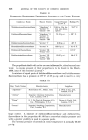
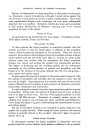
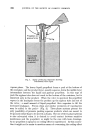
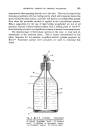
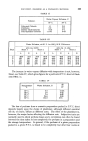
402 JOURNAL OF THE SOCIETY OF COSMETIC CHEMISTS After an interval for excellent refreshments, the members and visitors assembled to hear the President's Address on "The Development of a New Product." Dr. R. H. Marriott moved the vote of thanks to the President for his interesting address, which was carried with acclamation. DEVELOPMENT OF A NEW PRODUCT The Address of the President to the British Society, 1956 R. T. DOBSON* Mr. Dobson submits a general scheme for developing a formula for a new product and for testing it to make sure that it will have a satisfactory shelf lite. He then explains the use of, and gives a design for, a market research panel for the assessment of customer reaction. MANY in my audience to-night will have been concerned with the develop- ment, from time to time, of new products, and there may be in my talk to you much which appears obvious. Nevertheless, we all know that new products are introduced on to the market, and not infrequently problems concerning either the product itself, or the container in which it is packed, give cause for anxiety because some unforeseen reaction occurs which may well seriously affect sales and also cause severe disorganisation by the necessity to withdraw stock from the retailer in an effort to minimise adverse consumer reactions. I am fully aware that with all possible precautions prior to the launching of a new product an unforeseen latent defect may occur only after the product has been on the market for several months, and the only real way such an unforeseeable defect may be prevented from coming to the attention of the consumer is to give adequate length of shelf-life tests under all condi- tions of storage for as long as the product might be expected to remain in the retailer's stock. If, however, we resort to such tests, any one product could remain under conditions of test for so long a period that the conditions of the market could well be no longer favourable for its introduction. Before turning to the type of tests which should be carried out on new products to eliminate so far as is reasonably possible product trouble after marketing, let us spend a few minutes on the study of the method by which the product may be first conceived and see if we might, right from the start, arrange our programme for the introduction of a new product on the market into an order which, if followed, might well show up any inherent faults and, at the same time, allow the most rapid progress consistent with a low probability of fault development after marketing. * Chesebrough-Ponds, Ltd., Perivale, Mddx.

402 JOURNAL OF THE SOCIETY OF COSMETIC CHEMISTS After an interval for excellent refreshments, the members and visitors assembled to hear the President's Address on "The Development of a New Product." Dr. R. H. Marriott moved the vote of thanks to the President for his interesting address, which was carried with acclamation. DEVELOPMENT OF A NEW PRODUCT The Address of the President to the British Society, 1956 R. T. DOBSON* Mr. Dobson submits a general scheme for developing a formula for a new product and for testing it to make sure that it will have a satisfactory shelf lite. He then explains the use of, and gives a design for, a market research panel for the assessment of customer reaction. MANY in my audience to-night will have been concerned with the develop- ment, from time to time, of new products, and there may be in my talk to you much which appears obvious. Nevertheless, we all know that new products are introduced on to the market, and not infrequently problems concerning either the product itself, or the container in which it is packed, give cause for anxiety because some unforeseen reaction occurs which may well seriously affect sales and also cause severe disorganisation by the necessity to withdraw stock from the retailer in an effort to minimise adverse consumer reactions. I am fully aware that with all possible precautions prior to the launching of a new product an unforeseen latent defect may occur only after the product has been on the market for several months, and the only real way such an unforeseeable defect may be prevented from coming to the attention of the consumer is to give adequate length of shelf-life tests under all condi- tions of storage for as long as the product might be expected to remain in the retailer's stock. If, however, we resort to such tests, any one product could remain under conditions of test for so long a period that the conditions of the market could well be no longer favourable for its introduction. Before turning to the type of tests which should be carried out on new products to eliminate so far as is reasonably possible product trouble after marketing, let us spend a few minutes on the study of the method by which the product may be first conceived and see if we might, right from the start, arrange our programme for the introduction of a new product on the market into an order which, if followed, might well show up any inherent faults and, at the same time, allow the most rapid progress consistent with a low probability of fault development after marketing. * Chesebrough-Ponds, Ltd., Perivale, Mddx.
Purchased for the exclusive use of nofirst nolast (unknown)
From: SCC Media Library & Resource Center (library.scconline.org)