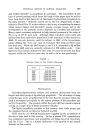
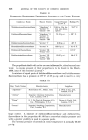
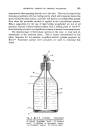
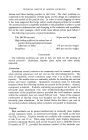
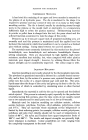
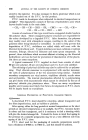
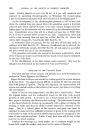
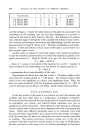
TECHNICAL ASPECTS OF AEROSOL PACKAGING 347 and methyl chloride 8 as propellents for perfumes. The foundation of the type of aerosol packing which forms the basis of this paper may be said to have been laid by the discovery of fluorinated hydrocarbon propellents in the early 'thirties. 4 Research carried out by the U.S. Department of Agri- culture in World War II, in their efforts to find a way of combating the insects which caused disease and discomfort among overseas troops, led to the development of the portable aerosol dispenser by Goodhue and Sullivan.* Heavy metal containers subjected to high internal pressures of the order of 70 p.s.i.g. at 70 ø F. were used. Although these containers were costly ancl cumbersome they made their appearance in the American civilian market in 1945. It was not, however, until the advent, in 1947, of the low-pressure packs utilising the "beer can" type of containers that these products came into their own. While the 1947 output in the U.S.A. amounted to 5• million units, their 1955 sales are currently estimated at 220 million units. Sales figures for this country indicate the later start over here of aerosols, but their increase within the last two years may be said to be no less spectacular. TABLE I AEROSOL SALES IN TI-IE UNITED KINGDOM Year Total Sales -.. 1950 500,000 units 1951 1,250,000 units 1952 1,500,000 units 1953 2,000,000 units 1954 2,500,000 units 1955 6,000,000 units PROPELLENTS Chlorofluorohydrocarbons (ethane and methane derivatives) form the largest and safest group of liquefied gas propellents. The advantage of using a liquefied gas as the propellent lies in the fact that the pressure within the pack is determined principally by the vapour pressure of the propellent and not by its quantity. The pressure within the pack will thus remain constant as long as a single drop of liquid propellent remains. The liquid propellents available in this country, their trade names and the suppliers thereof are listed in Tables II and III. Until recently one British manufacturer supplied all the propellents of the above type used in this country. To-day a second U.K. manufacturer has commenced operations, and propellents are being imported from Italy and the U.S.A. This is a further indication of the growth of the aerosol industry in this country.

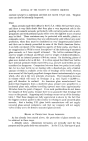
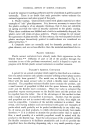
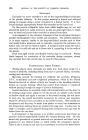
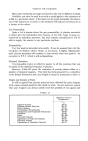
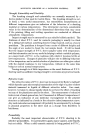
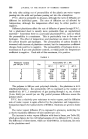
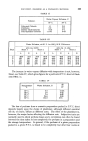
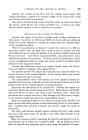
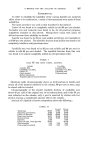
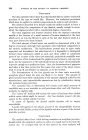
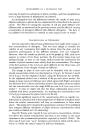
348 JOURNAL OF THE SOCIETY OF COSMETIC CHEMISTS TABLE II FLUORINATED HYDROCARBON PROPELLENTS AVAILABLE IN THE UNITED KINGDOM CHEMICAL NAME TRADE NAMES Gauge Pressure Boiling Pt. at 70 ø F. Trichloromonofluoromethane "Algofrene" 1 2-64 in. Hg. be- 74.7 ø F. "Arcton"9 low one atmo- "Isceon" 131 sphere Dichlorodifluoromethane "Algofrene" 2 70.12 p.s.i. -- 22 ø F. "Arcton" 6 "Freon" 12 "Isceon" 122 Dichloromonofluoromethane "Arcton" 7 8.38 p.s.i. 48 ø F Monochlorodifluoromethane "Arcton" 4 122.5 p.s.i. -- 41.4 ø F. Trichlorotrifluoroethane "Arcton" 63 -- 117.9 ø "Freon" 113 Dichlorotetrafluoroethane "Arcton" 33 12.87 p.s.i. 38.4 ø F. "Freon" 114 "Isceon" 224 The propellents dealt with so far are non-inflammable, odourless and non- toxic. A concise account of their properties is to be found in the March, 1956, issue of this Society's Journal. 6 A mixture of equal parts of dichlorodifluoromethane and trichloromono- fluoromethane has a pressure at 70 ø F. of 35 p.s.i.g. and is used to a very TABLE III Reg. Trade Names Manufacturers Suppliers .... "Algofrene" Montecatini SA., Milan, Italy J. Weil & Son, Ltd., London, E.C.2 "Arcton" Imperial Chemical Industries, Manufacturers Ltd., London, S.W. 1 -- "Freon" E.I. Du Pont de Nemours & Co. Brown & Forth, Ltd., Inc., Wilmington, U.S.A. London, N.W. 1 -- "Isceon" Imperial Smelting Corporation, Manufacturers Ltd., London, W. 1 large extent. A mixture of dichlorodifluoromethane and dichlorotetra- fluoroethane in the proportion 40: 60 has a somewhat similar pressure and with a greater stability is used in aqueous packs. The internal pressure of aerosols at room temperature is normally 35-40 p.s.i.g.
Purchased for the exclusive use of nofirst nolast (unknown)
From: SCC Media Library & Resource Center (library.scconline.org)