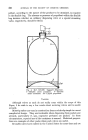
376 JOURNAL OF THE SOCIETY OF COSMETIC CHEMISTS DEFINITIONS In the plastics world one constantly hears of thermoplastic and thermo- setting materials. These are two broad classifications of products, the members of which have the common property of softening and becoming plastic at some stage of their manufacture. Tf•ermo•last{cs, like metals, are hard or soft according to temperature. They can be softened by heating and hardened by cooling, and this process of crossing the softening point on the temperature scale can be repeated as often as desired without appreci- able effect on the properties in either state. In a word, the process is fully reversible and heat produces a physical change only. Polystyrene, po]ythene and P.V.C. are typical thermop]astics. Tf•ermos•t•{ng compounds, on the other hand, are first softened by heat, but the continued application of heat sets up a chemical process within the material causing it to harden to a final condition which does not permit re-softening because of the chemical cross-linking which has taken place. It will readily be appreciated that these two classes offer very different possibilities as regards methods of shaping into finished articles and as to the service temperatures at which the finished articles will function satis- factorily. By and large, thermoplastic articles can only be used at tempera- tures below 100 ø C., whilst thermosetting materials are often serviceable at temperatures two or two and a half times this level. Thermosetting moulding compounds are usually made from resinous binders filled with either woodflour, fibrous substances, mineral powders or papers. The fillers impart special properties such as increased impact or tensile strength, heat or water resistance to the compound according to the type of filler selected. Plasticisers are used almost exclusively in the thermoplastics, although they do not improve all of them. The main function of the plasticiser is that of a softening agent to bring the working temperature of the thermoplastic --for example, P.V.C.--down to a suitable level and away from the natural working temperature which may be dangerously near or even above the decomposition point of the basic resin. Polystyrene and polythene are examples of thermoplastics whose natural softening point is controlled within its working limits without the use of added plasticisers. On the other hand, P.V.C. generally requires plasticisers. Common plasticisers are the high boiling esters like di-octyl phthalate and tri-tolyl-phosphate used in P.V.C. Di-methyl-phalate is one of the main plasticisers used in cellulose acetate and camphor is the principal agent employed to produce celluloid from cellulose nitrate. Some indications of the processes by which plastics are moulded and fabricated and some of their uses in packaging follow.

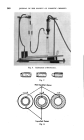
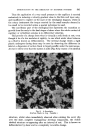
PLASTICS i•OR PACKAGING 377 COMPRESSION MOULDING A hard steel die consisting of an upper and lower member is mounted on the platens of an hydraulic press. The die is machined to the shape it is required to produce and may consist of only one or as many as forty-eight moulding cavities. The die is heated, usually by circulating steam through ports in the platens or the mould itself or electrically, to a temperature sufficiently high to soften the plastics material. Thermoserring material in powder or pellet form is charged into [he tool, the press closed and the softened material constrained to take the shape of the cavity. Pressures up to 2 tons per square inch of projected moulding area are normally used and this pressure is maintained until the applied heat has hardened the material in which final condition it can be ejected as a finished piece without cooling. Curing times between two and ten minutes. The materials most commonly fabricated by this method are the phenol formaldehyde, urea formaldehyde and melamine formaldehyde thermo- serring compounds. They are characterised by high rigidity, high water resistance, excellent heat stability, but, when compared with other plastics materials, poor impact stiength. however, by utilising fibrous fillers the impact strength can be considerably improved. The colour range is wide. INJECTION MOULDING Injection moulding is universally adopted for the thermoplastic materials. The powdered or granulated material is softened in a cylinder heated extern- ally, and is then, by the action of a pressure ram, squirted through a small orifice into the cavity of a closed multiple part cold steel die. The semi- liquid mass takes the shape of the cavity and gives up its heat to the die, the temperature of which is controlled by circulating water or other thermal liquid. Immediately the material is cold the die can be opened and the fi•ished article ejected. This process is extremely rapid, especially fm the production of articles having thin sections, since the time cycles do not usually exceed one or two minutes and for small parts may be as low as 10 seconds. Materials used for injection moulding are cellulose acetate, cellulose acetate butyrate, polythene, Terylene, ethyl cellulose, polysts•ene, nylon and P.V.C. They are materials whose maximum service temperature is limited by their softening points: for example, cellulose acetate, polystyrene, polythene and poly-vinyl chloride should not be used at temperatures in excess of 80 ø C., but nylon and Terylene have upper temperature limits of 100 ø C. and 180 ø C. The tensile and impact strengths are generally high, water resistance is excellent. Colour possibilities are wide, ranging from the completely transparent to the most vivid.
Purchased for the exclusive use of nofirst nolast (unknown)
From: SCC Media Library & Resource Center (library.scconline.org)