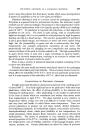
DEVELOPMENT OF A NEW PRODUCT 403 We might well start off by asking ourselves how does the new product commence life at the moment. The answer to this question will vary considerably from organisation to organisation ß in some cases a new product will stem from the laboratory in others from the marketing side, or, again, from the advertising section. It may be that no really new idea is involved, but merely the desire to follow existing competitive products already established on the market. Some of the questions to which an answer should be forthcoming prior to any work on a new product are as follows ß Do we wish to appeal to a wide or to a select market ? What is the market potential and on what price structure should this best be attacked ? What is the probable market acceptance of various types of containers, and is the market more prone to accept our product in the form of an opaque or clear or translucent liquid, semi-liquid, powder or compressed product ? What are the advertising claims we can make ? Can we afford to break entirely new ground in the presentation of our product ? If so, will this entail an educational advertising campaign ? In my opinion, an answer is required to all of these questions before any serious consideration can be given to formulation and testing of a new product, and the right type of answer can only come from a meeting at which are present' top management, marketing and advertising representatives, cosmetic chemist, production and purchasing representatives. In other words, I believe that the establishment of new products on a sound basis can only stem from a new products' committee formed from personnel representing the various sections of the organisation which will ultimately be concerned with the product once it is launched. When thoughts have been finalised on type of product required, style of pack, basic advertising claims, type of market to be aimed at, price structure and approximate time of launching, the cosmetic chemist may commence formula- tion work with the know.ledge that his ingredient costs may not exceed X, that certain ingredients may be ruled out of consideration because of style of packing, the inclusion of certain ingredients is a "Must," because of basic advertising claims that the formulation has to be adaptable to production at the rate of Y pounds per day in order to accommodate sales potential, and that the datum line for completion for his work is D. The time necessary to produce a satisfactory formulation will, of course, vary considerably, depending upon many factors, such as existing knowledge upon which to draw, the staff with available time and the probable difficulties of .e•stablish- ing a stable formula. However, the experienced cosmetic chemist should be able to evaluate the probability of completing his project within a specific time and must, unless the project is to drift on for an indefinite period, lay down a

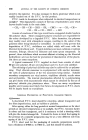
404 JOURNAL OF THE SOCIETY OF COSMETIC CHEMISTS schedule of experimental work to be carried out covering, so far as his experi- ence and imagination will allow, the possibilities of an unsatisfactory end- product to a number of his experimental formulae. If time is of no impor- tance-and this rarely occurs•one formula may be fabricated and followed through but should at a later stage unforeseen reactions occur, then a fresh start may have to be made and much time may be taken in arriving at the desired end-product. In my opinion, it is better to start with more than one basic type of formula and subdivide each into variations within itself, 'so that testing may proceed in several directions at the same time. The probability of obtaining the desired end-product in a relatively short period is then good. As a simple illustration of what I mean, let us assume our end-product is to be a water-in- oil emulsion of such viscosity that it will pour slowly from a neck opening of, say, 12 mm. i.d. We might lay down two basic formulae to start off: Formula A: Based on white oil, natural waxes, alkali and water. Formula B: Based on white oil, isopropylmyristate, ethylene oxide condensation product and water. Six variations of both formulae might then be laid down as follows: Formula A 1. Basic formula. 2. Variation ot white oil and water ratio. 3. Variation of ratio of waxes used in (1). 4. Variation of ratio of waxes used in (2). 5. Variation of alkali used in (1). t•. Variation of alkali used in (2). .Formula B 1. Basic formula. 2. Variation of white oils and isopropylmyristate ratio. 3. Variation of fat and aqueous phase ratio. 4. Reduction of ethylene oxide chains linked to hydrophobic molecule. 5. Increase of ethylene oxide chains linked to hydrophobic molecule. 6. Variation of hydrophobic molecule linked to ethylene oxide chains. If we started off with these twelve formulations, using ingredients drawn from the same bulk where such ingredients are common to more than one formula, we should, when adverse reactions occurred under test conditions, obtain a reasonably clear picture of the cause of the trouble and might see the way in which our problem could be overcome. Further, the picture presented to us from a study of the behaviour of all samples might well show, not only the weak links in our formula, but also the good points, and allow us to improve our end-product with relatively small formula adjustments.
Purchased for the exclusive use of nofirst nolast (unknown)
From: SCC Media Library & Resource Center (library.scconline.org)