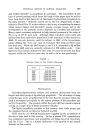
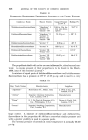
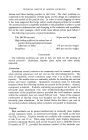
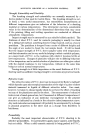
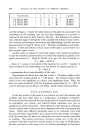
DEVELOPMENT OF A DETERGENT TEST 413 DEVELOPMENT OF A DETERGENT TEST-- PART III W. B. SMITH, B.Sc., and A. TAYLOR, M.P.S.* IN PART I • of this series a procedure for testing detergents for dishwashing was described and the magnitude of the uncontrollable variables, i.e., effects of using different operators and different batches of artificial soil, and of day-to-day repetition differences, were assessed. In Part 113 the control- lable variables, namely, the amount of soil, volume of wash liquor and temperature, were studied, and the optimum value and closeness of control for each was determined. All this work was carried out using only one type of soil--a flour and fat mixture--and one type of detergent--NansM' L Liquid. The study was then extended to different soils, different waters and different detergents, and the more important results that were found are described in the present article. QUANTITY OF SOIL The conclusion of the previous paper was that when half as much soil per plate was used, other conditions being kept to constant, 30-50 per cent more plates may be washed. This may be expressed symbolically by the equation: No. of plates = K (Quantity of soil per plate) -• --where r is approximately 0.5. The above refers to the flour/fat soil that was used. In the present investigation other soils were studied, and with an egg/fat mixture, for instance, the number of plates washed was very nearly inversely proportional to the amount of soil applied to each, i.e., r is very nearly unity. With a simple fat soil the number of plates was found to be almost independent of the quantities of soil used, i.e., r is nearly zero. This surprising conclusion was confirmed in many experiments and some of the data are given below. The soil was a proprietary cooking fat--"Trex"--weighed directly from the carton and spread on each plate without any melting, mixing or other treatment, and apart from the use of different amounts of this the procedure was as described in Part I. The following table gives the numbers of plates washed at different concentrations of Nansa L Liquid. These figures should be sufficient to dispel the idea, held in some quarters, of the dishwashing process being essentially an interaction between the soil *Marchon Products, Ltd., Whitehaven, Cumberland. Nansa is a registered trade mark of Marchon Products, Ltd.

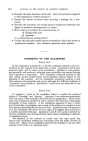
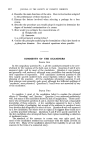
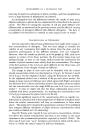
414 JOURNAL OF THE SOCIETY OF COSMETIC CHEMISTS Concentration « 1 2 3 g./litre ' 4 g. Fat per plate 2 11 20 I 24 plates 2 g. Fat per plate 2 12 23 [ 26 plates 1 g. Fat per plate 3 11 26 28 plates « g. Fat per plate 1 12 26 28 plates and the detergent. Clearly the solid surface of the plates is concerned in the •nechanism of the washing, and the fact that detergency is a process of removal of soil must be kept clearly to the fore. Nevertheless, it is possible that a limited range of detergents with a suitable soil will show some correla- tion between soil/detergent interaction and dishwashing, and this has been demonstrated by Lloyd E. Weeks et al. 8 But this relationship is not funda- mental it does not hold for certain types of detergents, and is shown only with certain types of soil. As this series of articles is concerned largely with statistical methods, it may be considered pertinent here to criticise the statistical analysis of the _paper just referred to. Lloyd E. Weeks, et al., gave the line of best fit as: Y = 6.90 + 22.07 X --where X • grams of soil added in the foaming test, and Y = number of plates washed in the dishwashing test, but almost an equally good fit is: Y •- 30.7 X --representing direct proportionality of the tests. The standard deviation from the line is only q- 2.3 plates, which is litfie more than the random spread of q- 1.94 plates. The variance ratio is 1-48, which is not even significant at a 20 per cent significance level. Thus, the data are quite consistent with the hypothesis represented by Y---- 30.7 X and yet the paper quotes 95 per cent limits, which exclude this possibility. STUDY OF DIFFERENT SOILS In the first article of this series it was pointed out that both natural and artificial soils have their place in a programme of detergent evaluation. Work described there showed that the preparation of artificial soils could not be reproduced very closely, and batch-to-batch variations were just as significant as with natural soils. The preference of the laboratory assistants was for natural soils as the use of these eliminates the work of preparing the plates. When more efficient detergents came to be evaluated, tests with natural soils often required 30 or more plates and became unduly prolonged, with the result that the labour of soiling that was saved was then expended in washing. The testers' preference, therefore, swung over to the use of synthetic soils that would give results mostly in the range of 10-20 plates. Results restricted to this range have two further advantages in that moie
Purchased for the exclusive use of nofirst nolast (unknown)
From: SCC Media Library & Resource Center (library.scconline.org)