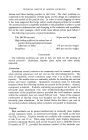
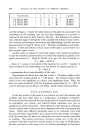
DEVELOPMENT OF A NEW PRODUCT 40• There are, of course, many other types of consumer acceptance tests which can be carried out, but time will not permit discussion of these. It may, however, be of interest if I deal very briefly with the composition of a Panel for the final product test. The Panel should be formed of individuals willing to co-operate in the test scheduled and should include correct grouping by age, sex, social class, etc. Classification into classes A, B, C and D is based upon conventional grading into social groups by experienced interviewers when making the preliminary house-to-house call for the purpose of establishing the Panel. It is estimated from statistical information available that in each 100 female adults in the United Kingdom 10 are in the A/B, 25 in the C and 65 in the D classes. Panellists should be drawn from areas over the United Kingdom, the number signed up in each area being calculated from the density of female adult population known to live in those areas, so that a balanced Panel representative of the adult female population by area in the United Kingdom is obtained. When considering a Panel of women for our test, the percentage of each group in the Panel should be roughly as follows: A/B Class .... 10% c ...... 25ø./0 D ...... 65% Aged 16/24 ...... 20% ,, 25/34 ...... 32% ,, 35/44 ...... 26% ,, 45/55 ...... 225/0 The number of married women in the Panel should be approximately 77 per cent, and the number of single women 23 per cent the number of housewives being 60 per cent and of occupied women being 40 per cent. The number of Panellists drawn from large urban areas should be about 42 per cent of the Panel, from medium urban areas 20 per cent, and from small urban areas 30 per cent. During initial signing UP of the Panel, various characteristics of the Panellists should be recorded by the interviewers, such as length of hair, whether this is oily or greasy, the texture, quantity and colour of same, complexion characteristics such as shade and type of skin, etc., as this information will be required when results of the Panellists' preferences are analysed and tabulated. It might also be helpful to obtain certain information about each Panel- list's buying habits, as such information can be of value in evaluating their preference of your samples against those products usually used. During the time that the above consumer tests are being carried out,

410 JOURNAL OF TI-IE SOCIETY OF COSMETIC CHEMISTS independent tests should be carried out by small selected Panels who are concerned only with preference of style of package and preference for ease of use from one type of package rather than another, but this Panel is not concerned with the actual user evaluation of the product. You will, I trust, realise that in this short talk I am unable to cover fully the subject of testing prior to marketing a new product. There are many extra tests which must be laid down for special products or special packing for example, I would not be satisfied with a product of the aerosol type if it had been subjected only to the tests I have described. Further, some of the tests I have spoken of would not be applicable to products of dissimilar nature to the emulsion samples taken. The object of this talk is to instil a line of thought into those of my audience who have not, perhaps, hitherto given due consideration to planned testing of new products prior to marketing, and my talk will have achieved its object if I leave the following thought in your mind. Such planning may cost several days of labour plus 30 days of waiting with a few hours of observation, and necessitates written reports but this is a small price to pay when set against the costs which can arise through inadequate experimental work and which are involved in the exchange of faulty stock a few months after the introduction of a new product plus the undeterminable cost of loss of goodwill. SOCIETY OF COSMETIC CHEMISTS OF GREAT BRITAIN DIPLOMA EXAMINATION, 195f) This examination was held at Acton Technical College on Monday and Wednesday, June 25 and 27, 1956. Two three-hour papers were set to candidates who had satisfactorily attended a three-year course covering the syllabus for the Diploma and had passed the session examinations held at the end of the first and second years. PAPER ONE Candidates must answer Question 1 and any FOUR other questions. Do not attempt to answer more than five questions, including Question 1. Candidates should commence each question on a separate sheet of paper. 1. Write a short account of the emulsifying agents used in toilet and cosmetic preparations.
Purchased for the exclusive use of nofirst nolast (unknown)
From: SCC Media Library & Resource Center (library.scconline.org)