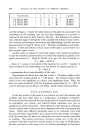
BOTTLE CLOSURES 371 (b) White wood pulp has the best appearance. (c) It is alleged that wood pulp is less prone to mould growth than com- position cork however, no definite proof of this has been advanced, and given the right circumstances either would be a vehicle for mould growth and subsequently may promote mould growth. It is worth mentioning here that conditions that may cause deterioration of cap liners are damp or dirty storage and broken containers. A list oi commonly used liner facing materials with a brief description is as A co-polymer of vinyl chloride and vinyl acetate on paper. A film of polythene of thickness 0.002 in. to 0.005 in. on facing paper or direct on backing material. follows: Vinylite Vinylseal Polythene Telecothene Alkathene Ceresine Oil varnish base, one type prepared from tung and linseed oil, on paper. Blackol British type cashew nut polymerised resin pigmented black on varnishable Kraft paper. Resistol Melamine formaldehyde impregnated paper with alkyd type resin. Crystal Cap Similar to Resistol. Tin Foil Pure metal of thickness 0.025 mm. to 0.040 mm. lamin- ated to paper or direct to backing material. Aluminium Foil Pure metal of thickness 0'025 mm. to 0'063 mm. laminated to paper or direct to backing material. Pliofilm Rubber hydrochloride on paper. Permaceal Similar to Pliofilm. Saran Polyvinyldene chloride on paper. Homogenous rubber or plastic liner material such as polythene or poly- vinyl chloride is used for some bottling purposes. The chief disadvantages in the usual use of these are ß 1. If liners made from them can be glued in, only hand assembly is practical, this adversely affects overall cost of cap. 2. Rubber liners invariably have a characteristic odour. 3. With plastic liners there is a lack of resiliency a,nd a tendency to flow when in use, but no evidence can be offered to prove this affects sealing efficiency. In the mineral water bottling trade returnable moulded caps with rubber ring liners have been used for some years now and appear to be gaining favour.

372 JOURNAL OF THE SOCIETY OF COSMETIC CHEMISTS Until a few years ago there were many varied types of sizes of caps and threads used, but this variety is being reduced although it is still extensive. At present the bulk of closure finishes come within the British Standard 1918, in which there are two specified types: shallow continuous thread finishes and tall continuous thread finishes. There are no dimensions specified in B.S. 1918 for screw cap, whether metal or plastic, but a method of testing caps with gauges is laid down. This is, in short, that screw caps, whether metal or plastic made to fit British Standard R-3/2 and R.4 glass finishes, shall be gauged by the use of a double-ended gauge, each end of this gauge being of certain maximum and minimum glass finish tolerances. The caps shall fit both ends of gauge. The overall diameter dimensions of shallow finishes range from 0'694 in. to 4.704 in., and that for tall finishes from 0'506 in. to 1.193 in. this is a wide range that includes sizes suitable for practically any purpose. There is one other feature regarding the weight of caps that is worth mentioning since with the modern trend of industry more and more caps are required to suit automatic assembly conditions. Generally speaking, caps used for automatic assembly on bottles have to be more robust than caps used for hand assembly, and resulting from the use of more material to make a robust cap it is common for caps used in automatic assembly to be more expensive than lightweight caps. To sum up for moulded caps, indications are that their overall use in various bottling trades is still increasing, and it would appear unlikely to decrease in the foreseeable future. METAL SCREW-ON CAP There are two types that are in common use: one that is completely prefabricated before use and the other prefabricated in a cup form. When used, this second type is placed upon a threaded bottle neck and mechanically rolled so that the shape of the container thread is formed on the cap. Metal caps are made from decorated pure aluminium, aluminium man- ganese alloy, tinplate, or blackplate this latter is essentially rolled steel plate of the same type that is used in the manufacture of tinplate, thick- nesses of material used being in the region of 0-009 in. to 0.020 in. Decoration is invariably done before fabrication and is in the form of coating, printing and varnishing also in a few instances, embossing. There are no definite laid down dimensional standards for metal caps in Great Britain. In practice there are mainly two types: those that agree with the rolled-on closure finishes, and those that agree with the B.S. 1918 closure finishes, the latter in turn being composed of two types, R3/2 and R.4. The laid down method of checking caps to fit these finishes is the same as that for moulded caps. Liner materials used in metal caps usually are of the same type as those
Purchased for the exclusive use of nofirst nolast (unknown)
From: SCC Media Library & Resource Center (library.scconline.org)