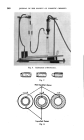
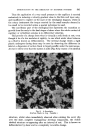
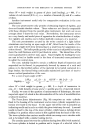
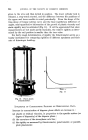
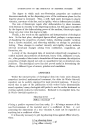
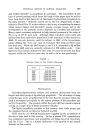
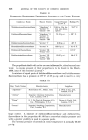
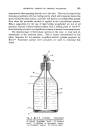
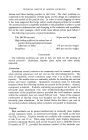
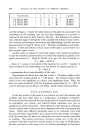
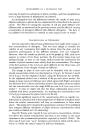
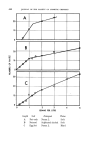
346 JOURNAL OF THE SOCIETY OF COSMETIC CHEMISTS where • is the slope of the upper linear portion of the plot, and (log stress) -- (4) (log effiux velocity) ---- log •' An account of the applications of this treatment may be found in ('). The treatment is, naturally, applicable to rheological data from either rotary or capillary effiux instruments. REFERENCES • "Viscometry and Plastometry," de Waele, A., J. Oil & Colour Chemists Assoc., 1925, 6, $3-69. "Change of Viscosity with Rate of Shear in Disperse Systems" (in German), de Waele, A., Koll.-Zeits., 1925, 36, 6, 332-33. "Plastometric Studies on the Structure of Interfaces" (in German), de Wade, A., and Lewis, G. L., Koll.-Zeits., 1929, 48, 2, 126-41. • "The Measurement of Plasticity," A. de Wade, The Science of Petroleum (Oxford University Press), 1935, 1106-17. "The Double Mobility of some non-Newtonian Fluids," de Waele, A., and Dinnis, G., Physics, 1936, ?, 426-$1. a "Rheology for the Technical Man," de Waele, A., Paint Technology, 1949, 14, 161, 205-14. "The Rheological Diagram," de Waele, A., and Lewis, G. L., (in English), Koll.-Zeits., 1953, 133, 2/3, 86-91. TECHNICAL ASPECTS OF AEROSOL PACKAGING A Lecture ddivered to the Society on Thursday, April 26th, 1956 A. HERZKA, B.Sc.* The considerations of practical impor[ante in [he planning of Aerosol produc[s and [he chief formula[ion difficulties usually encoun[ered are described and illus[ra[ed. A• aerosol, by definition, is a dispersion of fine particles in a gas for a period of time. Some pressurised packs, as will be discussed below, give rise to true aerosols, while the majority of packs give rise to anything but aerosols. Because of this and also to avoid any possible misconceptions, the terms "pressurised dispenser" or "fingertip dispenser" have been widely used in this country in the past. To-day, however, it is already possible to talk of an aerosol container, and everyone realises that a method of packing rather than a particular spray or emission is being discussed. According to Shepherd, • Charlie Griebauher, who packed ethyl chloride in glass containers in the 1890s, was the father of the aerosol industry. During the late 1920s German patents protected the use of carbon dioxide •' * Research Division, The 1V[etal Box Co., Ltd., London, W.3.

346 JOURNAL OF THE SOCIETY OF COSMETIC CHEMISTS where • is the slope of the upper linear portion of the plot, and (log stress) -- (4) (log effiux velocity) ---- log •' An account of the applications of this treatment may be found in ('). The treatment is, naturally, applicable to rheological data from either rotary or capillary effiux instruments. REFERENCES • "Viscometry and Plastometry," de Waele, A., J. Oil & Colour Chemists Assoc., 1925, 6, $3-69. "Change of Viscosity with Rate of Shear in Disperse Systems" (in German), de Waele, A., Koll.-Zeits., 1925, 36, 6, 332-33. "Plastometric Studies on the Structure of Interfaces" (in German), de Wade, A., and Lewis, G. L., Koll.-Zeits., 1929, 48, 2, 126-41. • "The Measurement of Plasticity," A. de Wade, The Science of Petroleum (Oxford University Press), 1935, 1106-17. "The Double Mobility of some non-Newtonian Fluids," de Waele, A., and Dinnis, G., Physics, 1936, ?, 426-$1. a "Rheology for the Technical Man," de Waele, A., Paint Technology, 1949, 14, 161, 205-14. "The Rheological Diagram," de Waele, A., and Lewis, G. L., (in English), Koll.-Zeits., 1953, 133, 2/3, 86-91. TECHNICAL ASPECTS OF AEROSOL PACKAGING A Lecture ddivered to the Society on Thursday, April 26th, 1956 A. HERZKA, B.Sc.* The considerations of practical impor[ante in [he planning of Aerosol produc[s and [he chief formula[ion difficulties usually encoun[ered are described and illus[ra[ed. A• aerosol, by definition, is a dispersion of fine particles in a gas for a period of time. Some pressurised packs, as will be discussed below, give rise to true aerosols, while the majority of packs give rise to anything but aerosols. Because of this and also to avoid any possible misconceptions, the terms "pressurised dispenser" or "fingertip dispenser" have been widely used in this country in the past. To-day, however, it is already possible to talk of an aerosol container, and everyone realises that a method of packing rather than a particular spray or emission is being discussed. According to Shepherd, • Charlie Griebauher, who packed ethyl chloride in glass containers in the 1890s, was the father of the aerosol industry. During the late 1920s German patents protected the use of carbon dioxide •' * Research Division, The 1V[etal Box Co., Ltd., London, W.3.
Purchased for the exclusive use of nofirst nolast (unknown)
From: SCC Media Library & Resource Center (library.scconline.org)