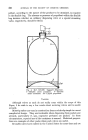
A METHOD FOR THE ANALYSIS OF LIPSTICK 393 The method to be offered here will, I hope, enable the analyst to arrive at a composition which will be essentially that of the lipstick under investiga- tion. FREE GLYCOLS Weigh a 'sample of lipstick, circa 4-00 grams, into a 250 mi. beaker. Add 50 mi. of absolute alcohol and heat with stirring until the mass is completely dispersed. Do not boil. Transfer this dispersion to a separatory funnel containing 60 mi. of water. Shake to mix, add two drops of con- centrated HC1, and extract with three 25 mi. portions of chloroform. Use each portion of chloroform to clean out the original beaker, boiling the solvent gently in the beaker to wash down the sides. Collect the solvent extracts in a separatory funnel, wash with a small amount of water, and add this wash water to the original aqueous portion. Make the aqueous fraction up to volume in a volumetric flask and determine the propylene glycol, using the method of Shupe. • TOTAL t)IGMENTS AND BROMOS Weigh a sample of lipstick, circa 4.00 grmns, place in a 250 ml. beaker, add 100 ml. heptane*,and digest on the hotplate at a temperature just below the boiling-point of the solvent. Continue this digestion for thirty minutes. Cover with a watch glass to inhibit evaporation. Remove from the heat and allow to stand at room temperature until the solution cools and the pigments settle. Filter through a WhatmariNo. 2 filter paper into a tared beaker, decanting the solution so that as little as possible of the pigments are transferred to the paper. Then transfer the pigments to the filter with three successive 25 ml. portions of hot heptane. Allow each successive_washing to drain completely before adding the next. Finally, wash the beaker and the funnel with 25 mi. of petroleum ether. Evaporate the solvent on the steam bath until a con- stant weight is obtained and report the result as total base. The total pigments and bromos may be determined by difference after correcting for the free glycols. Or if desired, the pigments and bromos may be weighed directly. Moisten the pigments and bromos on the filter with a small amount of alcohol and extract with several portions of 1 per cent ammonia, allowing each portion to pass completely through the filter before adding the next. Break up the lumps with a small glass rod to ensure complete solution of the bromos. Precipitate the dissolved bromos with HC1, heat to coagulate, filter, and wash well with hot distilled water. Re-dissolve with 1 per cent ammonia as before. Filter, again precipitate with HC1, filter and wash with hot distilled *American Mineral Solvents Co. normal heptane.

394 JOURNAL OF THE SOCIETY OF COSMETIC CHEMISTS water. Finally dissolve in not over 25 ml. of 1 per cent ammonia and separate by ascending chromatography on Whatman No. 2 paper using 1 per cent ammonia saturated with amyl alcohol as a developing agent.2 As the development of the chromatogram proceeds it will be seen that where the original drop was placed there will sometimes appear a brownish coloured spot which represents some of the lake colours stripped from the laking agent by the ammonia and not removed by the subsequent purifica- tion. Immediately above this will be a bluish red spot due to FD&C Red No. 3, if any be present either as such or as a lake. Immediately above this will be a less intensely blue-red spot due to D&C Red No. 21. Above this will be D&C Orange No. 5 and finally D&C Red No. 27. If rhodamine lakes are present, the dye will strip off and may easily be confused with D&C Red No. 27. However, if sufficient time be allowed, the rhodamine will finally outstrip the D&C Red No. 27 and appear as a purplish red spot toward the top of the chromatogram. This procedure will enable the analyst to determine qualitatively which of the bromos are present and relatively how much of each may be estimated by the size of the spots. If the identification of the lake colours seems necessary, they may be stripped and determined by the method of Sclar and Freeman. 8 ANALYSIS OF THE LIPSTICK BASE The total amount of base present will already have been deternfined as outlined in "Total Pigments and Bromos." Digest the base in 95 per cent alcohol by boiling gently for several minutes on the hot plate. Use approximately 200 ml. of alcohol for the base obtained from 4.00 grams of lipstick. During this digestion, the hydrocarbons will appear as a melted bubble on the bottom of the beaker, but almost everything else will dissolve. Allow to cool to room temperature, and filter into a tared beaker. Wash the original beaker and the undissolved waxes on the filter with several portions of cold alcohol. It is best to use a 4-inch funnel and a 17.50 cm. filter paper to facilitate the filtration and washing. The jelled mass of waxes on the funnel should be broken up occasionally with a glass rod during the washing to make sure that all alcohol soluble material is removed at this stage. This is a critical phase of this method, and great care must be exercised to make sure that sufficient attention be given to the washing with cold alcohol or some of the alcohol soluble material may be entrapped in the mass of wax crystals and lost. Little, if any, hard wax will be lost at this point by too much washing. Combine the washings in a tared beaker, dry to constant weight on the steam bath, weigh the residue, and record as the castor oil fraction.
Purchased for the exclusive use of nofirst nolast (unknown)
From: SCC Media Library & Resource Center (library.scconline.org)