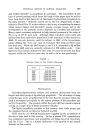
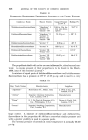
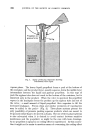
DEVELOPMENT OF A NEW PRODUCT 407 evaluation for pourability, absorption or dispersion effects on the skin or hair, preservation of original perfume, stability to pH value change, etc. The most satisfactory product considered from all angles can be put forward for evaluation by an independent panel of consumers. A thorough examina- tion of the marketing package in which the successful sample has been stored should take place and, if any adverse defects are observed, arrange- ments should be made to rectify faults and new containers tested and packed with the chosen formula. If slight defects on the container are observed, such as etching on the internal surface of tubes, the samples may be tested for a further period to evaluate the progressive action likely to occur over a period of time. The samples used for tests under natural light and sunlight should remain under test for as long as possible, and evaluation on any change recorded every seven days for a period of, say, four months. The evaluation of the finished product for consumer acceptance may be carried out in various ways, but I believe that the final evaluation should be made on the Blind Technique principle by an independent Panel consisting of a minimum oi 400 people fully representative of a cross-section of the potential purchasers. It is dangerous practice for one or two enlightened individuals to say that the product produced will be acceptable to the public. Consumers do not always readily accept a product which to the cosmetic chemist is the ideal. The consumer has many reasons for buying or not buying and many for not re-purchasing once bought, and these reasons may not always be logical. Buying habits are sometimes based on preference for no apparent reason, and the product or presentation may be accepted almost in the same manner as a child will naturally accept sweets. The sample, identified only by a code number and in a plain standard container, may first be offered to a regular Panel of 12 to 20 people chosen for their integrity. These Panellists are requested to use the product as directed and submit their report in writing in 10 to 14 days. Samples of a similar product are then submitted to the Panel and reported upon. The original sample, in a different container and under a different code number, is then again submitted to the Panel and their evaluation compared with their previous report. The whole process is then again repeated and the measurement of consistent acceptance or rejection taken. One must not, of course, repeat the process of alternating samples and competitive or similar products: otherwise the Panel will in time become conditioned. Three or even four strange samples may be introduced prior to the evaluation of the original sample a second time, a consistent report over a relatively long interval of time between tests being of greater validity than a similar report with a short interval between tests. If two or more samples of the finished product, which may vary only

408 JOURNAL OF THE SOCIETY OF COSMETIC CHEMISTS to a small extent, are available and there is doubt whether one might prove more acceptable than the other, the above type of Panel can be extremely helpful. Assuming one is now left with two samples about equally liked, the final choice may often be made by submitting these to about 100 to 200 office and factory personnel in one's own organisation or, if such personnel are not available, it is usually not too difficult to arrange such a test through the personnel officer of a large non-competitive company. The samples sub- mitted to such a Panel should be in plain standard containers identified only by code numbers, and half of the Panel should be requested to use A first with B second, with the remainder using B first and A second. With these larger Panel tests, it is wise to issue with the samples a card bearing set questions which are to be answered by the Panel, each card being signed by the Panellist before being returned. Care must be taken in the questions asked these should be of the open type and never leading. It is not wise to ask such a question as "Do you like A better than B ?" It is better to ask: "Do you prefer one sample to the other or do you find no difference ?" Similarly, on questions as to why A or B was preferred, if an attempt is made to find a preference by questions such as "Did A give better gloss than B, or did you find A lasted better than B ?" and again, "Do you prefer the perfume of A better than B ?" The answers to such questions will tend to be misleading, and more reliable information will be gained by asking: "Can you say why you preferred sample X ?" It should be appreciated that any preference shown by either of the two Panel systems referred to will not evaluate. the potential preference of the mass consumer, as the Panellists will not represent a typical cross-section of these purchasers. For instance, the personnel mentioned in the Office and Factory Test may predominate in the younger age group. Again, if 80 per cent of the above Panellists are factory workers as against 20 per cent office workers, one is faced with a social class distinction which may influence buying habits. Having arrived at the final sample which is considered to have the best user acceptance, this sample should then be put out under the Blind Tech- nique principle to the independent Panel first mentioned and should be tested against the nearest competitor existing on the market. To enable the Panel to state their preference on a pure user basis without bias being exerted either by package presentation or advertising, both samples are again issued in standard package identified only by code reference. The framing of the questionnaire to be sent out to this panel will depend entirely upon the type of product to be tested, but care should be taken to avoid leading questions, as it should be fully realised that a single preference for one of the samples can influence the answers given to other questions having no direct bearing upon the point of preference.
Purchased for the exclusive use of nofirst nolast (unknown)
From: SCC Media Library & Resource Center (library.scconline.org)