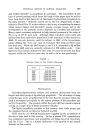
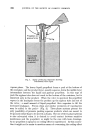
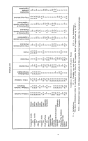
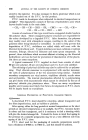
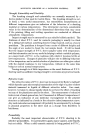
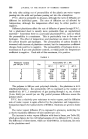
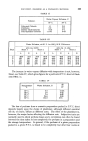
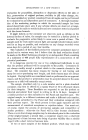
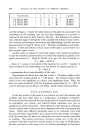
DEVELOPMENT OF A NEW PRODUCT 405 1. Sample 2. Sample 3. Sample 4. Sample 5. Sample 6. Sample 7. Sample 2,000 p.s.i. You will, I have little doubt, appreciate that the method of manufacture employed in our laboratory batches can often seriously affect the end-product. I refer, of course, to such things as conditions of stirring, rate of cooling, conditions of homogenisation, etc., and not only is it necessary to keep accurate records of the conditions employed so that these are available for study when later carrying out first pilot plant, and subsequently full-scale, plant production, but it is e. qually necessary for the conditions of manufac- ture employed in all variations of Formula A to be the same. Likewise with variants in Formula B, although these conditions will not necessarily be the same as those employed in the manufacture of Formula A. Bearing in mind the large effect the manufacturing conditions can often produce in the end-product, I would strongly recommend that the twelve samples I have already referred to be manufactured under varying conditions, each variation of formulae being treated as follows: cooled naturally. cooled rapidly. cooled slowly. stirred down to 45 ø C. stirred down to 30 ø C. stirred after homogenisation down to 30 ø C. homogenised at varying pressure, i.e. 500, 1,000, 1,500, Now you may well think that all this means a lot of unnecessary work, but I can assure you that development work planned on these lines will save a good deal of both work and time in the long run and give little room for latent formulae problems to develop after marketing. Further, you will obtain such a complete picture of the affects of the variants employed that you will be much more competent to carry out any subsequent formulae adjustments which may be necessary. Let us pause for a moment and see just how much work in the laboratory is involved in getting to the stage when we have our complete range of samples ready for shelf-life tests. The first step is to compound small laboratory batches, say, 500 grams of each formula and variants of same, and, assuming no obvious instability, we then proceed to make five kilograms of each, dividing each sample into ten parts and treating each 500 grams in the following manner: 3 x 500 grams into three beakers and record temperature against time, varying the cooling conditions. 2 x 500 gram samples one stirred down to 45 ø C., the other down to 30 ø C. Balance into homogeniser hopper, 500 grams withdrawn at 500 p.s.i., adjust pressure withdraw 2 x 500 grams at 1,000 p.s.i., adjust pressure

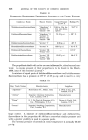
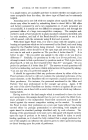
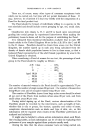
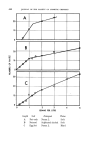
406 JOURNAL OF THE SOCIETY OF COSMETIC CHEMISTS withdraw 500 grams at 1,500 p.s.i., adjust pressure to 2,000 p.s.i. and with- draw the balance. Treat one of the samples withdrawn at 1,000 p.s.i. by stirring down to 30 ø C. After treating the other five variants of Formula A, and Formula B with its five variants in a similar manner, we have 120 samples each of approximately 500 grams and are in the position to commence shelf-life tests of the complete range, although it must be borne in mind that, in practice, a number of our samples will be eliminated from these tests because they have already shown defects and have been rejected. It could be argued that the only true shelf-life tests are those which involve the product under conditions of storage and for the length of time to which the product will normally be submitted, but I think that an accelerated shelf-life test, carried out in the proposed manner, will show whether the product under test can be expected to withstand a normal shelf life of, say, 12 to 18 months. An accelerated shelf-life test cannot, of course, give information as to just how long a product will stay in sound condition, if only because of the fact that storage conditions will vary to a large degree in different localities. If, however, the product will withstand the following conditions, there is little doubt that deterioration in the retailer's store and shop window will be avoided. Test 1. Subject the sample to 30 days at 50 ø C., examine and report every 7 days. Test 2. Subject the sample to 30 days at 40 ø C., examine and report every 7 days. Test 3. Subject the sample to -2 øC. for 30 days, examine and report every 7 days. Test 4. Subject the sample to alternating temperatures of -- 2 and 40 ø C., cycle every 24 hours. Examine and report every 7 days. Test 5. Subject the sample to carbon arc light for 100 hours' continuous exposure with controlled temperature. Examine and report at 20, 50, 70, 80 and 100 hours. Test 6. Subject the sample to storage in natural light and sunlight for 30 days. Examine and report every 7 days. Test 7. Control samples to be stored at 55-60 ø F. in the dark. The above tests should be carried out on the samples packed in the container in which they are intended to be ultimately sold and, if such containers are not transparent, duplicate samples, packed in white flint glass, should be subjected to the same test conditions to enable physical changes to be observed at seven-day intervals without disturbing the contents of the non-transparent containers. At the end oi the 30-day tests, the samples which have been proved satisiactory can be considered suitable for
Purchased for the exclusive use of nofirst nolast (unknown)
From: SCC Media Library & Resource Center (library.scconline.org)