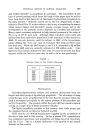
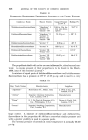
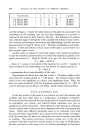
362 JOURNAL OF THE SOCIETY OF COSMETIC CHEMISTS Absolute alcohol Methylene chloride Charge: Hair lacquer (as above) Dichlorodifiuoromethane Trichloromonofluoromethane 36.0 g. 54.0 g. 75 parts by weight 46 ...... 46 ...... The most recent newcomer to aerosol hair lacquers is undoubtedly polyvinyl pyrollidone, .now freely available in this country. 3ø The PVP used in hair lacquers has a K value of 30 and a molecular weight of 40,000. One of the drawbacks of using PVP is its deliquescence, and the addition of a small amount of shellac has been suggested in order to overcome this. 3• Experi- mental packing of this formulation has shown that the shellac does not enter into any combination with the PVP and the desired effect is not achieved. A satisfactory formulation having all the desirable qualifications has been achieved by plasticising the PVP with dimethyl phthalate and adding a small amount of silicone fluid MS.555 (supplied by Midland Silicones Ltd.), a uniform film being formed, Wool wax alcohols and isopropyl myristate are other suitable additives and many more are referred to in the literature. a• No reference to perfumes has been made in the above formulations. While dosages may well be within the limits published 33 much will obviously depend on the perfume used and on the perfumer using it. LABORATORY PRACTICE It is hoped that the examples cited above have made it abundantly clear that a great deal of research is necessary before any particular pack can be approved. The first step, on receiving samples in the laboratory, is to test for compatibility between the product and the type of propellent which is suggested by experience. We have found the use ot ordinary lemonade "pop-bottles," suitably protected, to be very excellent for this purpose. If the first test is satisfactory, metal strips are inserted into another similarly filled bottle and the effects of the pack on the strips over a period of 7-10 days at room temperature is noted. If no deleterious effects are noticed by that time a number of aerosol containers are packed with what one hopes to be the ultimate formulation, and the containers are stored both at room temperature and at 95 ø F. for at least eight months. During that period various containers are destructively examined at regular intervals and the performance of the valve itself is checked frequently. A period of eight months may sound a little arbitrary, but it is a fact that any product which was passed as satisfactory under our test conditions has not failed when put on the market. For some time, the favourite method employed in the United States consisted of storing the

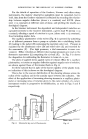
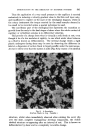
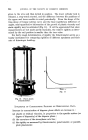
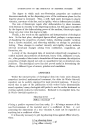
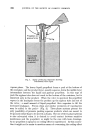
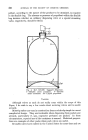
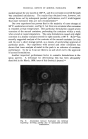
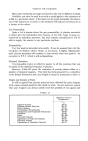
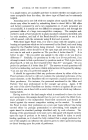
TECHNICAL ASPECTS OF AEROSOL PACKAGING 363 packed aerosol for one month at 130 ø F., and if no corrosion occurred the pack was considered satisfactory. The results thus obtained were, however, not always borne out by subsequent product performance, and it would appear that more extensive tests are now recommended. 84 Our own experience has proven that in the majority of cases storage at 95 ø F. accelerates corrosion, see Fig. 5, but there are occasions when corrosion is retarded at that temperature. One particular formulation caused severe corrosion of the aerosol container, perforating the container within a week when stored at room temperature. The same formulation caused only slight corrosion in a similar container stored for eight months at 95 ø F. Roots• has recently suggested analysis of the contents of the aerosol container for iron and tin over a short storage period, as a means of accelerating approval of particular packs. Our experience with aerosol and other containers has shown that trace analysis of metal in the pack is no criterion of container performance. So far as I can see there is no safe short cut to the approval of aerosol formulations. Another important performance factor in cosmetic formulations is the spray pattern. A technique for determining this has been adequately described in the March, 1956, issue of this Society's journal.• Fig. 5. Aluminium Aerosol Container (no internal laquering) showing pitting due to unsuitable product formulation.
Purchased for the exclusive use of nofirst nolast (unknown)
From: SCC Media Library & Resource Center (library.scconline.org)