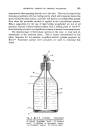
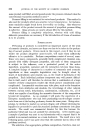
396 JOURNAL OF THE SOCIETY OF COSMETIC CHEMISTS The reagents must be checked very carefully against known mixtures of these two substances. Calculate the amount of castor oil present by multiplying the amount of glycerin found by 10. The presence of propylene glycol would indicate that there was some fatty acid ester of this substance present in the original lipstick however, since it will probably be impossible to prove conclusively which fatty acid is involved, the propylene glycol found here is usually reported as the ricinoleic acid ester purely as a matter of convenience. Saturate an aliquot of the aqueous extract with sodium chloride, distil the alcohols, and test for methyl alcohol using the method described in the United States Pharmacopoeia, 15th edition, page 27. The amount of fatty acid available precludes determining many of the classic constants for this class of substances. If the fatty acid is liquid it may reasonably be assumed that it is ricinoleic acid. This may be confirmed by the refractive index. Na•ø1.4720. The unsaponifiable fraction will include the alcohols arising from the saponification of the alcohol soluble fraction of the lanolin as well as any other free alcohols present. If there are any other higher alcohol esters present the alcohols from thes• will occur here. THE HARD WAX FRACTION This part will contain all of the hydrocarbons, all of the carnauba wax, about 80 per cent of the candelilla wax, all of the cold alcohol insoluble part of the lanolin and a. ny other cold alcohol insoluble material which may have been present. Dissolve this mixture of waxes in boiling petroleum ether. Allow to cool, filter, and chromatograph this solution on aluminum oxide using the method of Newburger. 4 Wash the column with petroleum ether until no more material is obtained. Evaporate the solvent, dry to constant weight and weigh. This weight will represent the total hydrocarbons. Elute the column with boiling 95 per cent alcohol until no more material can be extracted. Evaporate the solvent and weigh. This material will represent all of the alcohol insoluble portion of the lanolin and almost all of the non-hydrocarbon portion of the candelilla wax. Dissolve the cold petroleum ether insoluble waxes on the filter with boiling chloroform, transfer to a tared beaker, evaporate the solvent and weigh. Report this weight as carnauba wax. Confirm the presence or absence of lanolin by applying the Lieberman- Borchard test to the alcohol elutriate from the aluminum oxide chromato- gram and to the unsaponifiable matter from the cold alcohol soluble or "castor oil" fraction.

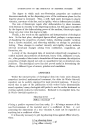
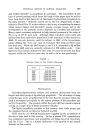
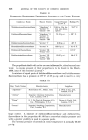
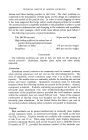
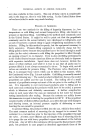
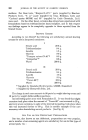
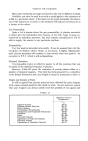
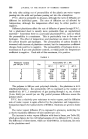
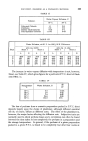
A METHOD FOR THE ANALYSIS OF LIPSTICK 397 EXPERIMENTAL In order to establish the solubility of the various lipstick raw materials either alone or in combination, a series of determinations were made of these solubilities. The same procedure was used as that described in the method. Castor oil was found to be completely soluble in cold 95 per cent alcohol. Carnauba wax and ozokerite were found to be, for all practical purposes, completely insoluble in this solvent. Mixing these waxes with castor oil did not increase their solubility in alcohol. Lanolin was found to be 52 per cent soluble and 48 per cent insoluble in cold 95 per cent alcohol. The insoluble fraction from lanolin was found to be completely soluble in cold petroleum ether. Candelilla wax was found to be 20 per cent soluble and 80 per cent in- soluble in cold 95 per cent alcohol. The insoluble fraction from this wax was found to be almost completely soluble in cold petroleum ether. TABLE I COLD 95 PER CENT ETHYL ALCOHOL Soluble Insoluble Lanolin 48% Lanolin 52% Candelilla wax 20% Candelilla wax 80% Castor oil Carnauba wax Cetyl alcohol Hydrocarbons Methyl ricinoleate Propyleneglycol-monoricinoleate Aluminum oxide chromatography shows no hydrocarbons in lanolin and nearly all of the material adsorbed on the column, 96 per cent or more, may be eluted with hot alcohol. Chromatography of the alcohol insoluble fraction of candelilla wax shows 45 per cent of the original wax to be hydrocarbons, and of the 35 per cent adsorbed on the column, only a part is removed by elution with hot alcohol, leaving a considerable amount still on the column. Analysis of a lipstick of known composition shows the following: TABLE II Total base Pigments and bromos Castor oil fraction Hard wax fraction Hydrocarbons Glycerin Castor oil calc. from glycerin Total alcohols Free propylene glycol _Found Theory 86-40 87.64 87-00 12.50 12.36 13'00 68-53 68-20 67'00 18.27 20.00 18'00 10-00 10.00 10.00 5-50 6.00 55.00 60.00 7-55 7.25 8.00 2.35 2.42 2.50
Purchased for the exclusive use of nofirst nolast (unknown)
From: SCC Media Library & Resource Center (library.scconline.org)