A NEW FAMILY OF AMPHOTERIC SURFACTANTS: FATTY AMINO ACID DERIVATIVES* By D. L. ANDERSEN and A. J. FREEMAN General Mills, Inc., Minneapolis 13, Minn. THE FORMULARY of the modern cosmetic chemist has become ex- ceedingly complex. The multicomponent systems comprising today's cosmetic products are a far cry from the "tincture of green soap" of yes- terday. The trend in cosmetic formulations is to specificity of function- ality--each component performing a particular task: foam stabilization, emulsification, solubilization, softening. The fundamental precepts re- main. A shampoo is compounded to clean the hair and scalp a hand lotion to soften the skin of the hands. However, the shampoo must do more than cleanse the hair and scalp the hand lotion must do more than soften the hands. Competitive emphasis is on the "plus" features-- shampoos that kill dandruff or that leave the hair more manageable medicated hand lotions. To meet this tremendous increase in emphasis on specific functionality, the synthetic detergent manufacturers have kept pace with an ever in- creasing number of products--each chemically conceived to perform a specific task or combination of tasks. The list of commercially available surface active agents has grown from a handful to hundreds. PRODUCTS A new family of surface active agents, the fatty amino acid deriva- tives, has been developed to meet the growing need of the cosmetic industry. These products are known under the trade name Deriphats.• Chemically these products divide into two major classes: (a) Monoadducts (N-alkyt/5-aminopropionates) RNHCH2CH2COO-M + (b) Diadducts (N-alkyl/5-iminodipropionates) jCH2CH.,COO- M * RN '•CH•CH.•COO- M-' ß Presented at the May 10, 1957, Meeting, New York City. t Available commercially from General Mills, Inc., Chemical Division, Kankakee, Ill. 277

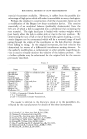
278 JOURNAL OF THE SOCIETY OF COSMETIC CHEMISTS The "R" group represents any fatty-based alkyl chain, more commonly lauric, coco and tallow. The "M" group represents any neutralizing base, commonly sodium or triethanolamine. In Table I are listed the commercially available products and their structures. TABLE I--FATTY AMINO ACID DERIVATIVES Phvsical Mono- or Fatty Neutralizing Product lfform Diadduct Chain Base Type 170 98% active flake Mono- Lauryl Sodium Type 170B 50% (aq.) solution Mono- Lauryl Triethanolamine Type 180 98% active flake Di- Lauryl Sodium Type 151 98% active flake Mono- Coco Sodium Type 157 98% active flake Mono- Tallow Sodium Type 154 98% active flake Di- Tallow Sodium Type 152 98% active flake Mono- Stearyl Sodium SYNTHESIS The fatty amino acid derivatives are manufactured via the condensa- tion of a fatty primary amine and methyl acrylate. The aminopropionic ester obtained thereby is then hydrolyzed to the appropriate water soluble carboxylic salt. RNH2 + CH2 = CHCOOCH.• -• RNHCH•CH.oCOOCH, jCH,zCH•COOCH.• RNH• -3- 2 CH• = CHCOOCH• -+ RN "'XCH•CH•COOCH.• Primary amines are capable of adding one or two moles of methylacrylate. Hence, the terminology, monoadducts and diadducts. ELECTROCHEMICAL PROPERTIES Surface active agents derive their chemical, physical and performance characteristics from their electrochemical nature. Generally, synthetic detergents are described as monofunctional and are characterized as anionic, nonionic or cationic based on their electrochemical structure in solution. It has only been in the past few years that the terms ampholytic or ampho- teric have been used to describe a new class of surface active materials. Amphoteric surfactants are polyfunctional and can exhibit anionic, cati- onic or nonionic characteristics depending on whether the system is alka- line, acidic or neutral. The fatty amino acid derivatives are almost classically simple examples of amphoteric surfactants. They contain the fatty amine functionality and the carboxylic acid functionality and as such are capable of fatty amine salt characteristics in acid systems, carboxylic acid salt characteristics in alkaline systems, and inner salt (zwitterion) or nonionic characteristics in neutral systems.
Purchased for the exclusive use of nofirst nolast (unknown)
From: SCC Media Library & Resource Center (library.scconline.org)