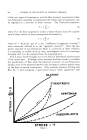
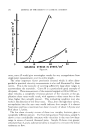
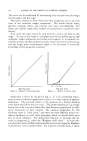
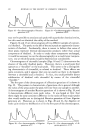
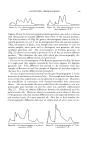
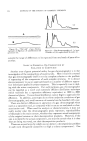
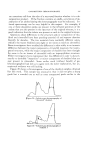
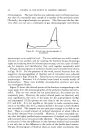
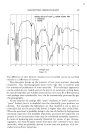
314 JOURNAL OF THE SOCIETY OF COSMETIC CHEMISTS Pigment dispersions were mentioned in passing during the flow curve discussion. At higher concentrations they often tend to be dilatant, with strong dependence on the shape, size and surface character of the particles. At lower levels of pigment to vehicle thixotropic flow is often noted. Strong effects are obtained with small amounts of surface active agents a specific case is the change in an ultramarine blue dispersion in mineral oil which has been reported (4). The thixotropic curve lost its loop almost entirely, be- coming plastic flow, with the addition of a small amount of Aerosol OT. The addition of lecithin to a suspension of quartz in water which is origi- nally nonthixotropic changes it to a plastic and thixotropic material (5). These examples are useful to illustrate the powerful nature of such addi- tives. They are double-edged weapons, and we suspect that at times an undesirable consequence in flow properties, especially with aging, which was not foreseen has caused many headaches in industrial cosmetic products. Our own reason for advocating agents, such as Ben-A-Gel where modifica- tion of flow properties or the state of pigment flocculation is desired, is based on their inert behavior they do not affect surface tension, and any in- fluence on pigment fiocculation seems to be a mechanical matter of holding larger vehicle layers around particles rather than changing the character of the vehicle-particle in terrace. Thickening nonaqueous liquids satisfactorily has posed problems in uni- formity and package stability for many years. The metallic soaps as a class are well known for gelling mineral and vegetable oils. Most of the anomalous results obtained with them from time to time can be traced to two sources. Variables in the soaps themselves, such as the amount of free acid, moisture, metal content and so on, cause serious differences in the rheological properties of the gels. In addition, the same soap with different heat and milling histories will produce correspondingly different flow curves. Resinous or polymeric products are also frequently used as thickeners. As we have seen, the predominant effect tends toward a pseudoplastic sys- tem, though plastic flow is frequently associated with such polymers as bodied drying oils. Reproducibility and stability in the package must be studied carefully in each case. The Bentones, which are organic compounds of montmorillonite, have been phenomenally successful in the protective coating field for thickening and gelling various vehicles since their introduction a few years ago. They will undoubtedly become a similarly useful adjunct to the cosmetic formulating industry. Bentone gels produce thixotropic curves of the same type as shown previously for Ben-A-Gel, and there is special value in their uniform behavior. The relationship between concentration of Bentone and the area of the loop in the thixotropic curve is essentially linear in nature, making it quite possible to predict the behavior of a Bentone with comfort-

RHEOLOGICAL REVIEW FOR COSMETIC CHEMISTS 315 able accuracy. The Bentone gel is also unaffected by temperature varia- tions, which we would like you to keep in mind when you formulate a face cream for use in cold climates. In your everyday formulating work, we should like to suggest, in closing, a few points which might be useful: 1. When such factors as yield point, extent of thixotropy and changes in body during package aging are in question, the use of a good multi-point method to determine what flow properties you actually have in hand is the most reliable means of collecting fundamental data. We hope it is clear that a measurement taken at a single point, such as at one rate of shear, has ,extremely limited value, even for control purposes. 2. Knowing something of the rheology of the individual components of your formulations should be very helpful. The combining of the flow types we have discussed is often exactly what you are doing to reach an estheti- ,cally pleasing product. 3. Keep a close check on the powerful modifiers in emulsions, pastes and dispersions. Surface active agents, dispersing agents and gelling agents should be checked to determine the relationship between the concentration of the agent and its effect on flow properties. 4. Where systems are pigmented, you can modify the theology effec- tively by changes in the shape, size and specific surface of the particle. Sometimes a different grade of titanium dioxide, iron oxide, talc or whiting may produce exactly the effect you need. REFERENCES (1) Cajori, F., "Sir Isaac Newton's Mathematical Principles of Natural Philosophy and His System of the World," Berkeley, The University of California Press (1947). .(2) Houwink, R., "Elasticity, Plasticity, and Structure of Matter," Cambridge, Cambridge University Press (1940). (3) Green, H., "Industrial Rheology and Rheological Structures," New York, John Wiley & Sons, Inc. (1949). (4) Fischer, E. K., "Colloidal Dispersions," New York, John Wiley and Sons, Inc. (1950). (5) Freundlich, J., 5 t. Soc. Chem. Ind., 5:3, 223T (1934).
Purchased for the exclusive use of nofirst nolast (unknown)
From: SCC Media Library & Resource Center (library.scconline.org)