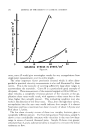
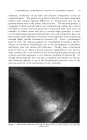
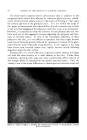
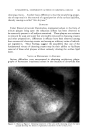
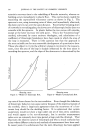
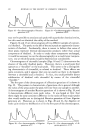
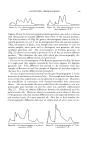
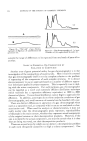
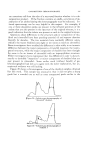
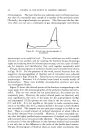
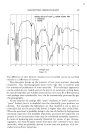
306 JOURNAL OF THE SOCIETY OF COSMETIC CHEMISTS sensitivity, et cetera. Under intense filtered ultraviolet illumination, fluorescent areas could be clearly focused upon the ground glass of the camera but curiously did not appear in the processed panchromatic nega- tives. However, it was discovered that when a pale yellow filter was used on the lens during exposure, the fluorescent sites were recorded in excellent detail and were greatly dependent upon the density of the particular filter used. The accompanying figures are presented as general examples of sebum fluorescence and glandular excretion. All were photographed by Lewis J. Sunny, B.P.A., using filtered ultraviolet light as the sole source of illumination. BIBLIOGRAPHY (1) Rothman, Stephan, "Physiology and Biochemistry of the Skin," Chicago, The University of Chicago Press (1954), pp. 284-336. (2) Montagna, W., "The Structure and Function of Skin," New York, Academic Press, Inc. (1956), pp. 255-293. (3) Weitkamp, A. W., •. •lm. Chem. Soc., 67, 447 (1945). (4) MacKenna, R. M. B., Wheatley, V. R., and Wormall• A., 7. Invest. Dermatol., 15, 33 (1950). (5) Wheatley, V. R., St. Bartholomew's bjrosp. 7, 57, 5 (1953). (6) Rothman, S., and Schaaf, F., in Jadassohn, "Handb. d. Haut- u. Geschlechtskr.," Vol. 1, Berlin, J. Springer (1929), p. 161. (7) Peck, S. M., Rosenfeld, H., Leifer, W., and Bierman, W., dcrh. Dermatol. and Syphilol., 39, 126 (1939). (8) Burtenshaw, J. M. L., 7. Hyg., 42, 184 (1942). RHEOLOGICAL REVIEW FOR COSMETIC CHEMISTS* By A. L. SeARBROUGH National Lead Company, New York, N.Y. RHF. OLO•V is the science of the deformation and flow of matter. That is a rather sweeping definition, since it allows ample room for studies from mayonnaise to volcanic lava, as well as from blood serum to wet sea sand. Our purpose here, since the scope of the subject is enormous, is to choose a few aspects which might have a direct and practical bearing in the field of cosmetic chemistry. We should like to suggest a few thoughts which may be helpful in your work of continual improvement of various pastes, creams, solutions and emulsions, the bulwark of your trade. Perhaps it would also be well to enter a standard disclaimer clause at this point. We are all familiar with the necessary custom in the chemical in- dustry. The printed brochure describes wonderful new products and rec- * Presented at the October 24, 1956, Meeting, New York Chapter, New York City,

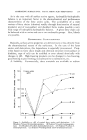
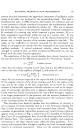
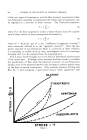
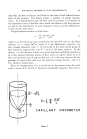
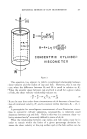
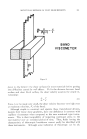
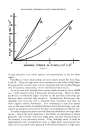
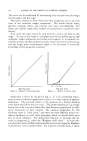
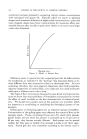
RHEOLOGICAL REVIEW FOR COSMETIC CHEMISTS 307 ipes which will solve all of the problems that have been keeping you awake at night. Then, on the last page, is a formidable paragraph which says, in effect, that the foregoing data "ain't necessarily so." Well, our position may be similar in that we are speaking not as either a cosmetic or rheology expert, but as one who has enjoyed our combination of theoretical and practical interests in the flow properties of matter. What we have ob- served and read in the pigment, paint, ink and plastics fields seems to us to have a very definite bearing on your products and problems. Let us begin with a review of our definitions, so that we have a base of mutual agreement for later discussion of practical mixtures. The follow- ing section on types of flow properties may be familiar ground, but we have a choice to make in some instances as to terms and schools of thought. There is such a network of conflicting beliefs in non-Newtonian flow that one must thread his own way, depending on experience and training. TYpEs OlV FLow The term "Newtonian flow" is not a subject of dispute. It comes from Newton's basic law of viscosity, which produced a definition of coeffi- cient of viscosity as the tangential force per unit area that will produce a unit rate of shear. More specifically, a substance has a viscosity of one poise when a shearing stress of one dyne per sq. cm. produces a velocity gradient of 1 cm. per sec. per cm. The classical model used by Newton consisted of two parallel planes confining the liquid being tested. It is not suitable as such for a practical instrument, because no one has devised a way of making the liquid retain its shape and position without using some type of side walls. The derivation of the cylindrical cup-and-bob type of viscometer was not only a logical expedient of simply curving the planes so that the liquid was continuous, but it was actually anticipated by Newton himself. In 1713, his Principia specifically outlined the action of a fluid between fixed and rotating concentric cylinders, pointing to transla- tion of motion from one to the other by the fluid (1). Though about a century and a half passed before further interest came to light, finally Poiseulle in 1846 reported that the volume per second of liquid flowing through a capillary tube is directly proportional to the activating stress. This was followed promptly by the work of other scien- tists leading directly to the first theoretical analysis of flow and definition of the coefficient of viscosity. Fig. 1 shows the performance of a New- tonian liquid when rate of shear is plotted against shearing stress, on a ro- tational viscometer. The curve is always a straight line intersecting the origin in NewtonJan liquids, because the rate of flow is directly proportional to the force exerted on the liquid. At any chosen point on the curve, the viscosity coefficient is equal to the shearing stress divided by the flow.
Purchased for the exclusive use of nofirst nolast (unknown)
From: SCC Media Library & Resource Center (library.scconline.org)