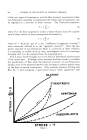
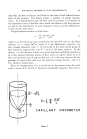
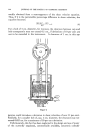
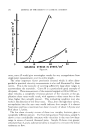
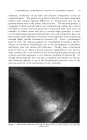
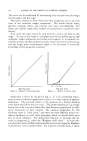
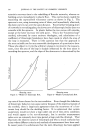
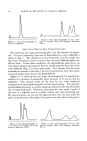
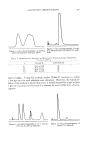
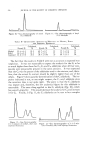
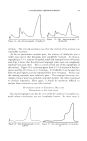
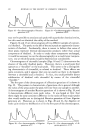
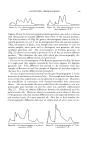
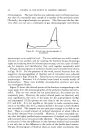
288 JOURNAL OF THE SOCIETY OF COSMETIC CHEMISTS readily obtained froin a rearrangement of the shear velocity equatiom Thus, if • is the permissible percentage difference in shear velocities, the equation becomes: 100 (Ro 2 -- R?) R? = • (9)1 For a bob of 4 cm. diameter, for instance, the clearance between cup andl bob consequently may not exceed 0.1 cm., if deviations of 10 per cent not to be exceeded in the instrument. A clearance of 1 cm. in this ap-• /4 Figure 4. paratus could introduce a deviation in shear velocities of over 55 per cent. Similarly, for a smaller bob of, say, 1 cm. diameter, the clearance may not exceed 0.025 cm. for a maximum of 10 per cent deviation. Unfortunately, this fact has been neglected in the design and use of many of the currently employed, commercially available, concentric cylinder

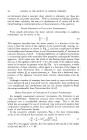
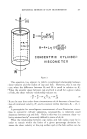
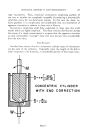
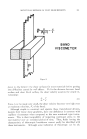
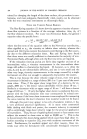
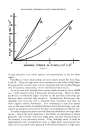
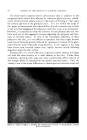
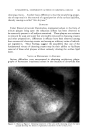
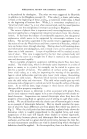
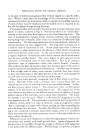
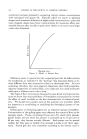
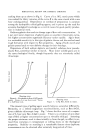
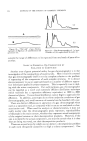
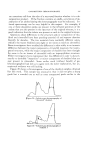
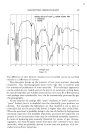
ROTATIONAL METHODS OF FLOW MEASUREMENTS 289 type viscometers. Thus, rotational instruments employing paddles of one sort or another are completely incapable of producing a theoretically valid flow curve for non-Newtonian liquids. In this case the shear ve- locity gradient is so complicated and undefinable that any description of apparent viscosities in relation to shear rate is illusory. Instruments employing small bobs suspended in large cups also yield results which are highly empirical. The shear velocity distribution during the course of a single measurement is so great that the apparent viscosity at some intermediate "average" shear rate may deviate very considerably from the true value. END EFFECTS Another basic source of error in concentric cylinder types of viscometers are the ends of the cylinders. Especially when the length of the bob is small compared to the diameter, a considerable portion of the torque meas- M CONCENTRIC WITH END dv W r •'• = r tQn•, CYLINDER CORRECTION Figure
Purchased for the exclusive use of nofirst nolast (unknown)
From: SCC Media Library & Resource Center (library.scconline.org)