FUNDAMENTAL, COMPARATIVE ACTIONS OF CLEANSING CREAMS 301 were surprisingly resistant to removal by scrubbing with soap and water. They were not grossly apparent under ordinary conditions of illumination. Although present over most of the body surface, these sebal plaques were most numerous on protected areas such as the chest or back and on those areas subject to drying and cold such as the forehead, cheeks or chin. They have been consistently found to be present on the facial skin of men and much less frequently on the facial skin of women. (It is of further interest to note that solidified sebum was found in greater abundance on the facial skin of men who shave electrically than on those using lather and razor.) These sebal plaques have received scant attention in the published literature. Since their presence is incompatible with the presumed func- tions of sebum, the foregoing observations suggested the possibility that the efficacy of cleansing creams may lie in their ability to dislodge and re- move these plaques from the orifices of the sebaceous ducts initial ex- periments revealed such preparations to be more effective indeed than the common soap-and-water scrub. It was of interest therefore to determine if differences in the relative efficiencies of commercial preparations could be demonstrated and to further investigate the properties of some of the individual ingredients in the hope that the findings might confirm or shed light on the nature of the action of such cosmetic preparations. (It should be emphasized that the studies which follow were concerned with the re- moval of sebal plaques and not with the removal of the surface lipid layer of sebum the latter is indisputably essential to the integrity of normal, healthy skin.) ]•X P E RIMEN'i'A L The skin of the normal female back was illuminated by filtered ultra- violet light (3600 Angsttoms) and individual sites were chosen for study based on the presence of evenly distributed fluorescent sebum deposits. Each of four commercial cleansing creams was then applied to a 2 X 2 cm. gauze swatch and secured to the experimental site with adhesive tape. After a contact time of fifty minutes, the swatches were removed and the areas wiped dry With cleansing tissue. The treated sites were then ex- amined for changes in the number of sebum deposits by comparison with adjacent hntreated areas and scored visually as follows: zero, no effect single plus, slight effect double plus, marked effect and triple plus, pro- nounced effect. Experiments were repeated at least five times using the cross-over experimental design with several subjects. The findings are presented in Table I and indicate that differences in efficiency, albeit minor in degree, could be detected by gross subjective observation among the four preparations. It should be mentioned that plaque removal could be accomplished in a

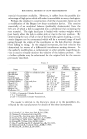
302 JOURNAL OF THE SOCIETY OF COSMETIC CHEMISTS matter of minutes by applying friction to the treated areas. Unfortunately, it was found difficult to apply the same uniform degree of friction to the several treated sites also, such friction invariably resulted in a pronounced darkening of the area (under ultraviolet illumination only) thereby ren- dering the results difficult to evaluate. This procedure was therefore dis- carded for the purposes of the present investigation. TABLE I Average Product Individual Scores Score Cleansing Cream A 4-4- 4-4- 4-4-+ 4-4- 4-4- 2.2 Cleansing Cream B 4-4-+ 4-4- 4-4- 4-4- 4-4- 2.2 Cleansing Cream C +4-4- 4-4- 4-4-4- 4-4-4- 4-4- 2.6 Cleansing Cream D 4-4-+ 4-4-4- +4-4- 4-4-4- 4-4-4- 3.0 Silicone grease 0 0 0 0 0 0 Salts 0 0 0 0 0 0 Milk + 0 + + + 0 0.8 Span 20 4- 4- 4- 4- 0 0.8 Tween 85 4- + + 4- 0 0.8 Petrolatum + ++ + + + + 1.4 Lanolin, toilet + ++ + + + ++ 1.6 Hydrogenated Lard ++ ++ +++ ++ ++ 2.0 Polyethylene Glycol 400 + + + + + + + + + + + + + 2.6 Olive $il ++ +++ +++ ++ +++ 2.6 Based on the findings obtained with the cleansing creams, similar ex- periments were conducted with a number of individual ingredients. The latter were chosen at complete random--those which happened to be con- veniently on hand--and by no means were intended to represent a cross- section of ingredients commonly used. The findings, also presented in Table I, indicate a marked spread of efficacy among the products with oleag- inous substances being the most effective. In view of the known lipoidal nature of sebum, the solubilizing properties of a series of fat solvents were also studied. These included acetone, chloroform, glycerol, kerosene, white gasoline, dioxane, trichloroethylene and ethanol (95 per cent). Because of their topical irritant properties, extended applications were avoided instead, they were applied to the skin by means of a saturated cotton swab and rubbed into the area for a period of sixty seconds. Surprisingly, none of these solvents was found to be effective in removing the solid sebum plaques however, they effec- tively removed the surface oily layer rendering the treated areas dry and uncomfortable. DISCUSSION The sebaceous gland has been exhaustively reviewed by Rothman (1) and by Montagna (2) among others. From a physiological point of view, these glandular elements have been studied in reference to structure, dis-
Purchased for the exclusive use of nofirst nolast (unknown)
From: SCC Media Library & Resource Center (library.scconline.org)