AMPHOTERIC SURFACTANTS: FATTY AMINO ACID DERIVATIVES 281 Iproperties, these amphoterics exhibit some degree of bacteriostatic action. lAirhough exhibiting a relatively high degree of substantivity to the skin, Ithe fatty amino acid derivatives are essentially innocuous to the skin. lThis mildness probably is a result of their general chemical relationship Ito the amphoterism of the skin. E. Hydrotropic Properties. The alkyl/5-iminodipropionates (diadducts) lexhibit definite solubilizing action on certain organic and inorganic ma- Irerials. The chlorinated germicides, for example, can be solubilized at •neutral pH's with the iminodipropionates. This suggests the solubiliza- ition of other poorly soluble organic materials as additives to specialized Icosmetic products. In the field of inorganic materials, considerable success Ihas been had in formulating liquid heavy duty detergent formulations •containing concentrations of polyphosphates well in excess of the normal •solubility and compatibility of polyphosphates and syndets. F. Emulsification. In general, single component surfactant systems are •not considered optimum for emulsification. Hence the fatty amino acid I derivatives are of interest in emulsification in two ways. They, being am- Iphoteric in nature, offer promise because of their inherent polyfunctionality. I In addition, their compatibility with a wide range of other products offers •multicomponent systems heretofore impossible. The coco and tallow- I based amino acids are particularly interesting in emulsification problems. G. General Properties. Aside from the specific properties discussed so far, the versatility of these amphoterics extends to the surface active properties of detergency, wetting, surface and interfacial tension lowering, etc. Combinations and judicious use ofmonoadducts, diadducts and vari- ous fatty chains, coupled with pH control, allow selection of virtually any degree of effectiveness desired. Controlled cleaning and controlled wet- ting are possible. Surface or interfacial tensions can be adjusted. Another somewhat unusual property of interest to cosmetic chemists is corrosion inhibition. These amphoterics have demonstrated their ap- plicability as corrosion inhibitors in aqueous oil systems at concentrations as low as 5 ppm. Even at relatively high aqueous concentrations (such as encountered in a typical cosmetic formulation), these products are vir- tually noncorrosive, attacking iron only very, very slowly Hence, the fatty amino acid derivatives are suggested as prime ingredients in aerosol formulations. AP P LICATION s By virtue of its extreme versatility, the amphoteric molecule offers po- tential applicability to virtually any cosmetic formulation wherein specific surface active properties are required. The family of products possible through the various fatty chain lengths, the monoadducts, and the di- adducts, allows the selection of a particular product to perform a specific

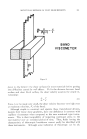
282 JOURNAL OF THE SOCIETY OF COSMETIC CHEMISTS function or series of functions. Shampoos, conditioning rinses, syntheti(5 bar soaps, face creams, hand lotions, etc., are all possible with the use oH one or more of the fatty amino acid derivatives. SUMMA RY A new family of amphoteric surface active agents based on the conden4 sation of a fatty primary amine and methyl acrylate have been made avail-I able commercially in. both monoadduct and diadduct forms and in a vat4 iety of fatty chain lengths. Their flexibility as to chemical structure andl their amphoteric polyfunctionality combine to provide an extremely ver• satile family of products offering promise in a wide variety of applications.I These fatty amino acid derivatives are particularly adapted to cosmetici formulations, offering controlled surface active properties, compatibilityl with a wide range of products, mildness and polyfunctionality. ROTATIONAL METHODS OF FLOW MEASUREMENTS* WALTER K. ASBECK Union Carbide Chemicals Company, South Charleston, 14•. ?a. A LARGE NUMBER of various types of rotational viscometers are obtain- able commercially, and many more are described in the current literature. Some special advantage over available apparatus is usually claimed for each new instrument which is described. Often a very specialized knowl- edge of the field of rheology and the specific application of a given instru- ment is consequently required before an adequate choice of apparatus and the results which it may be expected to yield can be made. To aid in this choice, it is pertinent to consider the various aspects of rotational viscom- eters, and those related to them, and to determine their advantages and limitations. With this background a more adequate choice of commercial apparatus can be made, or the design of special equipment to meet specific needs can be more rapidly accomplished. Although today theology is playing an important and ever increasing role in industrial control and research, it was not until the latter part of the 18th century that Coulomb (l) laid the foundation for rotational' type viscometers. In order to substantiate the derivations earlier carried out by Newton (2) for viscous flow, he suspended a circular plate from a * Presented at the October 4,1956, Seminar, New York City.
Purchased for the exclusive use of nofirst nolast (unknown)
From: SCC Media Library & Resource Center (library.scconline.org)