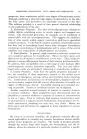
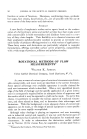
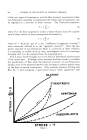
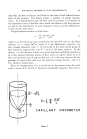
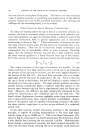
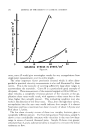
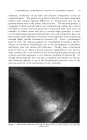
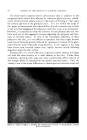
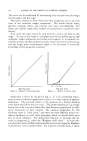
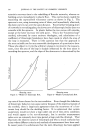
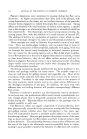
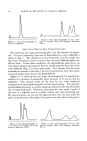
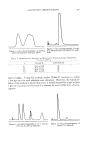
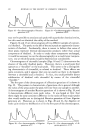
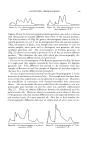
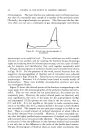
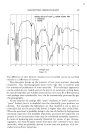
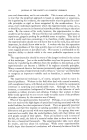
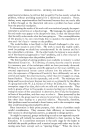
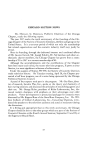
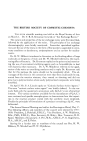
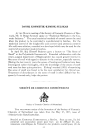
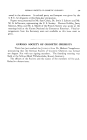
322 JOURNAL OF THE SOCIETY OF COSMETIC CHEMISTS Figure 18.--Gas chromatography of Reunion geranium oil I. Figure 19.--Gas chromatography of Reunion geranium oil II. may not be possible to associate each peak with a particular chemical entity, but this need not diminish the utility of the method. Figures 14 and 15 are chromatograms of two different samples of commer- cial rhodinol. The peaks to the left of the main peak are apparently charac- teristic of rhodinol. Incidentally, there is reason to believe that some of these peaks represent thermal decomposition products rather than actual components of rhodinol. In order to study these components unchanged, it would be necessary to run the chromatography at a much lower tempera- ture one at which the peaks would be flattened out considerably. Chromatograms of citronellol samples (Figs. 16 and 17) demonstrate the absence of the early rhodinol peaks. However, there is a small peak that appears as a "shoulder" on the main peak. This seems to be a distinguish- ing characteristic of citronellol, as related to rhodinol. These effects are quite consistent, and it appears that one can easily use them to distinguish between a citronellol and a rhodinol. In fact, one could probably detect adulteration of rhodinol with citronellol by means of the citronellol "shoulder." The first part of the chromatogram of a Reunion geranium oil is shown in Fig. 18. This pattern is characteristic of geranium oils in general although the ratios of the areas under the peak will vary from one sample to another. A chromatogram of another Reunion geranium oil is shown in Fig. 19, and it demonstrates different main peak ratios. It was hoped at first that there might be some consistent difference in the ratios of these major peaks that would enable one to distinguish Reunion geranium oil from Algerian geranium oil. However, as is shown in Figs. 20 and 21, the Algerian oil looks quite similar to the Reunion oil in the first part of the chromatogram. Figure 20.--Gas chromatography of Algerian geranium oil I. Figure 21.--Gas chromatography of Al- gerian geranium oil II.

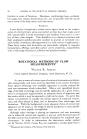
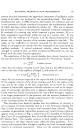
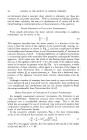
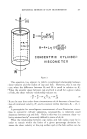
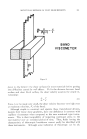
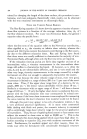
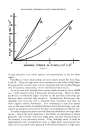
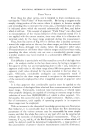
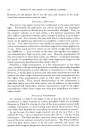
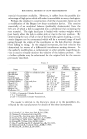
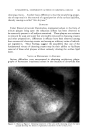
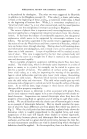
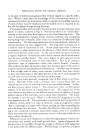
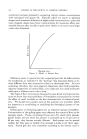
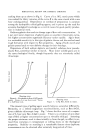
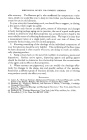
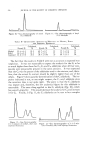
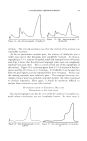
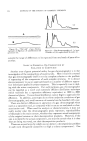
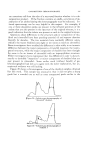
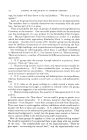
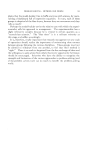
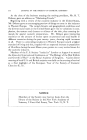
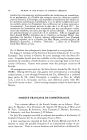
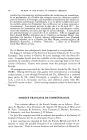
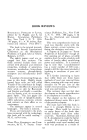
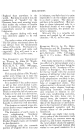
GAS-PARTITION CHROMATOGRAPHY 323 Figure 22.--Gas chromatography of synthetic geranium oil I. Figure 23.--Gas chromatography of syn- thetic geranium oil I]. Figures 22 and 23 show two typical synthetic geranium oils, and it is obvious that these peaks are entirely different from those of the natural products. The third synthetic oil (Fig. 24) gives a chromatogram closest to that of a natural geranium oil, yet it can be distinguished from the natural product. Thus, the pattern of peaks, even though they vary somewhat in ratio for similar samples, serve quite well to distinguish true geranium oils from synthetic geranium oils. The chromatogram of Turkish geranium oil (Fig. 25) shows it is not really a geranium oil at all but an entirely different product. This illustrates the ease with which gas chromatography dis- tinguishes between different kinds of essential oils. Far out in the chromatogram of the Reunion geranium oils (Fig. 26) there is a single peak that appears consistently but never appears for Algerian geranium oils. This difference has proved to be consistent with four samples of Reunion oil and four samples of Algerian oil, and thus might be the basis for a routine differentiation procedure. An area of great potential practical use for gas chromatography is in the detection of adulteration of essential oils. Not enough work has been done to be certain that adulteration can be detected in any given oil. However, the possibilities in connection with rhodinol-citronellol were mentioned above. Also two lavender oils were studied from this standpoint one was presumably pure lavender oil and the other was carefully sophisticated (Fig. 27). There are definite differences between the adulterated and the pure lavender oils. However, there is no question, as was shown in the case of the geranium oils, that natural differences are to be expected between one and another batch of a pure essential oil. One has to find whether the chromatographic differences between an adulterated oil and a pure oil are Figure 24.--Gas chromatography of synthetic geranium oil III. Figure 25.--Gas chromatography of"Turk- ish geranium" oil.
Purchased for the exclusive use of nofirst nolast (unknown)
From: SCC Media Library & Resource Center (library.scconline.org)