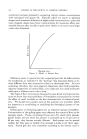
282 JOURNAL OF THE SOCIETY OF COSMETIC CHEMISTS function or series of functions. Shampoos, conditioning rinses, syntheti(5 bar soaps, face creams, hand lotions, etc., are all possible with the use oH one or more of the fatty amino acid derivatives. SUMMA RY A new family of amphoteric surface active agents based on the conden4 sation of a fatty primary amine and methyl acrylate have been made avail-I able commercially in. both monoadduct and diadduct forms and in a vat4 iety of fatty chain lengths. Their flexibility as to chemical structure andl their amphoteric polyfunctionality combine to provide an extremely ver• satile family of products offering promise in a wide variety of applications.I These fatty amino acid derivatives are particularly adapted to cosmetici formulations, offering controlled surface active properties, compatibilityl with a wide range of products, mildness and polyfunctionality. ROTATIONAL METHODS OF FLOW MEASUREMENTS* WALTER K. ASBECK Union Carbide Chemicals Company, South Charleston, 14•. ?a. A LARGE NUMBER of various types of rotational viscometers are obtain- able commercially, and many more are described in the current literature. Some special advantage over available apparatus is usually claimed for each new instrument which is described. Often a very specialized knowl- edge of the field of rheology and the specific application of a given instru- ment is consequently required before an adequate choice of apparatus and the results which it may be expected to yield can be made. To aid in this choice, it is pertinent to consider the various aspects of rotational viscom- eters, and those related to them, and to determine their advantages and limitations. With this background a more adequate choice of commercial apparatus can be made, or the design of special equipment to meet specific needs can be more rapidly accomplished. Although today theology is playing an important and ever increasing role in industrial control and research, it was not until the latter part of the 18th century that Coulomb (l) laid the foundation for rotational' type viscometers. In order to substantiate the derivations earlier carried out by Newton (2) for viscous flow, he suspended a circular plate from a * Presented at the October 4,1956, Seminar, New York City.

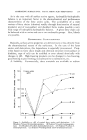
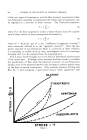
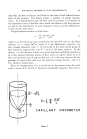
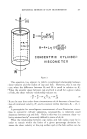
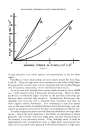
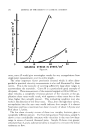
ROTATIONAL METHODS OF FLOW MEASUREMENTS 283 Itorsion wire and determined the logarithmic decrement of oscillation as the Iswing of the plate was damped by the surrounding liquid. Not until a Ihundred years later, in 1890, however, did Couette (3) construct and use •a true concentric cylinder rotational viscometer, the mathematical theory Iof which had been earlier described by Stokes (4). This was to become Ithe prototype of many of the presently employed rotational instruments. lit consisted of a rotating cup, which imparted a given moment, M, to a Ibob, suspended concentrically within the cup on a torsion wire. It was Ifound that the coefficient of viscosity, ,/, of the liquids measured by this Idevice was a simple function of the moment imparted to the bob. The •value of the coefficient of viscosity measured by this instrument was Ifound to correspond very closely with that measured on the same liquid by icapillary methods. A critical rotational velocity, where laminar flow Ichanged to turbulent flow, as earlier predicted by Reynolds (5), was also I found with this early Couette apparatus. The experiences of the last several decades have shown, however, that I the laws derived from the differential equations for "Newtonian" liquids: 1 •r pR 4 (Capillary System) (1) '•-.8 L where • is the volume extruded in unit time, and p is the differential pres- ssure on the ends of the capillary of length L, and radius R and [ RoaR? M = 4•rL•If [_Rfi • •* • (Rotational System) (2) where M is the moment imparted to the cup or the bob, L is the bob length, /47 the angular velocity of the driven member, and Ro is the radius of the cup, and Ri the radius of the bob, respectively, do not hold for a large number of industrially important colloidal solutions as well as for suspen- sions of microscopic particles such as pigment dispersions and emulsions. Under otherwise similar circumstances the rate of flow through a capillary is no longer proportional to the pressure, and the moment produced in a rotational instrument is no longer proportional to the rotational velocity of the rotating cylinder for these materials. This deviation from linearity signifies that the coefficient of viscosity is not a constant for these materials such as it is for Newtonian liquids, but that it either decreases or increases with increased shear velocity. Thus, a number of generalized typical flow patterns may result if stress is plotted against strain as shown in Fig. 1, where Curve I is classified as Newtonian flow, Curve II as pseudoplastic flow, Curve III thixotropic flow and Curve IV dilatant flow. The variable common to both capillary and rotational instruments is the shear velocity (also called the shear gradient). It in- creases with increased flow through a capillary and with increased angular velocity in rotational viscometers. Thus, it is the common denominator
Purchased for the exclusive use of nofirst nolast (unknown)
From: SCC Media Library & Resource Center (library.scconline.org)