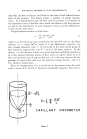
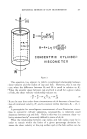
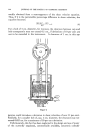
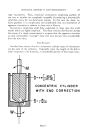
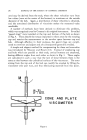
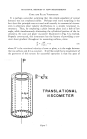
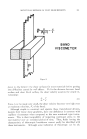
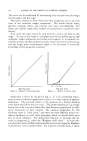
RHEOLOGICAL REVIEW FOR COSMETIC CHEMISTS 307 ipes which will solve all of the problems that have been keeping you awake at night. Then, on the last page, is a formidable paragraph which says, in effect, that the foregoing data "ain't necessarily so." Well, our position may be similar in that we are speaking not as either a cosmetic or rheology expert, but as one who has enjoyed our combination of theoretical and practical interests in the flow properties of matter. What we have ob- served and read in the pigment, paint, ink and plastics fields seems to us to have a very definite bearing on your products and problems. Let us begin with a review of our definitions, so that we have a base of mutual agreement for later discussion of practical mixtures. The follow- ing section on types of flow properties may be familiar ground, but we have a choice to make in some instances as to terms and schools of thought. There is such a network of conflicting beliefs in non-Newtonian flow that one must thread his own way, depending on experience and training. TYpEs OlV FLow The term "Newtonian flow" is not a subject of dispute. It comes from Newton's basic law of viscosity, which produced a definition of coeffi- cient of viscosity as the tangential force per unit area that will produce a unit rate of shear. More specifically, a substance has a viscosity of one poise when a shearing stress of one dyne per sq. cm. produces a velocity gradient of 1 cm. per sec. per cm. The classical model used by Newton consisted of two parallel planes confining the liquid being tested. It is not suitable as such for a practical instrument, because no one has devised a way of making the liquid retain its shape and position without using some type of side walls. The derivation of the cylindrical cup-and-bob type of viscometer was not only a logical expedient of simply curving the planes so that the liquid was continuous, but it was actually anticipated by Newton himself. In 1713, his Principia specifically outlined the action of a fluid between fixed and rotating concentric cylinders, pointing to transla- tion of motion from one to the other by the fluid (1). Though about a century and a half passed before further interest came to light, finally Poiseulle in 1846 reported that the volume per second of liquid flowing through a capillary tube is directly proportional to the activating stress. This was followed promptly by the work of other scien- tists leading directly to the first theoretical analysis of flow and definition of the coefficient of viscosity. Fig. 1 shows the performance of a New- tonian liquid when rate of shear is plotted against shearing stress, on a ro- tational viscometer. The curve is always a straight line intersecting the origin in NewtonJan liquids, because the rate of flow is directly proportional to the force exerted on the liquid. At any chosen point on the curve, the viscosity coefficient is equal to the shearing stress divided by the flow.

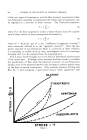
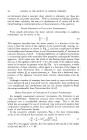
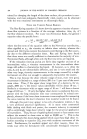
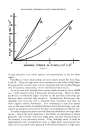
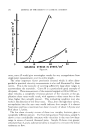
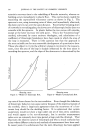
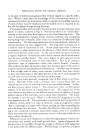
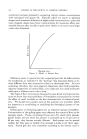
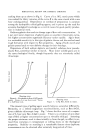
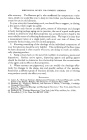
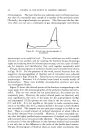
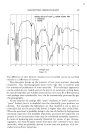
308 JOURNAL OF THE SOCIETY OF COSMETIC CHEMISTS The curve can be established by determining only one point and drawing a line through it and the origin. Most pure substances show NewtonJan flow properties, and so do solu- tions of low molecular weight compounds. This would include water, glycerin, alcohols, ethers, and common oils, esters, and aldehydes. For these, any reliable single point method of measurement is perfectly satis- factory. Now comes the major reason for such extensive work in the field of the- ology. As soon as you begin to add pigment particles, gelling agents, high molecular weight substances, and surface active agents, or to emulsify im- miscible systems, the flow properties nearly always become non-Newtonian• and the single point measurement ought to be discarded if reasonable knowledge of flow properties is desired. Shearing stress Figure 1.--Model of NewtonJan flow. ,, 1 Shearing stress Figure 2.--Model of plastic flow. Plastic flow is shown by the plot in Fig. 2. It is of considerable impor- tance in many industrial applications, since it is so often typical of pigment dispersions. The essential feature is the presence of a limited shearing stress below which flow does not occur. The system behaves as if an energy barrier has to be overcome before flow then becomes proportional to addi- tional increments of force exerted. The common designation for this minimum stress is "yield value," and there are three different points con- sidered significant as yield value intercepts, which we should settle upon here to avoid confusion. The dotted line extension to intercept the ab- scissa is designatedfB, called the "Bingham yield value." It is the only one which has been justified mathematically and was developed by Bingham in his pioneer work on plastic flow. On a purely scientific basis, it seems
Purchased for the exclusive use of nofirst nolast (unknown)
From: SCC Media Library & Resource Center (library.scconline.org)