AN EVALUATION OF HUMECTANTS IN COSMETIC EMULSIONS By GERALD C. HENNEY,* R. V. EVANSON]' and GLEN J. SPERANDIO'• An abstract of a thesis submitted to the Graduate School of Purdue University in partial fulfillment of the requirements for the Degree of Doctor of Philosophy A MAJOR PROBLEM associated with emulsified creams is the preven- tion of the drying out effect produced by evaporation of water from them. Evaporation occurs when the surface of an emulsion is excessively exposed to the atmosphere, or when the product is stored for extensive periods of time. In an effort to minimize this drying out, hygroscopic materials, 6t bumectants, are incorporated into the creams. The polyhydric alco- hols and their esters or ethers are most widely used as humectants because they are generally compatible and possess the desired physical properties. In formulating cosmetic emulsions, consideration should be given to the desired properties of the final product when selecting a humectant. Also, the humectant used should be the one which provides optimum water •etention when added in the proper quantity. The objectives of this project were to determine the relative effective- ness of humectant materials in reducing water loss from emulsions, to determine the most effective concentration of these humectants, and to evaluate the physical properties produced by them in a simple vanishing cream. Initial experiments were conducted to produce a cream with proper cos- roetic properties. Employing a simple vanishing cream formula: Stearic acid ............................................ 20% Emulsifier .............................................. 1% Humectants ........................................... 0-25% Water ................................................. 54-79% ' * Assistant Professor Pharmacy Administration, St. Louis College of Pharmacy and Allied Sciences, St. Louis 10, Mo. • Associate Professors of Pharmacy, Purdue University, Lafayette, Ind. 329

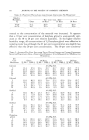
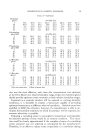
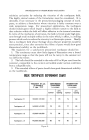
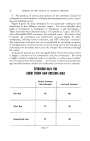
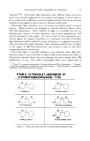
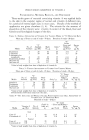
330 JOURNAL OF THE SOCIETY OF COSMETIC CHEMISTS various ratios of stearic acid and emulsifier and 29 combinations of nonionic surface active agents were evaluated. A blend of four parts Tween 80 and one part Arlacel 20 was selected as the emulsifier for the formula. Inasmuch as glycerol, sorbitol and propylene glycol are considered to be humectants of commerce, they are included in the list of materials to be evaluated. Polyethylene glycol 400 was selected to determine the relative effectiveness of a related polyol and 1,3 butylene glycol was included because claims have been made for its "mild humectancy."* All creams were prepared in the same manner. The humectant was con-- rained in the aqueous phase of the formula. Both phases were heated to 65øC., mixed and stirred by hand to minimize the amount of entrapped air in the finished product. The creams were placed in plastic vials having. an inner diameter of 2.9 cm., an inner depth of 5.4 cm. and weighing 10.2 gm. This weight represented only a small portion of the total sample and container weight. Samples of each cream were exposed to room temperature and humidity and to a controlled temperature of 30øC. (q-1 ø) and humidity ranges of 10 to 20 per cent and 60 to 70 per cent. A Thelco Model 4-H-2 Drying Oven was selected to maintain the temperature. A saturated solution of sodium nitrite was found by experimentation to produce a 60 to 70 per cent relatix)e humidity range in the Thelco Oven at 30øC. The samples were subjected to these conditions in the open containers. The creams were weighed be- fore and after exposure to the test conditions and the loss in weight accepted as the loss of water from the cream. The average per cent loss of total water content from four samples after thirty days' exposure at 10 to 20 per cent and 60 to 70 per cent relative humidity ranges is shown in Table 1. In the lower humidity range, glycr erol was effective in 5, 20 and 25 per cent concentrations. The creams TABLE 1--AvERAGE PER CENT Loss oF TOTAL WATER CONTENT OF CREwAMS AFTER TmRTY DAYS' EXPOSURE AT 10 to 20% AND 60 TO 70% RELATIVE HUMIDITY RANGES t .Per Cent Humectant- Humectant 0 5 10 15 20 25 10-20% Relative Humidity Glycerol 48.4 38.6 52.9 53.1 45.3 37.6 Sorbitol 48.4 43.1 38.6 33.3 28.5 25.6 Propylene glycol 48.4 64.0 45.5 45.6 40.4 40.5 Polyethylene glycol 48.4 61.7 37.5 37.5 34.5 33.8 1,3 Butylene glycol 48.4 67.6 41.2 41.2 34.5 30.6 60-70% Relative Humidity Glycerol 41.4 33.5 25.6 19.6 13.9 9.4 Sorbitol 41.4 37.3 29.4 26.0 19.1 20.4 Propylene glycol 41.4 44.6 31.6 31.1 24.0 23.4 Polyethylene glycol 41.4 34.1 30.6 28.6 25.3 20.1 1,3 Butylene glycol 41.4 38.5 31.5 26.4 22.8 23.0 * Commercial Advertisement, Celanese Corporation of America, Newark, New Jersey, 1957.
Purchased for the exclusive use of nofirst nolast (unknown)
From: SCC Media Library & Resource Center (library.scconline.org)