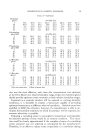
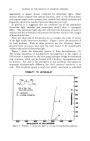
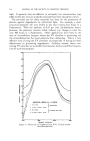
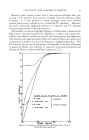
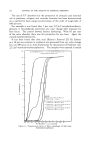
336 JOURNAL OF THE SOCIETY OF COSMETIC CHEMISTS to which the cream sample is exposed. No humectant material from the list of selected humectants evaluated in this project was the most effective in both humidity ranges. 3. Because the eflqciency of the humectant materials differs with a change in relative humidity, no one product of the group evaluated can be classed as the ideal humectant or the humectant of choice for all creams, but through selective formulation, cosmetic creams with a high degree of water retention can be developed. THE DERMATOLOGIST, THE OLDER WOMAN AND COSMETICS By ALICE E. PALMER, M.D.* Presented Tune 4I, 1955, New York City IT xs AN UNUSUAL challenge and opportunity for me to be asked to speak before you. It is a challenge because, while the dermatologist and the cosmetic chemist have some mutual interests, there remain some aspects of our endeavors which are in need of constructive and unifying thought. We are all aware that a total personality is molded by specific training and experience plus all other facts of his or her life. In my case, I am a dermatologist. But I am also a woman. I would like to divide what I have to say into three parts. First, the changes wrought in the skin with aging secondly, a few suggested things needed in the cosmetic field and thirdly, some of my reflections on the whole topic. In this era, where the average life span has been increased, it is interesting to speculate on whether we end up just working with inevitable age changes or whether we can eventually slow the process. To date, our task centers chiefly on keeping lives attractive, nonaggravated, useful and acceptable to others. From the point ooe view ooe the practice of dermatology, we contend with certain developments which are concomitants of the aging process. To this end, the dermatologist and the cosmetic chemist are working together in trying to slow these aging processes, and of trying to improve people's appearance, morale and comfort. But actually, basic scientists have * Grace Hospital, Detroit 1, Mich.

THE DERMATOLOGIST, THE OLDER WOMAN AND COSMETICS 337 not yet agreed on exactly when aging changes can be detected. Bean (1), in his study on cutaneous vascular changes, stated that vascular lesions as spider nevi, telangiectases of Dubrueihl and venous lakes become more numerous, and larger, with advancing age. But he added that there definitely cannot be established a real correlation between age as such and the number and size of these lesions. Such factors as heredity, liver function and hormonal status of the person were more important. And while Reizenstein (2) long ago stated that atrophy of the skin can be detected between 26 and 28 years, Goldzieher (3) concluded that atrophy of the skin is noticeable at 60 and pronounced at 70. He stated that atrophy corresponds roughly to a person's age and incidentally is not related to measured amounts of estrogen excretion. Schmidt (4) claimed that age changes begin at about age 40. Wrinkles, loss of hair pigment and the loss of hair are signs of age. Our skin tells the world our physiologic age. In rats, the age of the animal can be rather sharply approximated by histologic studies of the skin. In aging, there is atrophy of the epidermis and a reduction in the number of cells. But we dermatologists feel that the epidermal changes are not of too great significance. Increasing the cell depth of the epidermis can be done in a variety of ways by vitamins, hormones, irritants and friction (5). It does not make the skin look any younger if the subepidermal elements have degenerated. Most of the serious age changes in the skin are in the elastic fibers (6). We do know (7) that such senile or degenera- tive changes in the elastic fibers can be brought about prematurely in unprotected areas of the skin by sun and wind over the years. Out- wardly, the skin is leathery. In this sense, protective cosmetics at least can prevent premature aging. It is hoped that some protective cosmetic of the future can do something to prolong the youthful state of the elastic fiber. Vohwinkel (8) stated that senile changes begin at about the fortieth year and involve the outer portion of the dermis first and work down, with elastic and collagen fiber changes resembling radiation change. It may be that many of our cutaneous changes are actually due to the constant radiation we receive all during our lives on this earth, from several natural sources. It has been shown (9) that such natural radiation takes place all the time and that over a lifetime, we receive more radiation from these natural sources than we do from man-made radiation. In addition to these elastic and collagen fiber changes, there is definite shrink- ing and loss of activity in the sweat glands, the oil glands, the hair follicles, and in the cutaneous appendages, the hair and nails. The tiny blood vessels develop hardened walls the rate and amount of circulation is lessened. The metabolic changes are reduced, the immunologic mechanism, the oil-sweat film on the surface, all are altered. There are marked differences
Purchased for the exclusive use of nofirst nolast (unknown)
From: SCC Media Library & Resource Center (library.scconline.org)