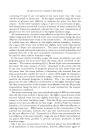
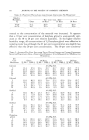
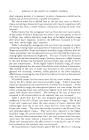
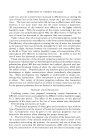
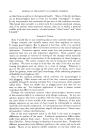
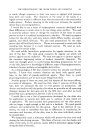
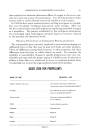
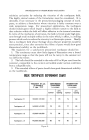
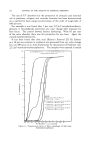
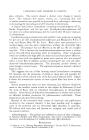
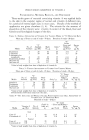
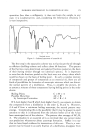
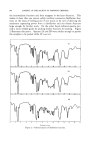
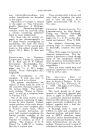
Ht, MECTANTS IN COSMETIC EMULSIONS 331 containing 10 and 15 per cent glycerol lost more water than the cream which contained no humectant. In the higher humidity range all concen- trations of glycerol were effective in reducing the water loss from the creams. In the lower humidity range, a 5 per cent concentration of glyc- erol seemed more economical in terms of amount of water retained by the amount of humectant employed, whereas the 15 per cent concentration of glycerol was the most economical in the higher humidity range. All concentrations of sorbitol were effective in the 10 to 20 per cent hu- midity range with the 15, 20 and 25 per cent concentrations being the most effective of all humectants tested in the concentrations. All concentrations of sorbitol were also effective at the higher relative humidity however, the creams with 25 per cent sorbitol lost slightly more water than did the one with a 20 per cent concentration. The cream containing 20 per cent sorbitol showed substantial reduction in water loss at both humidities and indicates that this is the most economical concentration of humectant to be used for those relative humidity ranges. In the lower relative humidity range, the cream containing 5 per cent propylene glycol lost more water than the cream which contained no hu- mectant. The creams containing 10, 15, 20 and 25 per cent concentrations lost about the same amount of water. Inasmuch as the cream with the :25 per cent concentration of propylene glycol lost only about 8 per cent less water than the cream without a humectant, this material does not seem economically suitable for use in a cream which might be exposed to a 10 to 20 per cent relative humidity range however, its use may be de- sired for the physical properties it produces. The 5 per cent propylene glycol was the only ineffective concentration in the higher humidity range. All other concentrations of the material were effective with the 10 per cent concentration being the best in terms of water retained for the amount of humectant employed. The cream containing 5 per cent polyethylene glycol 400 lost more water than did the cream without a humectant the higher concentrations of the material reduced water loss only slightly more than a 10 per cent concen- tration in the lowel humidity range. Thus the 10 per cent concentration appears to be the most effective for that range. At 60 to 70 per cent relative humidity, all concentrations of polyethylene glycol 400 were effective in reducing water loss. Effectiveness increased as the concentration of the material was increased however, the 5 per cent concentration seemed to be the most effective of all. Inasmuch as a 10 per cent concentration was most effective at the lower humidity range, the use of 10 per cent polyethyl- ene glycol 400 seems justified to provide optimum protection at both humidity ranges. 'The 5 per cent concentration of 1,3 butylene glycol was least effective of all humectants in that concentration however, effectiveness again in-

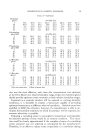
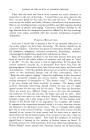
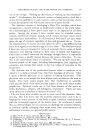
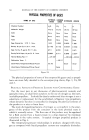
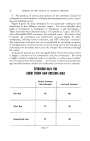
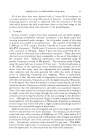
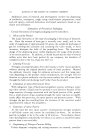
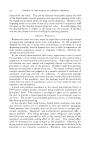
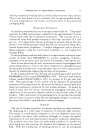
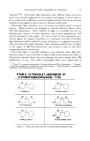
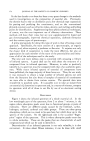
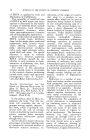
332 JOURNAL OF THE SOCIETY OF COSMETIC CHEMISTS TABLE 2--PER CENT WATER Loss fROM CREAMS CONTAINING NO HUMECTANT Relative Humidity, • -Per Cent Loss A•er % 7 Days 14 Days 21 Days 28 Days 10-20 17.7 28.9 37.0 45.9 60-70 14.7 25.0 33.5 39.4 - creased as the concentration of the material was increased. It appears that a 10 per cent concentration of butylene glycol is economically opti- mum at the 10 to 20 per cent relative humidity. In the higher relative humidity range, all concentrations of 1,3 butylene glycol were effective in reducing water loss although the 25 per cent concentration was slightly less effective than the 20 per cent concentration. The 10 per cent concentra- TABLE 3--AVERAGE PER CENT I,oss fROM TOTAL WATER CONTENT OF CREAMS CONTAINING SELECTED HUMECTANTS OVER A TmRTy-DA¾ PERIOD AT 10 TO 20% AND 60 TO 70% RELATIVE HUMIDITIES Per Cent Humectant 7 Days 14 Days 21 Days 28 Days %WL* RWL t %WL* RWI,t %WL* RWLt %WL* RWLI' Glycerol IO-20%R.H. 5 15.4 87.0 23.6 81.7 30.7 83.0 35.5 77.3 10 20.4 115.3 32.3 111.1 42.1 113.8 50.2 109.4 15 22.8 128.8 35.0 121.1 44.3 119.7 51.1 111.3 20 19.1 107.9 28.9 100.0 38.2 103.2 43.9 95.6 25 16.0 90.4 24.0 83.0 31.0 83.8 36.1 78.6 Glycerol 60-70%R.H. 5 11.8 80.3 19.9 79.6 27.5 82.0 32.6 82.7 10 10.0 68.0 15.9 63.6 21.9 65.4 25.3 64.2 15 6.4 43.5 11.3 45.2 16.1 48.1 19.2 48.7 20 4.3 29.3 7.7 30.8 11.8 35.2 14.2 36.0 25 3.0 20.4 5.0 20.0 8.2 24.5 9.0 22.8 Sorbitol 10-20%R.H. 5 16.0 90.3 25.3 87.5 34.2 92.4 41.2 89.8 10 13.7 77.4 21.4 74.0 29.4 79.4 33.8 73.6 15 11.5 65.0 17.8 61.6 24.9 67.3 31.0 67.5 20 10.2 57.6 16.3 56.4 21.8 58.9 26.9 58.6 25 8.9 50.3 14.6 50.5 19.5 52.7 24.2 52.7 Sorbitol 5 10 15 20 25 Propylene glycol 5 10 15 2O 25 14.6 12.9 10.7 81 84 26 5 19 8 19 8 164 17 2 60-70% R.H. 99.3 23.4 93.6 30.7 91.6 35.8 90.9 87,8 18.7 74.8 24.3 72.5 28.4 72.1 72.8 16.3 65.2 21.8 65.1 25.3 64.2 55.1 12.1 48.4 16.2 48.4 18.6 47.2 57.2 12.8 51.2 17.2 51.3 20.0 50.8 IO-20%R.H. 150.0 41.1 142.2 35.6 106.3 61.5 134.0 111.9 29.7 102.8 25.9 77.3 43.2 94.1 111.9 28.8 99.7 25.0 74.6 43.8 95.4. 92.7 25.1 86.9 19.3 57.6 38.4 83.7 97.2 26.2 90.7 19.3 57.6 39.0 85.0
Purchased for the exclusive use of nofirst nolast (unknown)
From: SCC Media Library & Resource Center (library.scconline.org)